


 CDN NEWS |
  US NEWS







It was a long road ‘from managing hardship to building opportunity’.
By Geoff Russ
By Resource Works
More News and Views From Resource Works Here
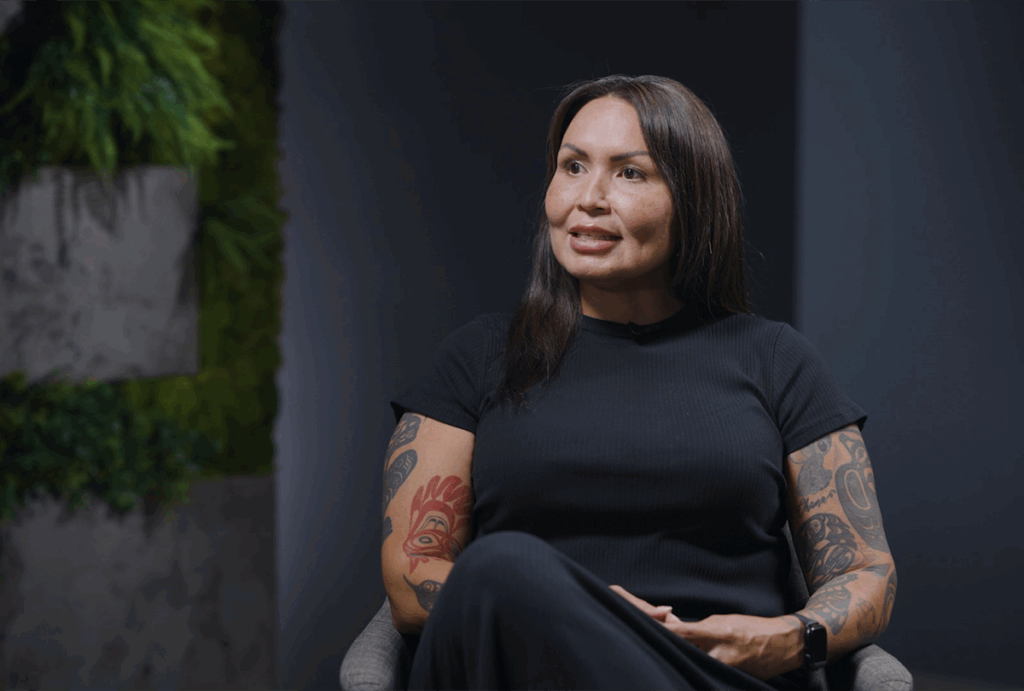
Crystal Smith says the turning point for her community was simple, and profound. “It is that decision of wanting better.”
In a conversation with host Stewart Muir for the Power Struggle podcast, the former Haisla Nation chief councillor described how years of negotiation, consultation, and institution-building set the stage for a new era on the Douglas Channel.
“It’s the decision of not wanting to manage poverty anymore,” Smith said in the interview. “It’s the decision of finding hope and finding opportunity for your people to thrive and to succeed in this life.”
The discussion, recorded for Muir’s series on energy, investment, and reliability, traced the Haisla journey from impact-benefit agreements to equity and ownership in projects that meet community values on land and water. Muir is the founder and chief executive of Resource Works, and host of Power Struggle, which profiles leaders shaping Canada’s resource future.
The backdrop has shifted decisively in recent months. In Kitimat, the country’s first large-scale export terminal loaded its inaugural cargo in late June, marking Canada’s entry into the LNG club.
Project operator updates confirm the milestone and outline initial two-train capacity of about 14 million tonnes per year, while the lead partner also marked the first shipment in its own statement. Smith’s account places that achievement within a partnership model she and other Haisla leaders helped shape, emphasising strong environmental performance and tangible returns at home.
The Nation’s signature initiative, Cedar LNG, is majority-owned by the Haisla alongside Pembina Pipeline. The floating facility is designed to run on clean electricity and has cleared key provincial and federal assessments. Project materials and public updates note that the environmental approvals were secured in 2023, and that enabling works include a transmission line to power operations with B.C. grid electricity.
In July, the Province announced funding support to build the transmission and substation infrastructure required to electrify the plant, describing a new 287-kilovolt line to Minette Bay and related nearshore works.



Commercial momentum is building around the project. In 2024, ARC Resources announced a long-term agreement to supply roughly 200 million cubic feet per day of natural gas to Cedar LNG, contingent on a final investment decision. Sector coverage at the time underscored that the tolling arrangement would represent about half of Cedar’s planned output.
Smith locates these steps in deliberate community choices, guided by constant engagement with members in Kitamaat Village and those living elsewhere. “You have opportunity, our nation is constantly growing,” she said, describing new education, training, and employment pathways designed to reduce barriers for Haisla citizens.
“You know, it’s been quite a journey,” she added, reflecting on the skepticism early on that an Indigenous-led LNG project could combine low emissions, reliable returns, and community oversight.
She was candid about the diversity within First Nations across the region and the country, noting that each community needs the space to determine its own path. “We’re all vastly, vastly different,” Smith said.
In the Haisla case, that path has meant aligning investment and governance with environmental stewardship, and insisting that participation be real, not symbolic.
The interview highlights tangible, local, lived experience instead of the kind of abstract issues we see in national debate about energy.
Power Struggle’s format is to feature decision-makers on energy and infrastructure – to hear about what they’ve gone through in real life – rather than to settle for repeating tired slogans we’ve all heard before.
Smith’s words point to a model that is already producing visible results in Kitimat, from the first LNG cargo to the groundwork for electrified liquefaction at Cedar LNG.
For Smith, the measure of success is not a headline or a ribbon-cutting. It is families returning, skills deepening, and institutions that will outlast any one leader.
As she put it, the compass has been set by a plain standard, taught at home and taken into office: “It is that decision of wanting better.”
Check out Crystal Smith’s full appearance on Power Struggle.
Share This:






















COMMENTARY: Ottawa Provides Glimmer of Hope and Streamlines Review Process for Energy Projects