


 CDN NEWS |
  US NEWS







Alberta’s number of inactive wells trending downward
Follow CEC on LinkedIn CEC LinkedIn
Follow CEC on Facebook CEC Facebook
Follow CEC on Twitter CEC Twitter
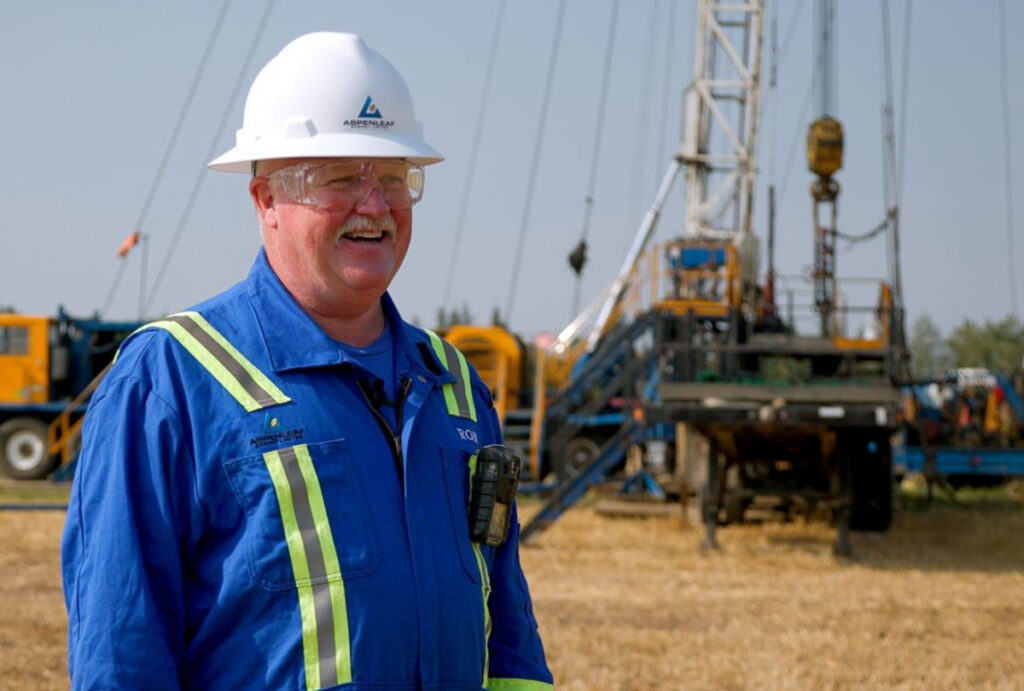
Aspenleaf Energy vice-president of wells Ron Weber at a clean-up site near Edmonton. Photo for the Canadian Energy Centre
In Alberta’s oil patch, some companies are going beyond their obligations to clean up inactive wells.
Aspenleaf Energy operates in the historic Leduc oil field, where drilling and production peaked in the 1950s.
In the last seven years, the privately-held company has spent more than $40 million on abandonment and reclamation, which it reports is significantly more than the minimum required by the Alberta Energy Regulator (AER).
CEO Bryan Gould sees reclaiming the legacy assets as like paying down a debt.
“To me, it’s not a giant bill for us to pay to accelerate the closure and it builds our reputation with the community, which then paves the way for investment and community support for the things we need to do,” he said.
“It just makes business sense to us.”
Aspenleaf, which says it has decommissioned two-thirds of its inactive wells in the Leduc area, isn’t alone in going beyond the requirements.
Producers in Alberta exceeded the AER’s minimum closure spend in both years of available data since the program was introduced in 2022.
That year, the industry-wide closure spend requirement was set at $422 million, but producers spent more than $696 million, according to the AER.
In 2023, companies spent nearly $770 million against a requirement of $700 million.
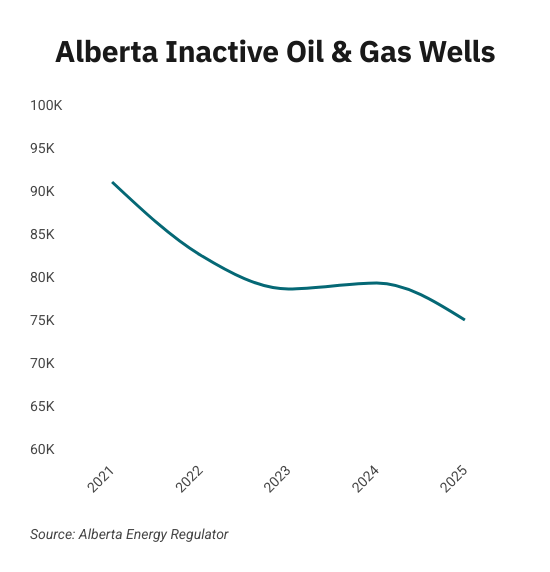
Alberta’s number of inactive wells is trending downward. The AER’s most recent report shows about 76,000 inactive wells in the province, down from roughly 92,000 in 2021.
In the Leduc field, new development techniques will make future cleanup easier and less costly, Gould said.



That’s because horizontal drilling allows several wells, each up to seven kilometres long, to originate from the same surface site.
“Historically, Leduc would have been developed with many, many sites with single vertical wells,” Gould said.
“This is why the remediation going back is so cumbersome. If you looked at it today, all that would have been centralized in one pad.
“Going forward, the environmental footprint is dramatically reduced compared to what it was.”
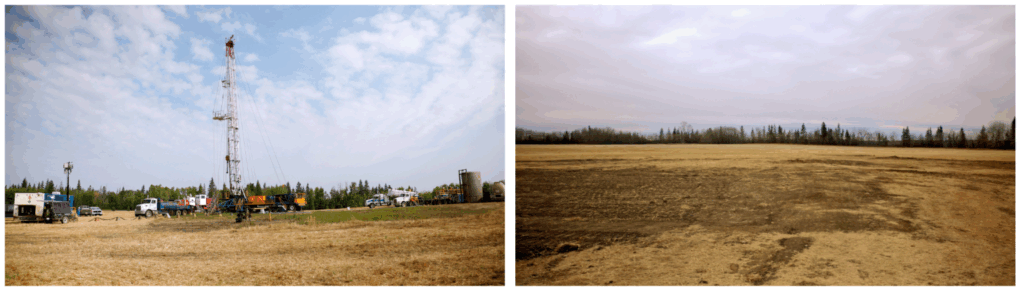
During and immediately after a well abandonment for Aspenleaf Energy near Edmonton. Photos for the Canadian Energy Centre
Gould said horizontal drilling and hydraulic fracturing give the field better economics, extending the life of a mature asset.
“We can drill more wells, we can recover more oil and we can pay higher royalties and higher taxes to the province,” he said.
Aspenleaf has also drilled about 3,700 test holes to assess how much soil needs cleanup. The company plans a pilot project to demonstrate a method that would reduce the amount of digging and landfilling of old underground materials while ensuring the land is productive and viable for use.
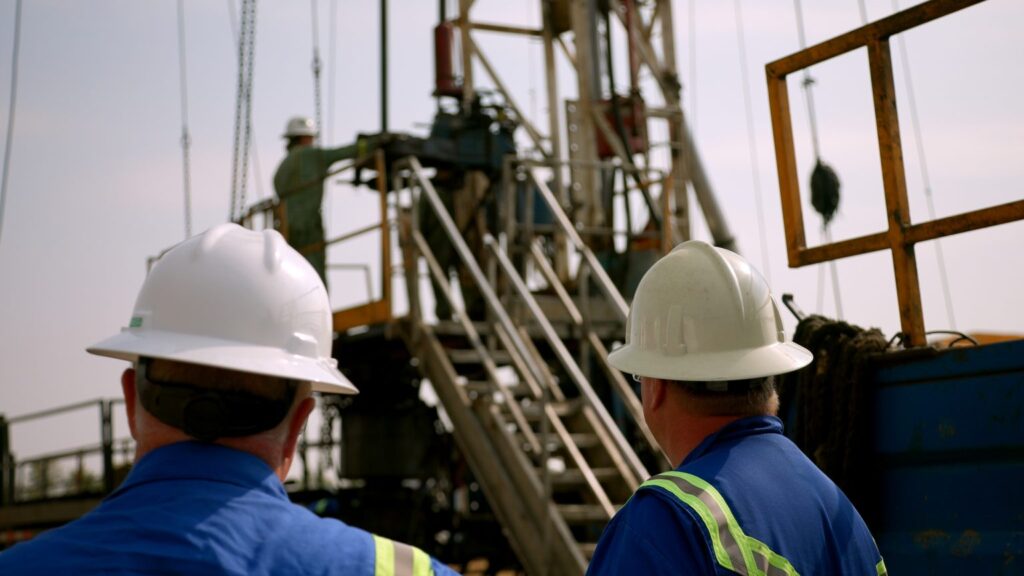
Crew at work on a well abandonment for Aspenleaf Energy near Edmonton. Photo for the Canadian Energy Centre
“We did a lot of sampling, and for the most part what we can show is what was buried in the ground by previous operators historically has not moved anywhere over 70 years and has had no impact to waterways and topography with lush forestry and productive agriculture thriving directly above and adjacent to those sampled areas,” he said.
At current rates of about 15,000 barrels per day, Aspenleaf sees a long runway of future production for the next decade or longer.
Revitalizing the historic field while cleaning up legacy assets is key to the company’s strategy.
“We believe we can extract more of the resource, which belongs to the people of Alberta,” Gould said.
“We make money for our investors, and the people of the province are much further ahead.”
The unaltered reproduction of this content is free of charge with attribution to the Canadian Energy Centre.
Share This:






















COMMENTARY: Ottawa Provides Glimmer of Hope and Streamlines Review Process for Energy Projects