CDN NEWS |
  US NEWS







By Julio Mejía and Elmira Aliakbari
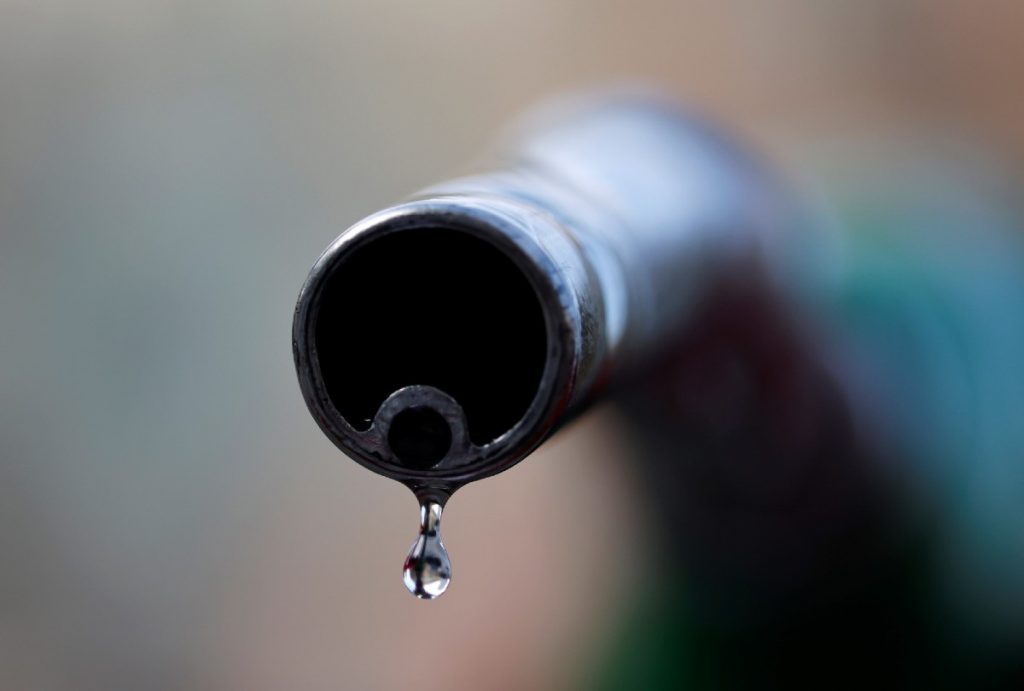
The Carney government recently announced changes to the Clean Fuel Regulations (CFR), signalling stricter carbon content rules for gasoline and diesel—though few details were provided. While the prime minister expressed confidence that the changes will strengthen the Canadian economy, in reality, the CFR is designed to increase fuel prices in exchange for negligible environmental benefits. If the government is serious about prioritizing the wellbeing of Canadians, it shouldn’t tinker with the CFR—it should eliminate it.
The CFR, which came into effect in July 2023, aims to reduce greenhouse gas (GHG) emissions by requiring a gradual reduction in the carbon content of gasoline and diesel. By 2030, fuels must contain 15 per cent fewer GHG per unit of energy than in 2016. Those who don’t meet the target must buy compliance credits, which raises their costs. Ultimately, these costs are all passed on to Canadians at the pump.
According to a recent study by the Parliamentary Budget Officer (PBO), the CFR is expected to increase fuel prices by up to 17 cents per litre for gasoline and 16 cents for diesel by 2030. These costs will be added on top of already high, policy-driven fuel costs. In 2023, for example, the average price of gasoline in Canada was 157.3 Canadian cents per litre, compared to just 129.4 cents per litre in the United States—a 21 per cent difference, mainly the result of fuel taxes in Canada.
As fuel prices rise due to the CFR, the costs of running tractors, powering machinery, and producing and transporting goods and services will all increase, setting off ripple effects across our economy. The PBO estimates that the CFR will decrease Canada’s economic output by up to 0.3 per cent—or approximately $9.0 billion—in 2030. For context, that’s more than the entire output of Prince Edward Island in 2024, so the effects are roughly equivalent to wiping out the economy of a whole province.

Of course, increases in fuel prices also mean more pressure to household budgets. The PBO estimates that in 2030, the average Canadian household will incur $573 in additional costs because of the changes to the CFR, and lower-income households will bear a disproportionately larger burden because they spend more of their budget on energy.
The policy’s uneven impact across provinces is particularly significant for lower-income regions. For example, households in Nova Scotia and P.E.I.—two of the provinces with the lowest median household incomes—are expected to bear average annual costs of $635 and $569, respectively. In contrast, families in Ontario and British Columbia—two of the provinces with higher median household incomes—will pay less, $495 and $384 per year, respectively. Simply put, the CFR imposes more costs on those who make less.
To make matters worse, the expected environmental benefits of the CFR are negligible. Even if it delivers its full projected reduction of 26 million tonnes of GHG emissions by 2030, that represents only “two weeks of greenhouse gas emissions from the Canadian economy,” according to the federal government.
Given that GHG emissions cross all borders regardless of where they originate, in a broader perspective, that reduction represents just 0.04 per cent of projected global emissions by 2030. So, Canadians are being asked to pay a material price for a measure that will have virtually no environmental impact.
Toughening regulations on carbon content for gas and diesel won’t benefit Canadians, in fact, it will do the opposite. The CFR places a real financial burden on Canadian households while delivering no meaningful environmental benefit. When a policy’s costs vastly outweigh its benefits, the answer isn’t to adjust it, it’s to scrap it.
Share This: