


 CDN NEWS |
  US NEWS









By Deidra Garyk
We find ourselves at the intersection of energy reality and sustainability. The convergence means the way we do business globally is morphing. Some see opportunity in the most unlikely of places, while others only see obstacles.
A new report by the Public Policy Forum entitled Build Big Things: A playbook to turbocharge investment in major energy, critical minerals and infrastructure projects makes a case for why Canada should find the opportunities and how we can do that.
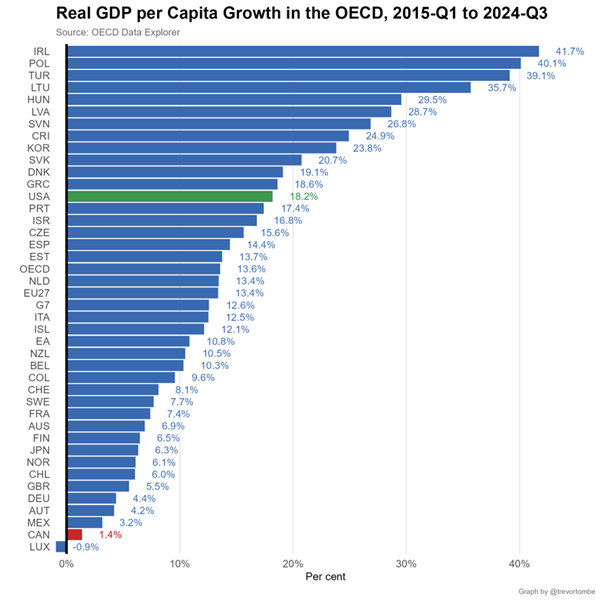
Analysis done by Calgary’s own economist and professor Trevor Tombe identified that Canada’s real GDP per capita growth from 2015 to 2024 was 1.4 percent. This puts us in second-last position among OECD countries.
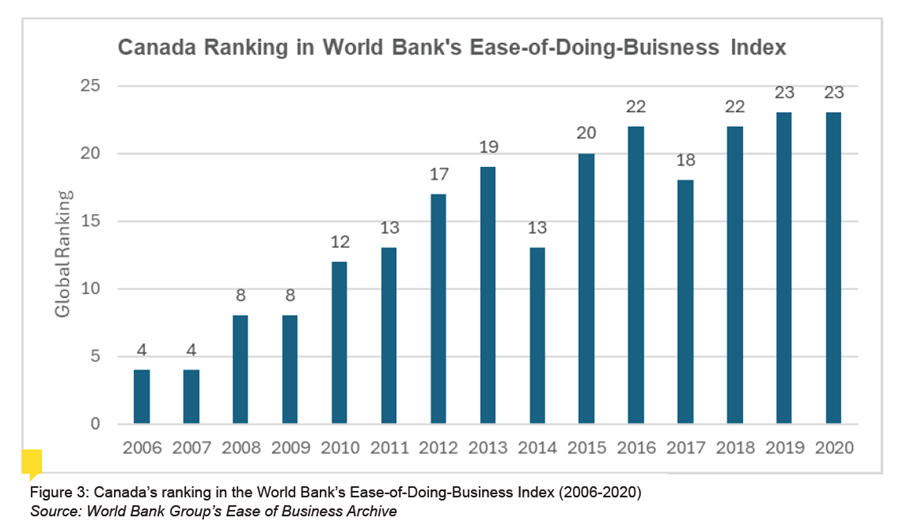
Canada also took the penultimate spot among OECD countries for the time it takes to get a construction permit. As the graph shows, this isn’t a partisan problem; therefore, it can’t be corrected with a partisan solution. Although, noticeably, we have slipped further over the last few years. For multinational corporations that can invest anywhere, Canada’s ease of doing business appeal is not attractive, and that hampers our ability to build big things.
Fortunately, some jurisdictions are doing something about unnecessarily burdensome regulations. Alberta’s Red Tape Reduction initiative has removed over 200,000 regulations for net savings of $3 billion, a number tallied by the businesses impacted, not government. These are duplicative or archaic rules that added limited to no protections and removing them has not exacerbated risks. Work is still ongoing to ensure the balance is right.
BC is also fast-tracking projects, recognizing the need to build to remain a modern society. By shifting energy development permitting to the BC Energy Regulator, project timelines have improved.

The regulatory barriers affect more than traditional energy development. A new mining project in Canada can take anywhere from 15 to 25 years from application to operation. Energy, mining and infrastructure projects go through three to six years of federal regulatory review processes, in addition to provincial reviews. This is unacceptable if Canada is to meet the resource demands of the future.
The Report makes the case that, “[p]rioritizing nation-building projects such as ports, rail and roads is essential to strengthening internal economic linkages, enhancing export competitiveness and ensuring supply chains remain resilient and globally competitive.”
It goes on to cite, “barriers to success that include: burdensome regulatory processes and permitting procedures; insufficient financial supports and difficulty accessing capital, particularly in the crucial, high-risk development stages before getting to FID; inadequate infrastructure such as roads, bridges and ports; and a persistent lack of capacity and capital among Indigenous groups to participate fully as partners in new projects.”
There’s waning interest from the public in shrill anti-resource activism that puts their current lives and livelihoods at risk. Average weekly earnings in Alberta haven’t changed over the last ten years. Canada is one of the most indebted countries in the world, including subnational and consumer debt. This means that we are not as easily able to strategically act to deal with issues or embrace opportunities.
The report offers four strategic pillars for action:
- Co-ordinated financing: Align public and private funding sources to support priority projects and close investment gaps. Governments should not always aim to be the first or primary source of funding. The most effective role for public financing is often in de-risking projects,
- Efficient and effective regulations: Reconfigure regulatory and permitting processes to get to “yes” much more quickly, providing clearer timelines, improved efficiency and effectiveness, greater certainty, enhanced environmental performance, and a more strategic role for economic regulators across jurisdictions.
- Enabling critical infrastructure: Take a systems-level approach to planning to ensure that foundational infrastructure and skilled labour are in place to support future growth.
- Increasing Indigenous economic participation: Strengthen partnerships between project proponents, government institutions and Indigenous rights-holders to support meaningful Indigenous involvement in major projects, including through improved access to capital, stronger ownership opportunities and continuous capacity building.
Canadians must define who we are and who we want to be, on our own terms. We must change the mindset from fear to opportunity and be proud to be producers of primary materials. We need a kick in the pants to move towards taking calculated risks rather than running away, hoping for security because of our fears. We must build big things.
Deidra Garyk is the Founder and President of Equipois:ability Advisory, a consulting firm specializing in sustainability solutions. Over 20 years in the Canadian energy sector, Deidra held key roles, where she focused on a broad range of initiatives, from sustainability reporting to fostering collaboration among industry stakeholders through her work in joint venture contracts.
Outside of her professional commitments, Deidra is an energy advocate and a recognized thought leader. She is passionate about promoting balanced, fact-based discussions on energy policy, and sustainability. Through her research, writing, and public speaking, Deidra seeks to advance a more informed and pragmatic dialogue on the future of energy.
Share This:





















B.C.’s Overlooked Firm Power Option: What the Geothermal Evidence Shows – Resource Works