CDN NEWS |
  US NEWS







Canada’s Path to Net Zero by 2050: Darkness at the End of the Tunnel
- The Government of Canada has committed to going beyond the Paris target of reducing greenhouse gas (GHG) emissions to 40 percent below 2005 levels as of 2030 and now intends to achieve net zero carbon dioxide (CO2) emissions as of 2050. This study provides an outlook through 2050 of Canada’s path to net zero by answering two questions: will the Government of Canada’s current Emission Reduction Plan (ERP) get us to net zero by 2050, and if not, is it feasible for any policy to get us there?
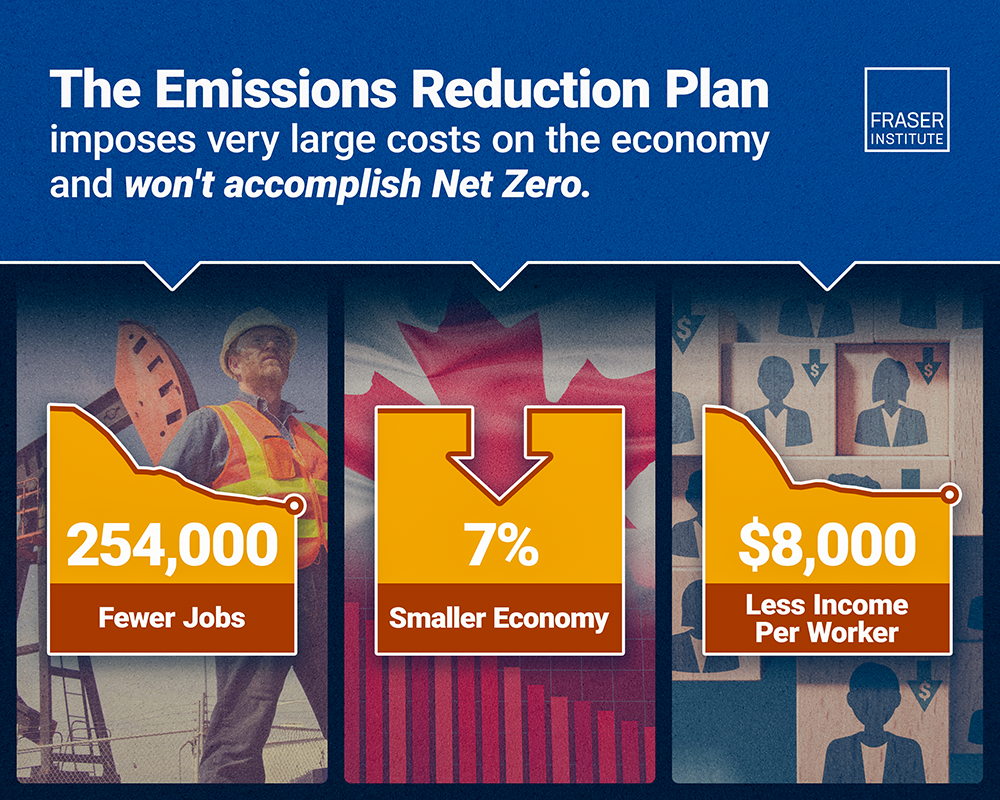
- First, a simulation of the ERP extended to 2050 results in emissions falling by approximately 70 percent relative to where they would be otherwise, but still falling short of net zero. Moreover, the economic costs are significant: real GDP declines by seven percent, income per worker drops by six percent, 250,000 jobs are lost, and the annual cost per worker exceeds $8,000.
- Second, the study explores whether a sharply rising carbon tax alone could achieve net zero. At $400 per tonne, emissions decrease by 68 percent, but tripling the carbon tax to $1,200 per tonne achieves only an additional 6 percent reduction. At this level, the economic impacts are severe: GDP would shrink by 18 percent, and incomes per worker would fall by 17 percent, compared with the baseline scenario.
- The conclusion is clear: Without transformative abatement technologies, Canada is unlikely to reach net zero by 2050. Even the most efficient policies impose unsustainable costs, making them unlikely to gain public support.


Share This: