


 CDN NEWS |
  US NEWS







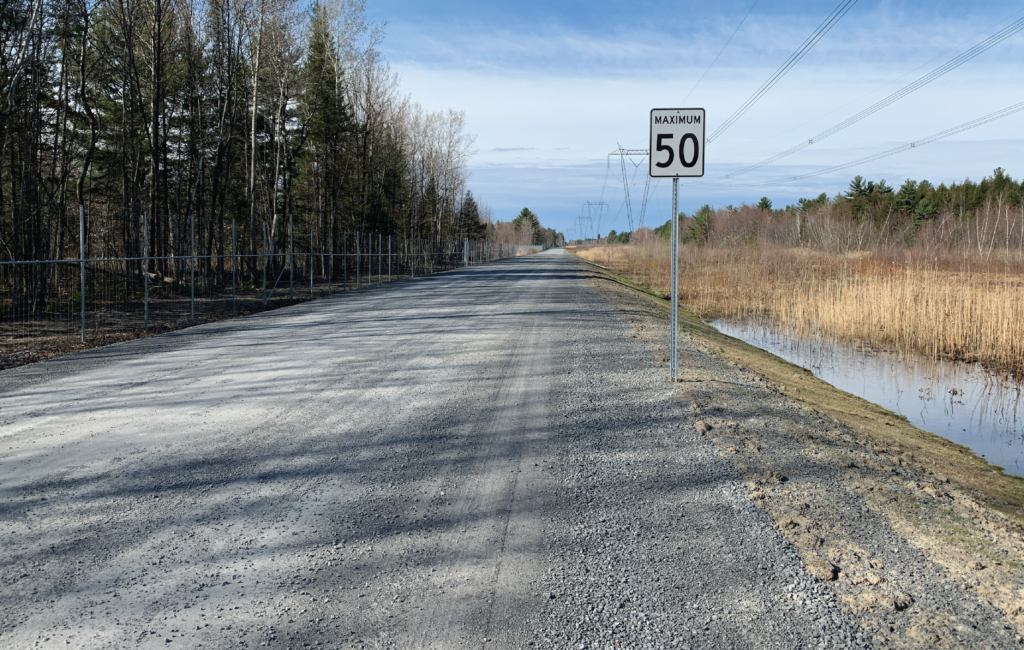
Efficient drainage is one of the most critical factors in ensuring long-lasting and safe roads. When water pools due to poor drainage systems, erosion, subsurface failures, and hazardous driving surfaces often occur. Traditional road construction designs include culverts, drainage pipes, and slopes to maximize road runoff and provide drainage. But these elements in road designs are usually costly, labour-intensive, and require post-installation maintenance for optimal performance! Alternatively, a more effective way to build superior roads is with the revolutionary Tough Cell® geocell. This technology improves drainage capabilities and enhances overall performance through its unique 3D confinement design.
What are Tough Cell® geocells?
Tough Cell® geocells are three-dimensional honeycomb-like structures made from a novel polymeric alloy, which makes them stronger and more durable than more commonly available HDPE geocells. When filled with granular materials such as sand or gravel, they create a flexible, reinforced composite surface. The 3D interaction of the soil, cell walls, and geometry maintains soil compaction, thus increasing the structural strength of the infill and pavement layer. Versatile in use, geocells are a great option for building paved and unpaved roads, access roads, heavy haul and mining roads, pads, and slope stabilization applications.
How do Tough Cell® geocells provide superior road drainage?
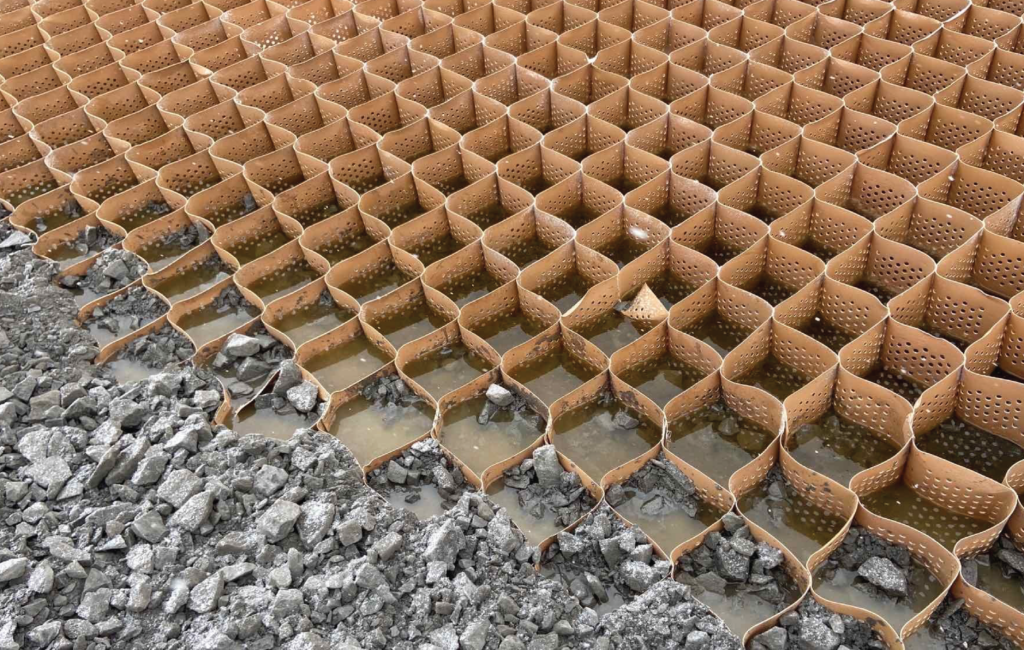
Tough Cell® geocells prevent water accumulation on road surfaces and provide a systematic solution to managing surface and subsurface water. Water is one of the most destructive forces for road infrastructure; it weakens underlying subgrades, causes surface deformation, and accelerates wear and tear. Tough Cell® geocells work to:
1. Enhance subgrades
Tough Cell® strengthens road subgrades by distributing vertical loads over a wider area through the “beam” or “mattress” effect. This helps to prevent soil compaction and uneven settlement and ensures that water can flow freely through the subgrade material without pooling at weaker points along roads, causing localized sinking. This prevents structural failures such as potholes and ruts from forming.
2. Improve permeability
Tough Cell® geocells can be perforated to allow excess water to pass through and drain efficiently. Additionally, as geocells are primarily filled with highly permeable granular materials such as sand or washed gravel, water easily moves through the geocell layer. This helps channel surface water away from the road’s surface, minimizing water collection and preventing the development of soft spots. By facilitating drainage through and around the road, Tough Cell® geocells help prevent the formation of puddles and improve overall surface performance.
3. Mitigate water erosion
Large volumes of rainfall flowing across a road surface can cause erosion, especially along the edges and side slopes. Tough Cell® geocells helps mitigate this by keeping fill in place through its 3D cellular confinement geometry. The cell structure confines the materials, preventing them from being washed away by running water. This not only preserves the integrity of the road itself but also protects surrounding landscapes, such as embankments or shoulders, from eroding during heavy rainfall.
4. Reduce damage from frost heave
Frost heave is particularly common in colder climates where water trapped in the sublayers of roads freeze and expand. The freeze-thaw of trapped water leads to a loss of compaction and the development of soft spots that eventually crack, develop boils, or cause other forms of subsurface failure. This compromises the road’s durability and safety. Tough Cell® geocells help reduce frost heave by promoting better drainage and preventing water from becoming trapped in the road’s sublayers. With geocells in place, water flows freely out of the road structure, reducing the risk of frost-induced damage.
5. Facilitate the installation of drainage layers
Tough Cell® can be combined with additional drainage solutions such as geotextiles, culverts, and drainage pipes to enhance water management in road construction. Tough Cell® can be placed above or below the drainage layers, and the 3D confinement system prevents fine particles from clogging the drainage systems. As a reinforced system, water can be directed away from roads quickly and efficiently, thereby reducing water accumulation on the surface and protecting subgrades from unnecessary moisture.
NPA Geocell Technology: Real-World Applications
NPA geocell technology has been successfully implemented in road projects worldwide, particularly in regions where water management or sensitive soils are a critical concern. Tough Cell® geocells offer a robust solution to two of the most significant water management challenges in road construction: ensuring proper drainage and preventing water pooling. By reinforcing the subgrade, promoting permeability, and facilitating better water flow, geocells improve road durability and enhance travel safety.
As Canadian infrastructure demands continue to grow, Tough Cell® offers a simple and cost-effective way to increase the life span of roads, offering immediate benefits and long-term performance. To learn more about Tough Cell®, contact Paradox Access at 1.877.MUD.UGLY or [email protected]

Share This:





















COMMENTARY: Carney Government’s ‘Export’ Plan Relies on Canada’s Natural Resource Sector – Fraser Institute