


 CDN NEWS |
  US NEWS







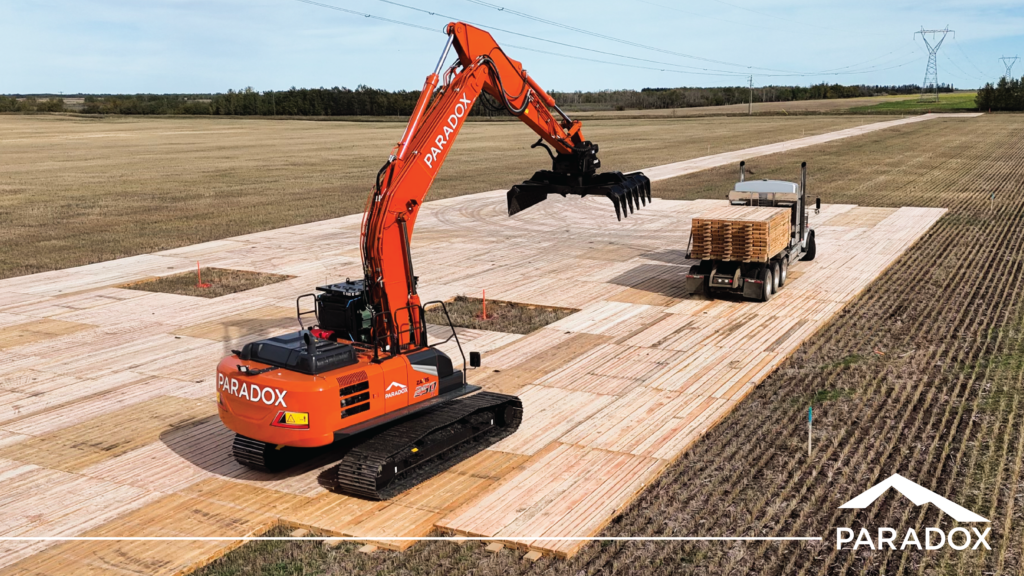
Scenario: Imagine your Equipment Operators are working in a remote field after a few days of intense, uninterrupted rainfall. The sensitive soil is waterlogged and muddy. As your equipment presses forward, they sink deeper, kicking up mud as the tires try to gain traction. Eventually, they’re stuck, and your equipment is left tilting unsafely as it sinks. Just like that, your project is behind, your crew’s safety is at risk, and you have an annoyed client and an unhappy landowner on your hands. Frustrated, you wonder how this disaster could have been avoided…
Introducing Access Mats
Access mats are crucial to ensuring continuous field-level operations. Industries such as construction, oil & gas, utilities, and forestry use mats for ground protection, heavy equipment support, and safety compliance. Ultimately, access mats help you to avoid weather and safety delays by allowing work to proceed efficiently while minimizing environmental impacts and setting you up for easier reclamation work upon project completion.
In previous articles, Paradox has elaborated on the differences between access and rig mats and even recounted one of their most popular mats- the traction control mat, custom-made to overcome even the most unique challenges! But let’s get down to brass tacks.
What are access mats, and why are they important?
Access mats are portable platforms (made of wood and/or other materials) that can be placed over challenging or environmentally sensitive terrain to provide temporary roads to and from work sites. They ensure safe and reliable passage over muddy, saturated, or unstable ground and are used for:
1. Traversing Rough, Challenging Terrain.
For uninterrupted operations, matting provides year-round access to your work sites, regardless of challenging ground conditions. It provides a stable foundation across unstable terrain, enabling safe passage and operation in even the most difficult environments. This is particularly important in regions like Alberta, where extreme weather and rugged landscapes can render the ground impassable.
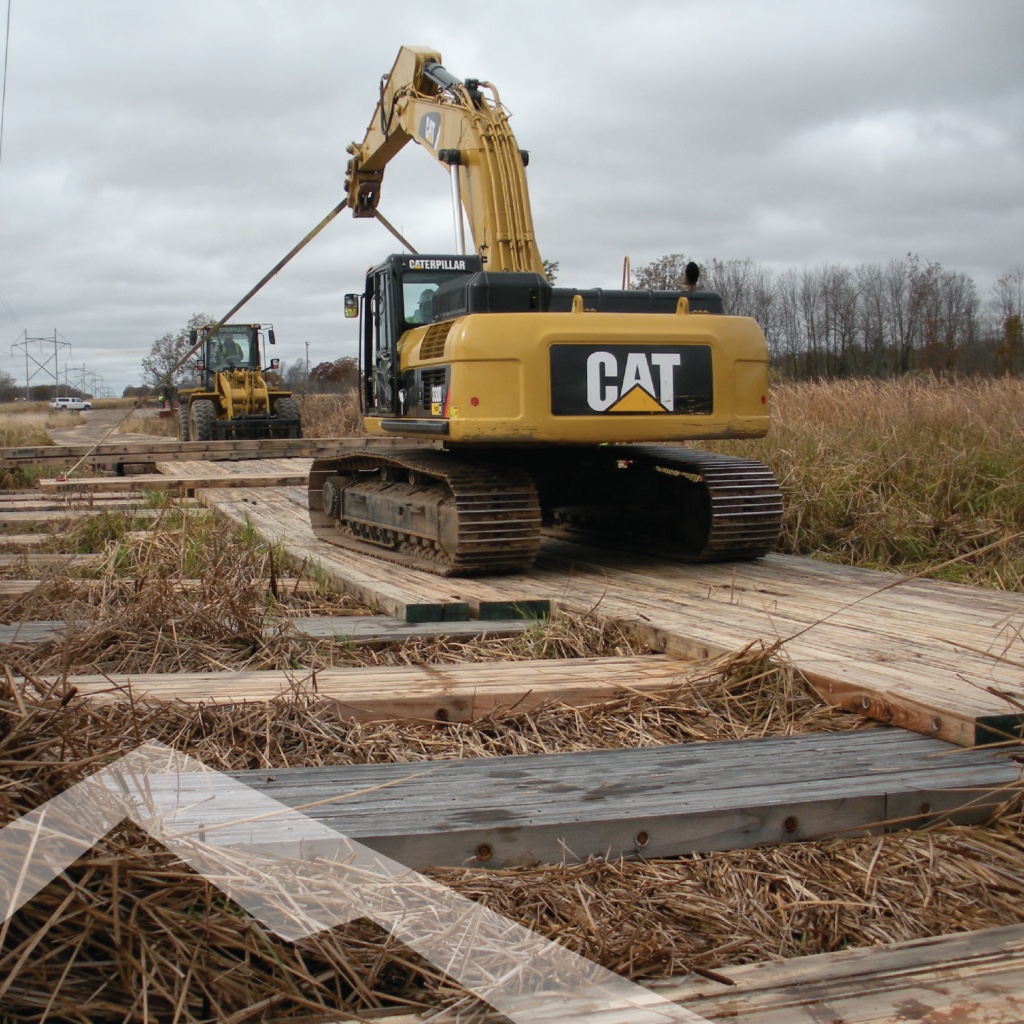
2. Protecting the Ground and Sensitive Soils.
Access mats can leave lands virtually untouched when your job is done and they are removed. They minimize soil compaction by distributing the weight of equipment and vehicles across the mats and reduce ground contamination by acting as a barrier between your equipment and the ground. This reduces the risk of soil contamination from oil or other chemical spills. Access mats also help to protect sensitive soils such as peat, bog or muskeg. By reducing ground disturbance, matting acts as a buffer to stabilize soils near water bodies and sloped terrains.
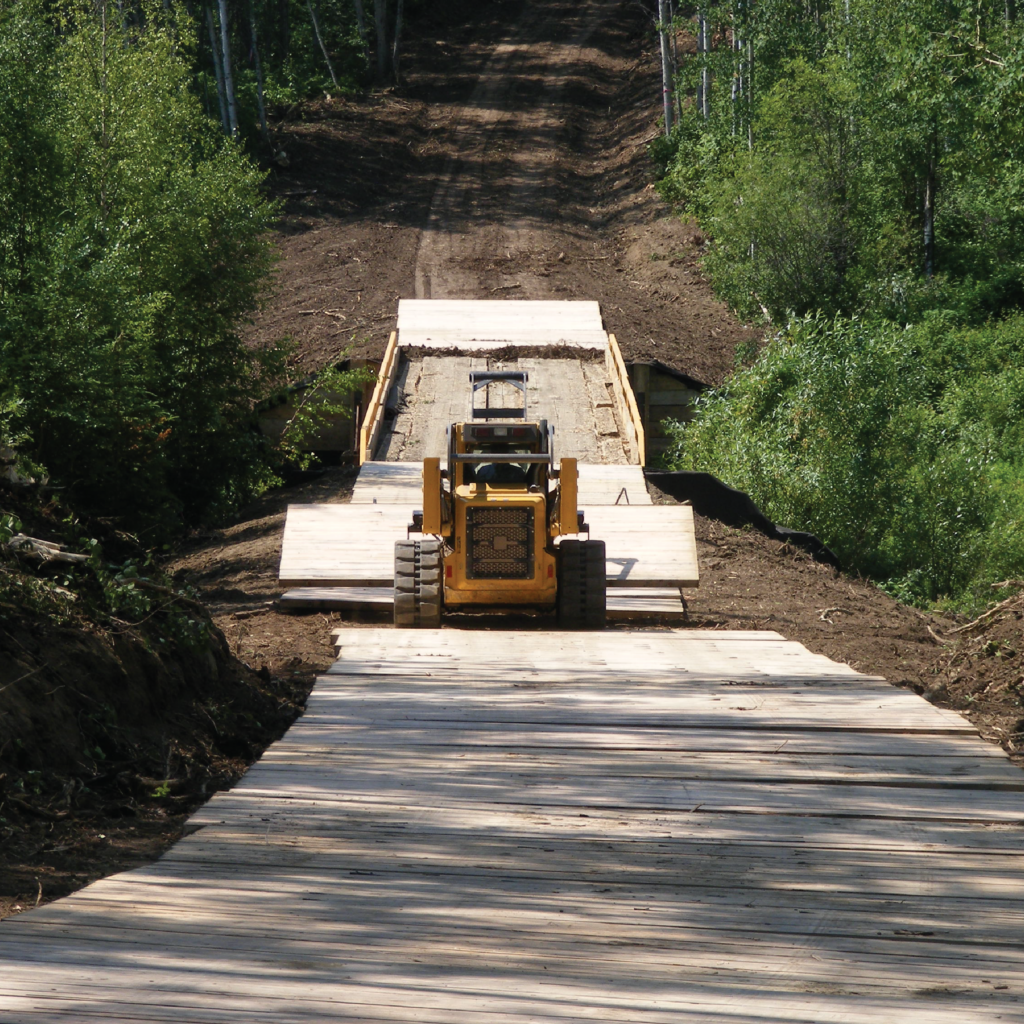
3. Creating Safe Access.
Access matting plays a crucial role in enhancing safety on your work sites. It provides a solid, even surface over muddy, rocky, uneven, or soft soils that reduces the risk of slippage, trips and falls for workers on foot. For vehicles, it provides stability that reduces the chances of machinery destabilizing or tipping. Matting ensures safer, more reliable pathways in remote territories and high-traffic areas where workers, equipment, or vehicles traverse. In emergencies requiring rapid on-site response, it supports safe and quick passage.
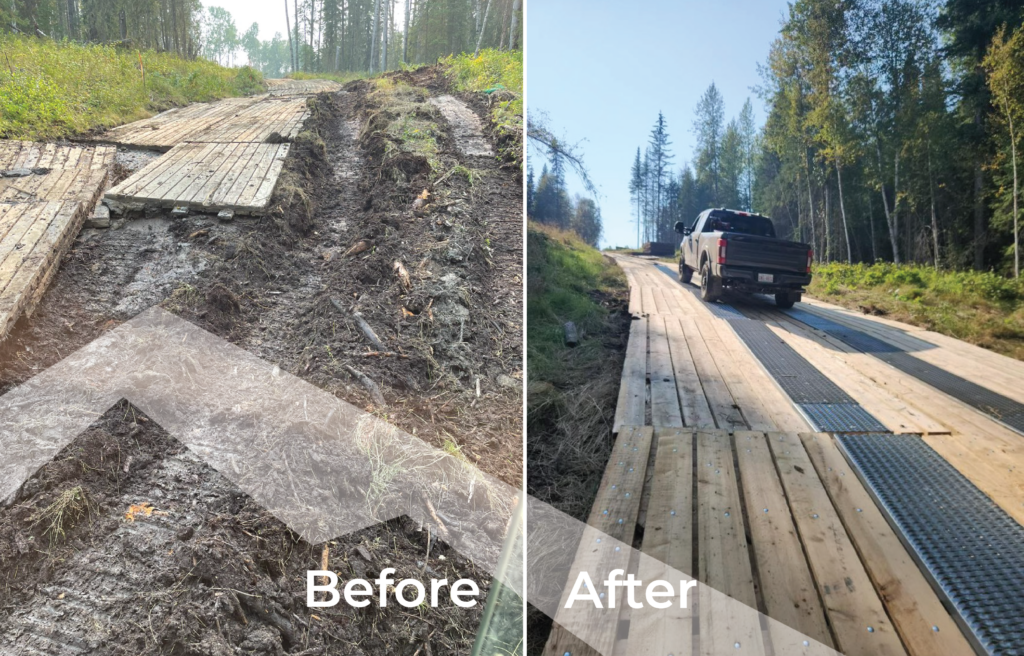
4. Improving Traction.
Traditional access mats are designed to provide traction using wood surfaces that reduce slippage, a large surface area that distributes the weight evenly and prevents sinkage, and a clean surface above the ground, preventing tire spinning in loose soil, sand, or mud. However, in some circumstances, such as steep slopes or wet and icy weather, traditional access mats may not provide enough traction to combat the conditions. Understanding these challenges, Paradox builds traction control access mats with steel gratings that elevate traction and user safety. They are custom-built to meet each client’s specific equipment type and use case.
In many industries, access matting supports safety protocols and risk management strategies by mitigating hazards associated with ground instability, unpredictable weather, and heavy equipment movement. Access mats support the weight of heavy haul vehicles and other large machinery, preventing ruts, sinks, and damage to the underlying surface. This makes work sites significantly safer for personnel and machinery. Selecting the right type of mat based on load capacity, terrain, and project requirements ensures optimal performance and cost-efficiency.
With two decades of experience and expertise in the matting industry, Paradox Access supports the diverse needs of its access matting clients. Contact one of their experts today at 1.877.MUD.UGLY or [email protected]. Learn more about their access mats here.

Share This:






















INSIGHT: Canada’s Natural Resource Sector is at the Heart of the Government’s ‘Export & Diversification’ Plan