


 CDN NEWS |
  US NEWS







Pipelines play a critical role in the movement of Oil and Natural Gas, Natural Gas Liquids, CO2 and refined products in Canada. As background, there are more than 840,000 kilometres (km) of transmission, gathering and distribution pipelines in Canada stringently regulated by the Canada Energy Regulator (CER, formerly the National Energy Board). The CER regulates pipelines throughout their life cycle – from pipeline design and application, construction, and operation through to abandonment. This robust system of accountability protects Canada’s rich natural environment and supports a resilient and sustainable energy sector.
With enhancements in regulatory oversight, as well as pushback against the development of new pipeline capacity, pipeline owner operators are looking for ways to extend the service life of their existing assets, without compromising the operational safety of their systems. As such, a key tool in the extension of pipeline life expectancy is the utilization of detailed FEA.
FEA models are utilized as a tool for current insight and future prediction and are created from a combination of data retrieved from as-built alignment sheets, inline inspection (ILI) tools, and real-time operational parameters such as pressure and temperature. This digitization of an asset using FEA is leveraged to assess the current status of the pipeline and predict remaining life expectancy to anticipate potential line failures. Stress Engineering Services is a leading provider of FEA services to industries worldwide, specifically creating FEA models from existing asset data to empower the pipeline owner operators with information regarding remaining life expectancy as well as potential mitigations to extend the service life of their pipelines, or recommendations on pipeline replacement or decommissioning.
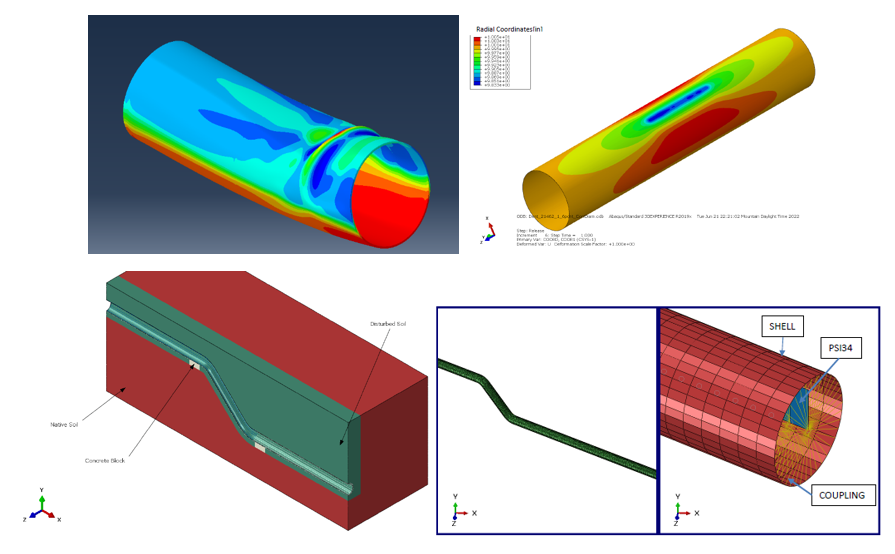
Our reputation is accredited to the extensive industry experience of our engineers and their ability to expertly apply this sophisticated analysis tool to achieve reliable and practical solutions.
Through FEA, we provide solid mechanics evaluations of stress, strain, and displacement demands and compare them to estimates on capacity. These evaluations involve strength and fatigue, static and dynamic, fluid dynamics, and heat transfer assessments. While we utilize state-of-the-art software and programs to produce advanced modeling and simulations for our analysis projects, it is our renowned reputation for technical excellence, passion to serve, and problem-solving expertise throughout the industry that our client’s value most.
Should you have more questions regarding FEA and our modeling and analysis capabilities, please reach out to either Bobby Virdi, Kenny Farrow or Tom Raptis at [email protected], [email protected] or [email protected].
Share This:






















INSIGHT: The Northern Shield Energy Corridor Provides Energy Security for All Canadians – Yogi Schulz