


 CDN NEWS |
  US NEWS








Each week Josef Schachter gives you his insights into global events, price forecasts and the fundamentals of the energy sector. Josef offers a twice monthly Black Gold newsletter covering the general energy market and 33 energy, energy service and pipeline & infrastructure companies with regular updates. We also hold quarterly webinars and provide Action BUY and SELL Alerts for paid subscribers. Learn more.
Global Economic, Political & Military Update:
Investment bulls are hoping that the Federal Reserve will make a pivot comment today when the Fed releases their interest rate decision. The bulls will be listening for ‘pivot news’ when Chairman Powell holds his regular press conference at 2:30PM ET. The predicted 75 BP increase (the fourth 75 BP rise) to 3.75-4.00% (the highest level in 15 years) did occur with a unanimous vote. The Fed remains concerned about intransigent inflation and will continue their tightening process into 2023. Key words in the Fed message was that the pace of additional interest rate rises will be sufficiently restrictive for some time to get inflation down to the desired 2% over time. The market liked this wiggle room statement that maybe hikes could slow or be smaller rate rises in the future. However, we don’t think this will change Fed action in the near term as inflation is proving hard to control. We think the Fed Funds rate needs to get over 5% before inflation will peak and roll over. A slowing in the pace of rate rises is not a reversal of policy and rate easing, but is still in a tightening posture. In the Q&A he mentioned that it was too early to talk about pausing interest rate increases. Our expectation for the December 14th Fed meeting and press conference is that they increase the Fed funds rate by 50 BP.
The Feds key indicator, the employment cost indicator, rose 5% in Q3/22, a level double their desired 2% rate. The Bank of England is expected to follow the US with a 75 BP increase later this week. The key for Central Bankers is the ongoing food and shelter inflation which is not peaking. In addition unions are getting more vociferous in demanding wage increases above inflation. One example of the problem is that the Eurozone CPI rose 10.7% in October.
The proposed deal with rail unions that President Biden took victory laps on now appears to be breaking down as two unions have not ratified the proposed deal. In late November they could strike. President Biden needed this voting timeline to avoid a strike before next Tuesday.
US interest rates have an additional problem on top of QT and the Fed selling US$95B/month. China and Japan have been aggressive sellers of their holdings, so the top three holders of US Treasuries are now sellers and interest rates will need to rise to find potential buyers who will want yields that offset inflationary expectations.
On the war front in Europe, Russia seems to be moving to destroy most of the energy and water infrastructure in Ukraine before the onset of winter to make things even worse for the civilian population. Some European countries are getting tired of the war and providing support as street protests worsen. France and Germany face the most internal pressure to end their involvement. Japan has not agreed to US sanctions against Russian natural gas and announced that they will continue with the Russian Sakhalin-1 natural gas project.
Bullish pressure for crude prices remains the proposed 2.0Mb/d cutback by OPEC starting this month, low US SPR storage levels and the onset of winter.
Bearish pressure for crude comes from the ongoing lockdowns in China and low imports of crude. China has locked down iPhone City (Foxconn Technologies plants in Zhengzhou) in order to get people off the streets. Workers can’t get in and components have been cut off. Disney’s Shanghai facility has been locked down and people stuck there can only leave after a negative Covid virus test.
EIA Weekly Oil Data: The EIA data of Wednesday November 2nd was mixed for oil prices. US Commercial Crude Stocks fell 3.1Mb to 436.8Mb but remained above last year’s level of 434.1Mb. The US Strategic Petroleum Reserve (SPR) had a low release of 1.9Mb last week. Motor Gasoline Inventories fell 1.3Mb while Distillate Fuel Oil Inventories rose 0.4Mb. Refinery Utilization rose 0.7% to 90.6% utilization. US Crude Production fell 100Kb/d to 11.9Mb/d. Weather and facility issues were the likely causes.
Total Demand last week fell by 106Kb/d to 20.48Mb/d as demand for Other oils fell by 257Kb/d. Gasoline demand fell by 271Kb/d to 8.66Mb/d while Jet Fuel Consumption fell 373Kb/d to 1.31Mb/d. Cushing inventories rose 1.3Mb to 28.2Mb on the week.
There clearly is US domestic energy demand destruction. US Motor Gasoline demand was down 845 Kb/d or down 9% from 9.50Mb/d last year. Jet Fuel consumption fell 374 Kb/d or down 22% from 1.68Mb/d last year.
EIA Weekly Natural Gas Data: US Natural gas storage is being built up for winter 2022-2023 with withdrawals starting now. The US data released last Thursday showed a build for the week ending October 21st of 52 Bcf. Storage is now at 3.39 Tcf. The biggest increase was in the Midwest (20 Bcf). Cold weather helped as demand rose. The five-year average for last week was an injection of 62 Bcf while in 2021 it was an injection of 63 Bcf. US Storage is now 5.5%, below the five-year average of 3.59 Tcf. NYMEX is trading at US$6.16/mcf today while AECO is at $3.81/mcf.
ON DEMAND CATCH THE ENERGY CONFERENCE: We had an amazing and record turnout at the Schachter Catch the Energy conference on October 22nd.

We started the day with my plenary speech which included a general market overview and its implications for the energy sector and why I see that a new energy super cycle started in March 2020. Afterwards we had 34 companies presenting their stories. The exhibitor rooms were very popular as individual investors had a chance to speak to each company that presented. Many rooms reached capacity quickly. The booth areas were very well attended and extensive discussions with management occurred. Investors were very pleased to have in person access to management after the two year pandemic hiatus. The wonderful food prepared by Great Events Catering throughout the day received a WOW from attendees. Thank you to our Sponsors for their support to make this a very high quality and successful event.



Overall we are very happy with how the day turned out (despite having our first Calgary winter snow storm) and we hope you were too. Save the date for next year’s conference on October 14, 2023 at Mount Royal University (MRU).
For those that could not attend we video recorded my plenary session and the 10 companies in the two large Ross Glen Hall rooms. Access to this on demand service is now available.

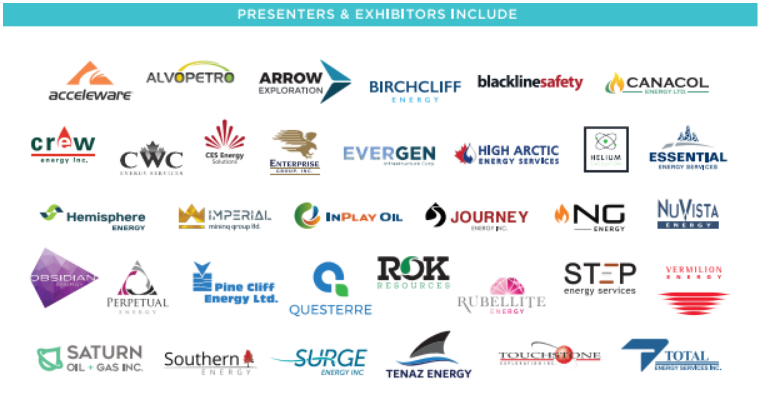
Thank you to our Sponsors and Presenters!

Baker Hughes Rig Data: In the data for the week ending October 28th the US rig count fell three rigs to 768 rigs (up two rigs last week). Of the total rigs working last week, 610 were drilling for oil and the rest were focused on natural gas activity. The overall US rig count is up 41% from 544 rigs working a year ago. The US oil rig count is up 37% from 444 rigs last year at this time. The natural gas rig count is up 56% from last year’s 100 rigs, now at 156 rigs. The industry this year has been responding to higher US and international natural gas prices with materially more activity than last year. This should lift overall US production in coming quarters.
In Canada, there was an increase of two rigs (last week an increase of two rigs) to 212 rigs. Canadian activity is up 28% from 166 rigs last year. Peak potential for staffed rigs is likely around 260 – 280 this winter. Activity for oil grew 48% to 145 rigs up from 98 last year and natural gas rigs fell slightly to 67 rigs from 68 a year ago. This decline in rig activity for natural gas likely relates to the recently lower natural gas prices in Alberta. With winter now here we expect activity to pick up as prices strengthen over $5/mcf and as large winter drawdowns occur.
CONCLUSION:
As a global recession unfolds, crude prices plunge sharply. In 2008-2009 during the financial crisis, demand fell by over 5Mb/d from over 88.5Mb/d to 83Mb/d. The price of crude fell from US$147.27/b to US$33.55/b in eight months. During Iraq’s invasion of Kuwait, prices rocketed from US$16.16/b in July 1990 to a high of US$41.15/b in October and then plunged in four months to US$17.45/b as recessionary demand destruction occurred. WTI today is priced at US$89.01/b. Watch for a breach of US$76.25/b (the late September low) for the next onslaught to commence.
The final overall stock market corrective low (the ‘pause that refreshes’) for this new nascent energy super cycle, should occur during Q4/22 as WTI prices breach US$70/b. This upcoming climactic low should provide fabulous buying opportunities at great prices (Table Pounding BUY levels) for energy related stocks.
Energy Stock Market: Over the last few months the Dow Jones Industrials Index has fallen >5,600 points to a new intraday low of 28,661. The Dow is now following a normal bear market bounce and is nearly exhausted and should back down shortly. Once the Dow reverses, we should start the next painful phase of the overall decline from the start of the year down to the 24,000 – 25,000 area. This bottom is likely to occur during the tax loss selling season into mid-December.
The S&P/TSX Energy Index today is at 264. Last month’s low of 200.97 is now the support level to watch. A bust of this level should drive the Index below 200 and get us into the climactic bottom liquidation area of 160-180 that will set up a fabulous buying opportunity.
Once we see the market showing climatic bottom signals we intend to send out Action Alert BUY ideas to subscribers. Ideas are likely during tax loss selling season (late-November to mid-December). Become a subscriber to get these timely BUY Alerts. Go to https://bit.ly/2FRrp6k
Our Q3/22 90-minute webinar takes place on Thursday November 24th at 7PM MT. We intend to cover the Q3/22 reports of the companies we cover with specific detail on those that beat expectations and those that underperformed. There will be two Q&A sessions. If stocks retreat materially by then we will cover the additions to the Action Alert BUY lists as well. One needs to be a subscriber to access the webinar live or access the archive thereafter.
Please feel free to forward our weekly ‘Eye on Energy’ to friends and colleagues. We always welcome new subscribers to our complimentary energy overview newsletter.
Share This:




















SETTING OFF ALARM BELLS: Carney’s EU Deal Threatens Alberta, Energy, & Sovereignty – 170,000 Reasons to Reject Canada’s EU “Associate Membership” – The Nemeth Report