


 CDN NEWS |
  US NEWS







Global benchmark Brent fell below $87 a barrel after retreating by almost 9% last week. The country saw its first Covid-related death in almost six months on Saturday and another two were reported on Sunday, sparking fears of a further wave of restrictions in the world’s biggest oil importer just as a city of 11 million near the capital asked residents to stay home amid an outbreak.
Goldman Sachs Group Inc. lowered its fourth-quarter forecast for Brent crude by $10 a barrel to $100, according to a note, with the reduction driven in part by the possibility of further anti-virus measures in China as cases climb.
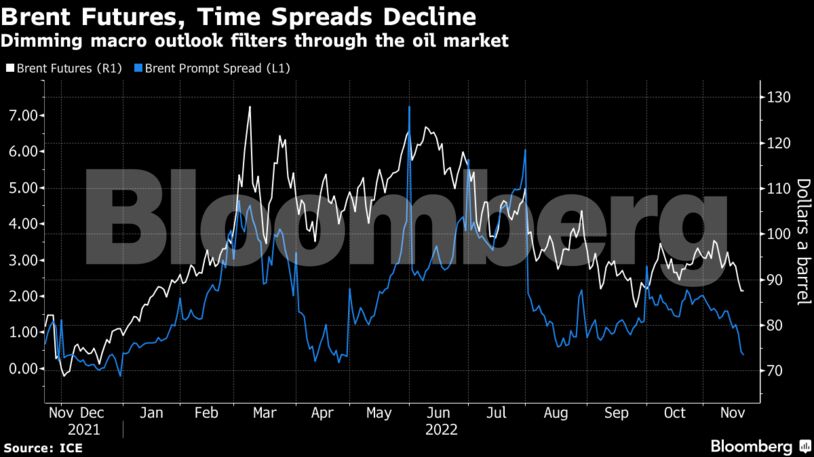
Crude has erased the gains made at the start of the quarter, when the Organization of Petroleum Exporting Countries and allies including Russia agreed to reduce production by 2 million barrels a day. A looming European Union ban on Russian seaborne flows and Group of Seven price-cap plan are clouding the outlook, with officials possibly set to announce the cap’s level on Wednesday as they step up their response to Moscow’s invasion of Ukraine.
“Potentially new mobility restrictions in China along with high Russian crude exports” are pushing prices lower, said Giovanni Staunovo, commodity analyst at UBS Group AG. The drop has been balanced by OPEC production cuts and solid demand in the US ahead of the Thanksgiving holiday, he said.



Prices:
Brent for January settlement eased 0.8% to $86.96 a barrel on the ICE Futures Europe exchange at 9:18 a.m. in London.
Prices are lower for a fourth straight session, on course for the longest run of daily losses since August 2021.
WTI for December delivery, which expires Monday, declined 0.5% to $79.71 a barrel on the New York Mercantile Exchange.
The more-active January contract was 0.6% lower.
“The market is right to be anxious about forward fundamentals due to significant Covid cases in China and a lack of clarity on the implementation” of the price cap, Goldman analysts including Callum Bruce said. Still, for longer-term investors, the drop provides an opportunity to add length, they said.
Commodity investors also are concerned that further aggressive monetary tightening will lead to a global economic slowdown, hurting energy consumption. Traders this week will look to minutes of the most recent Federal Reserve policy meeting for more clues on the course of rate hikes.
Share This:






















REMAKING THE LANDSCAPE FOR INVESTORS – The First-Ever Canada Investment Summit – Maureen McCall