


 CDN NEWS |
  US NEWS







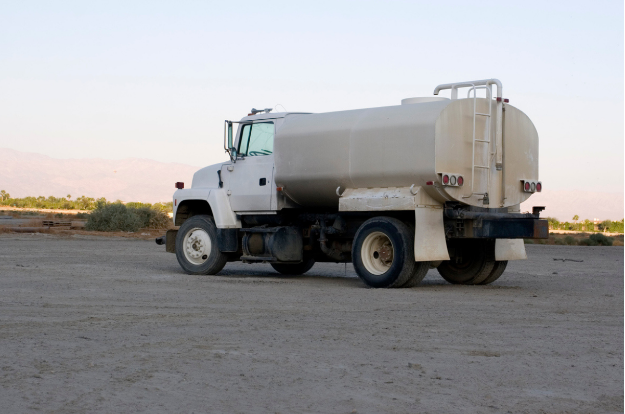
Did you miss the recent updates to Alberta Energy Regulator (AER) Directive 058?
Under the authority of the AER and Alberta Environment and Parks (AEP), a fresh update to Directive 058 quietly came into effect on March 28, 2022.
What’s changed in Directive 058?
Directive 058 identifies requirements for the safe handling, treatment, reuse, and disposal of the upstream petroleum industry’s oilfield waste. It also prescribes waste management responsibilities, activities, methods, and documentation.
In addition to removing sections such as ID 99-04: Deposition of Oilfield Waste into Landfills and IL 98-02: Suspension, Abandonment, Decontamination, and Surface Land Reclamation of Upstream Oil and Gas Facilities, Directive 058 introduces a new mandate for duty holders that choose to continue use of “disposal by pipeline” and “spreading oily by-product on roads” to apply for an alternative waste management activity.
While these updates are important, the amendment you’ll want to pay attention to is around the storage of water for reuse.
Why track stored water for reuse in oil and gas?
The AER strongly recommends reusing as much produced water and water-based flowback as possible; not only is the environmentally responsible thing to do but it’s also the economically sound option.
It’s no secret that produced water is the top commodity by volume most generators produce. Water-based flowback is also a large line item in many companies’ waste disposal budget.
With the new Directive 058 changes requiring applying to store water for reuse in hydraulic fracking along with the existing requirement to recover any hydrocarbon content, it has become significantly more important to accurately track how much volume is going for storage, disposal, or any other use.
This is why it’s important to properly manifest and track the movement of these water products. This is done most effectively using standard AER waste manifests. Though typically used for dangerous oil waste (DOW) loads, AER manifests can be used to track non-DOW loads just as effectively.
How do you make water tracking accurate and efficient?
While volumes are reported to the AER, there is often not much internal tracking of details like where water came from, where it’s going, who is taking it, and what it will be used for (if anything) in the future.
Fortunately, there are industry-specific solutions to support accurate tracking.
Using PAYLOAD digital manifest saves time, ensures compliance
While many companies do not create manifests for produced water and flowback (unless impacted by hydrocarbons), digital manifests can be used to enable detailed tracking of your reusable water (and all other waste streams) so you know exactly where everything is and how it will be used with just a few clicks.
PAYLOAD Manifest is an application that helps upstream producers remain compliant in the transportation of waste and recyclables from origin through to destination.
With PAYLOAD Manifest you can:
- Enable oilfield waste generators to create and distribute documents in a process that is completely digital.
- Allow truck drivers to view and display documents on-demand, offline or online.
- Tie in receivers (internal or external) to reconcile loads entirely within the app.
- Have a digital repository for all manifests.
- Act as a source of truth for manifest and tracking data.
PAYLOAD has a proven track record of equipping upstream producers to be compliant and time efficient. No more rifling through paper or sifting through excel spreadsheets, all your necessary data is in one accessible place with clear, concise reporting.
See how we can help your organization master AER compliance with less effort with digital manifesting. Learn more at payload.com.
Share This:





















INSIGHT: Canada’s Economy Falling Behind Despite Misleading Headlines – Fraser Insitute