


 CDN NEWS |
  US NEWS







By David Yager
April 25, 2022
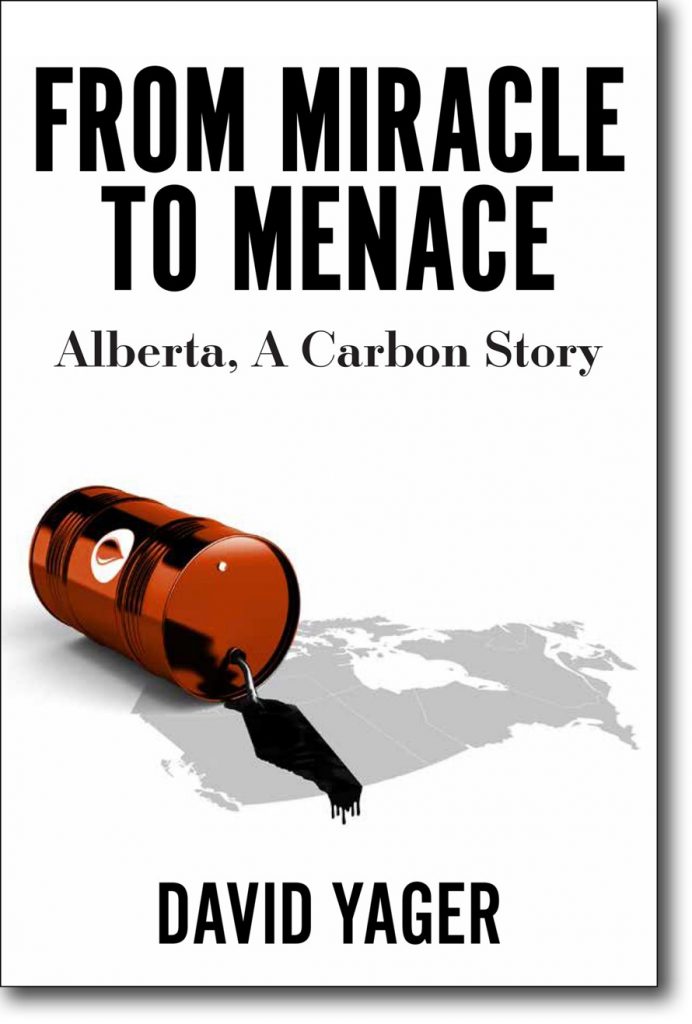
The opening sentence from my book reads, “That is what is supposed to happen when the world decarbonizes by switching away from fossil fuels. Massive economic dislocation and disruption. Did someone forget to tell you that?”
Three years later the energy transition is not working out as advertised.
We must.
Climate change is so serious that if we don’t replace fossil fuels as soon as possible, the future costs to all of humanity will far exceed the expense of decarbonizing today.
With costs for wind and solar falling and batteries advancing, all that was needed was commitment, enlightened government policy and funding, and silencing big oil’s self-serving lobbing.
Rapid energy transition would create investment, jobs, wealth and opportunity.
We can’t.
There remains stubborn and continuous skepticism, not about climate science but energy science.
That replacing 85% of the world’s primary energy was daunting if not impossible using known alternatives. Because today you can’t make jet fuel, plastic or fertilizer from solar electricity.
There aren’t enough specialty minerals for electrification on this scale. The fossil fuel carbon footprint required to create renewable energy sources is significant.
But either nobody wanted to hear any of this, or those who should weren’t listening.
Here’s the four major non-oil factors that led to the current situation.
Fear
Fear sells. No matter how much better things get, our default psychological fear mechanism convinces many that it can’t last.
It started with Malthus in the late 1700s. As the coal-fired industrial revolution modernized England, the population grew, more children survived childbirth, and people lived longer.
Malthus concluded that the population was growing faster than the world’s ability to feed itself, and mass starvation was inevitable.
That was 320 years ago.
Europe and North America spent the next one and one-half centuries expanding everywhere, fighting two big wars, and surviving a major economic depression.
What followed WWII was an unprecedented period of world peace and prosperity.
In the 1960s fear returned. A seminal event was Silent Spring, a 1962 book about the perils of pesticides by Rachel Carson. Due to public concerns, within in a few years DDT was banned. In 1948 the inventor had won a Nobel Prize in Physiology or Medicine because DDT had clobbered malaria mosquitoes and saved millions of lives.
The next big fear exploiter was the 1968 epic book The Population Bomb by Paul Ehrlich. Convinced that the continually growing population could no longer feed itself, Ehrlich proposed the US government put sterility chemicals into America’s drinking water to lower the birth rate. Ehrlich became famous by repeatedly telling everyone they were doomed.
By the 1970s the west’s wise and wealthy were convinced that the greatest enemy of people was people, and that our relentless quest to stay alive, propagate and improve our lifestyles would destroy ourselves and/or the global ecosystem.
In 1972 the Club of Rome published a book titled Limits to Growth. Computers were used to calculate when the world would run out of petroleum, copper, iron ore and all the other things essential to make continued growth in population and prosperity possible.
It never happened. The world’s population was 3.9 billion. It is 7.9 billion today.
That same year, the United Nations held its first international environment conference in Stockholm.
Years after the UN was founded during the Second World War, the organization was suffering from an identity crisis due to an unprecedented outbreak of world peace.
So the UN had to find other ways to save the world.
At Stockholm environmental non-government organizations (ENGOs) were for the first time invited and recognized as legitimate and credible stakeholders and policy influencers.
This was the beginning of public opinion and policy being influenced not only by elected governments and sovereign nations, but by unelected ENGOs with specific agendas.
Over the next three decades ENGOs migrated to global warming and climate change.
The Sierra Club was founded in the late 1800s to preserve US wilderness areas for mountain climbing. Greenpeace was started to stop nuclear testing and save the whales. The Pembina Institute emerged from Drayton Valley in 1982 to control sour gas development after the huge Lodgepole blowout. David Suzuki was still a professor of genetics before he became famous narrating a TV show titled The Nature of Things.
Today they’re all climate all the time.
Because that’s where the money and influence is.
After much study in the mid-1980s, in 1988 the UN created the Intergovernmental Panel on Climate Change – IPCC – to add “science” to the global warming issue.
The IPCC would undertake to accurately predict the weather. Not tomorrow or next week. But 100 years into the future.
The fundamental premise was that carbon dioxide acted like a thermostat. The higher the concentration in the atmosphere, the higher the temperature. Most CO2 came from fossil fuel emissions which were growing with the population.
The IPCC has always conceded that understanding what causes extreme weather events is very complex. Clouds, solar radiation, and the behavior of oceans make accurate models difficult.
But environmentalists and politicians grabbed the message that was the simplest to convey and understand. Consumer and industrial emissions were the main driver of climate change.
And that was really bad.
In 1988 NASA’s James Hansen assured a US Senate Committee in New York City that GHG emissions were causing global warming. The results would be catastrophic. Hansen received international media coverage which released yet another fear from our subconscious minds – the weather.
The 1992 environment conference in Rio de Janeiro was coined the “Earth Summit.” Since 1995 the UN has held 26 climate “Conference of the Parties” around the world. Every gathering ended with attendees agreeing that climate change is terrible, and emissions must be reduced.
But emissions keep rising. Why? Because it so much easier to commit than deliver.
In 2005 the US Environmental Protection Agency labelled carbon dioxide a pollutant.
Al Gore’s 2006 movie An Inconvenient Truth won both an Oscar and a Nobel Peace Prize. This took global warming mainstream into living rooms and classrooms. It was surely the most significant event that shaped the minds of a generation about the perils of climate change.
A great book about fear and human behavior is the The Progress Paradox by Gregg Easterbrook.
Published in 2003, Easterbrook’s point was that even though life was clearly getting so much better for so many based on empirical data, why were we convinced everything was getting worse?
He concluded that that western society had been so wealthy for so long that material needs had been replaced by spiritual needs.
The big issue was no longer how do I survive, but how do I feel?
Emotion was replacing facts in the public dialogue. This would ultimately shape government policy.
For energy, that was a huge problem.
The Internet
One of the least recognized impacts of the internet is how it has caused short-term thinking and emotions to supersede long-term implications.
It turned the world from “we” to “me.”
This was explained to your writer in 2013 by a pollster at the PSAC annual dinner.



Oil and pipelines were under siege and the industry was trying to figure out how people could demand more of their product and hate it at the same time.
Anybody trained in marketing or economics would conclude that the key drivers for the future of fossil fuels were positive.
And they still are. But this was about feelings, not fuel. This was difficult for engineers, geologists and financiers to comprehend.
The speaker held up his handphone and said it’s not that young people don’t read. They read more than ever. The difference was that thanks to the internet, the reader now controlled the content.
The internet and the handphone allowed the viewer to only see what they wanted. People could now spend their days viewing nothing but celebrity gossip, NBA scores and the most trivial details of the lives of their friends and co-workers.
The mainstream media used to tell us everything. Not knowing who was reading or watching, the daily newspaper and 6 o’clock TV news disseminated a broad cross-section of local, national and world information.
A common complaint is that the traditional media doesn’t tell the full story. But that media no longer exists. As the internet gobbled up advertising dollars, the conventional media’s reporting and research capabilities have been decimated.
Remember the classified ads? Huge money maker. Now this is completely digital.
As digital media platform algorithms advanced, they figured out how to give viewers more of what they liked to see. Or wanted to buy. The hunt for eyeballs and “click bait” was refined using software.
Then came the weather, one of mankind’s core preoccupations. Terrible weather is frightening. It could destroy your home, or kill you.
The internet streamed every forest fire, flood, tornado, flood or cyclone to the rest of the world in seconds.
“The earth is on fire!” Hard to argue with that. You just saw it with your own eyes.
Climate alarmists used the internet to push even more disturbing but eyeball-grabbing content. Almost every bad weather event was linked to man-made climate change. This could only get worse without immediate action.
You were next. It was only a matter of time.
Today’s climate emergency could not exist without the internet.
Tribal Politics
Historically, political parties offered platforms with something for everybody. They sought the broadest possible appeal. Just like the pre-internet media.
But thanks to the internet, political parties learned how to find and recruit supporters using social media and other data hunting tools like voter lists, emails, and demographics. This made it easier for political strategists to identify single issues that would resonate with the largest numbers of voters.
As the climate emergency crescendo grew louder, political parties targeted voters in large urban centres who were worried about climate change.
This was assisted by new digital information streams more focused on lifestyle and entertainment than economics, politics, global events, physics or science.
How else could Kim Kardashian have become famous?
Successful politics is finding a parade and getting in front of it. Climate change was a clear path to lots of votes by expressing deep concern and pitching policies to solve the problem.
Today 65% of Canadians live in urban centers of 100,000 or more in Atlantic Canada, Quebec, Ontario, the lower mainland of BC and Vancouver Island.
You can win a federal election on a pro-climate, anti-fossil fuel platform without electing a single MP from the WCSB. And rural votes, where all resources are extracted, today comprise only 18% of the population.
And because of the internet, campaigning politicians could put forth the most preposterous platforms and get votes.
Many campaigned on banning fossil fuels.
And they won!
That people would no longer have handphones, international air flights or fruit and vegetables in the winter was never mentioned.
Because in today’s world, too many urban voters have no idea where anything comes from. This applies to fuel, food, steel, plastic, drugs, electricity or any of the necessities of life.
Voters born after the major recession in the late 1970s and early 1980s have never run out of anything. It’s just there. Always has been, always will be.
So they worry about their worries, not their needs.
What they know is that they are very troubled by bad news, bad weather and climate change. And if they vote properly, somebody will fix it and then they will sleep better at night.
Because when people hear what they believe, they don’t always question if it is true.
Macroeconomics
The ten years leading up to the pandemic lockdown will not be duplicated anytime soon, if ever.
This is when the energy transition was conceived, and the public was persuaded it was achievable.
Since the world financial crisis of 2008/09, the true performance of the economy has been disguised by continue government borrowing – quantitative easing – and very low interest and inflation rates.
This was given a boost by the oil price collapse of 2015 which gave the world the lowest inflation-corrected oil in 20 years. The growth in renewables during this period was heavily supported by governments.
Energy consultancy Goehring & Rozencwajg released its 2021 Q4 Natural Resource Commentary the day before Russia invaded Ukraine on February 24.
Titled “The Distortions of Cheap Energy,” it focused on how energy policy decisions made in the pre-COVID era were becoming impossible to replicate under current market conditions.
The authors wrote, “The past decade has seen a material acceleration in renewable adoption. At the same time, from 2010 to 2020, every form of primary energy (oil, natural gas, coal, uranium) fell by nearly 90% from peak to trough. We have gone back for 150 years and cannot find a similar ten-year drop. According to Sydney Homer, the 2010s also witnessed the lowest interest rates in at least 4,000 years. The 2010s were characterized by cheap, abundant energy and cheap, abundant capital.”
Which is great. The costs of renewables plunged. The economy grew. Lots was written about how renewables were now cheaper than fossil fuels. Glaring reliability challenges were never mentioned.
But extremely attractive input costs were overlooked. It’s called the energy cost of energy.
“Amazingly, no one has connected declining energy costs and cheap capital with the proliferation over the last decade of energy-hungry, capital-intensive projects such as wind, solar, and lithium-ion battery manufacturing. We think the two are fundamentally linked…Between 2010 and 2020, energy prices fell from approximately $14 per GJ ($80 per oil-equivalent barrel) to $2.80 per GJ ($20 per oil-equivalent barrel).”
For solar, this meant that 60-75% of the cost saving attributed to the so-called learning curve was caused by cheap input energy, cheap capital and a one-time reduction in polysilicon markets. Wind power fell by 50%-70% due to the cost of energy and capital.
Goehring & Rozencwajg warn about rising costs for renewables. “If our models are correct and both energy prices and capital costs rise going forward, the impact on renewable energy will be dramatic. We calculate that solar costs could easily rise from 7 cents to 20 cents per kwh while wind costs could rise from 4.5 cents to 6.0 cents per kwh. In both cases, nearly a decade of cost savings would be wiped out.”
The world became disconnected from where energy comes from and how much we consume. After oil went to zero two years ago because of COVID lockdowns, even bolder predictions emerged about the end of oil. It would never recover. Sunset industry. Stranded assets.
For years, the oil industry and energy experts have tried to explain that fossil fuels and wind and solar electricity were not interchangeable. That replacing 85% of the world’s primary energy from coal, oil and natural gas – plus the myriad of non-energy products – was impossible without extreme economic and lifestyle disruption.
But life was good, and nobody was listening. At least not enough people to change the outcome of the next election.
This is the environment in which the so-called global energy transition was conceived. A dream world that could quickly and seamlessly replace fossil fuels with renewable energy and protect the future from catastrophic climate change.
As technology advances and inflation and interest rates are brought under control, there is no question that cleaner energy resources will be developed and adopted. That’s great. We all need a better plan than burning more coal. Or buying fossil fuels from Russia. It’s the right thing to do.
And it is regrettable that things had to turn out so awful for so many to finally change the channel and return to fact-based energy transition policies.
But what is also regrettable is that more pain is unavoidable before we tackle the energy transition using science, physics and economics, not fear and emotion.
David Yager is an oil service executive, oil and gas writer, energy policy analyst, and author of From Miracle to Menace – Alberta, A Carbon Story. Find the book to www.miracletomenace.ca.
Share This:





















