


 CDN NEWS |
  US NEWS







By David Yager
March 28, 2022
A month after the Russian invasion of Ukraine, Prime Minister Trudeau visited Europe to attend meetings with NATO, EU, IEA and the G7 countries.
A key issue was western energy security and ending Europe’s dependence on Russian oil, gas and coal.
The conclusion was that the most effective non-military way to punish Russia is replacement supplies of fossil fuels from other countries to deprive Russia of the cash to finance its Ukraine incursion and other military ambitions.
Understanding what this audience wanted to hear, the federal government announced that Canada could increase production by 300,000 boe/d over the course of the year; 200,000 b/d of oil and 100,000 boe/d of gas.
It would be delivered through the US using existing infrastructure for reasons that need not be restated here.
Ottawa also assured this would not derail Canada’s existing emission reduction commitments and other climate policies, the most aggressive in the world among major oil and gas producers.
What should have been a wake-up call for the Trudeau administration was US President Joe Biden’s pledge to continuously expand US LNG exports to Europe for the rest of this decade to help replace Russian gas.
This came only weeks after the federal government put the last nail in coffin of the Energie Saguenay LNG export project in Quebec.
Ignoring previous climate pledges, Biden assured Europe that America’s booming LNG exports would continue to grow because this was strategic for the European economy and global security.
It was not intuitive for the Trudeau government – and its cadre of professional environment activists on the federal payroll – to reverse a decade of policies and activism to cap the growth of Canada’s fossil fuel industries just because of a war in Europe and a global energy crisis. Oil and gas emission targets for 2025 will still be announced this week.
Fortunately, being a member of NATO, G7 and the IEA has certain obligations.
But it won’t be the federal government that increases oil and gas production. It will be the industry the Liberals have vilified, capped and obstructed for nearly seven years.
This global energy and food crisis is far more serious than fulfilling past election commitments. Like many counties, Canada will be changing course on climate policy.
Ottawa just hasn’t figured it out yet.
**********
In the next few months, the world will be facing what many analysts believe will be the most significant shortfall of oil supply in contemporary history. Some believe it could be 3 million b/d. Inventories are at the lowest levels in years.
The main cap on oil and gas prices will be demand destruction, not increased supply. High energy prices are exacerbating the rising costs of inflation, interest rates, food and supply chain disruptions. If energy prices don’t go higher the only reason is because the economy is doing worse.
Printing more money to avoid a recession won’t work this time. Many governments are cutting fuel taxes and costs to try to make life more affordable, the exact opposite of pledges made in Glasgow last November.
The global energy shortage was caused by years of underinvestment due to low commodity prices; the political crusade to vilify fossil fuel investment to accelerate decarbonizing the global energy complex; the failure of low carbon energy sources to materially reduce or replace fossil fuel demand; an economy emerging from the pandemic lockdown; and the war between Ukraine and Russia, the world’s second largest oil producer.
This is rapidly morphing into a global food crisis that is already affecting billions through higher prices.
What makes this oil price spike and supply shortage unique is the muted response by producers.
Historically, as prices rise so have capital budgets and exploration and development programs.
But this time around it is different. Never in the history of oil have western producers had more cash and profits to reinvest with lower stated intentions of doing so.
There are several major factors today affect the behavior of western oil and gas companies. Canada has more barriers to production growth than any other major producer.
Standing in the way of global energy security are governments and institutions that have invented, administer and perpetuate obstacles to increased oil and gas production.
Be assured, all those in charge are well-paid, well-nourished and safe.
Following are the main changes in tones, politics, regulation and policy required to get all that producer cash back into the ground where it came from.
And in doing so begin the non-military path to punish Russia by cutting off funding for its dangerous political ambitions.
**********
1 – Big Green Takes The Year Off
The west’s professional environmental protection industry now finds itself on the wrong side of history. The same ordinary people Big Green is supposed to be protecting are suffering.
Fear sells. 21st century environmentalists are masters of capitalizing on human emotions to raise money and sway public opinion. Forest fires. Floods. Hurricanes. Tornadoes. So deadly. So awful.
The pitch is that your donation will help Big Green eliminate the fossil fuels that threaten the future of civilization.
Never mentioned is the reality that 80 per cent of the world’s primary energy comes from oil, coal or natural gas and life on earth as we know it impossible without them.
You’d think the emerging food crisis would be a wakeup call. But the climate crusaders’ war against fossil fuels has never mentioned food cost or supplies.
Squeezed disposable income due to the higher cost of everything will affect donations. Having burning buildings replace burning forests on the TV news literally changes the channel on the priorities of ordinary people.
Big Green should manage its reduced cash inflow by taking the rest the year off.
And donors should redirect their funds to Ukraine support group of their choice.
2 – BC and Quebec Finally Look Beyond Their Borders
The two provinces that have done to the most to ensure Canada’s landlocked oil and gas cannot reach world markets are British Columbia and Quebec.
Both have elected provincial governments that either campaigned or introduced policies that ensure that the WCSB’s hydrocarbons remain underground. On a planet that refuses to use less of either, this means that essential oil and gas supplies must come from the bad guys.
Like Russia.
BC has opposed or obstructed pipelines to the Pacific coast one way or another for over a decade. Premier Christie Clark was the first to put “conditions” on approving new oil pipelines. Premier John Horgan campaigned in 2017 to use “every available tool” to block the TMX expansion.
That province must now do more to help expedite the completion of TMX, Coastal GasLink and resolve the legal issues that have collapsed drilling in northeast BC since last summer.
As a large producer and exporter of hydroelectricity, Quebec has demonstrated world-leading virtue signaling on climate and its continued indifference to anything that takes place outside of its borders.
It started in 2016 with fierce opposition to Energy East by Montreal Mayor Denis Coderre who declared, “We are against it because it still represents significant environmental threats and too few economic benefits for greater Montreal.”
While current Premier Francois Legault was originally pragmatic about fossil fuels (he once ran a jet-fuel powered airline) and LNG exports, he changed his mind last year to secure more woke voters for 2022’s upcoming election.
Quebec’s contribution to the world oil and gas shortage in 2021 was to block the Energie Saguenay LNG project and ban the development of any oil and gas in the province.
Increasing oil and gas exports from Canada via tidewater is impossible without some material change in global outlook and responsibility by these two provinces.
Because it’s no longer just about you.



3 – The Federal Government Thinks Global, Not Political
There is no national government of a major, western oil and gas producing country that has done more to ensure its vast oil and gas resources never reach world markets than the current Liberal administration.
Up until six months ago this was a badge of honor. Hence Justin Trudeau’s warm reception at the COP 26 climate conference in Glasgow where he promised that on his watch Canada would continue to ensure that the only way oil and gas output would increase was it if could be done while simultaneously reducing emissions.
No other major producer has been shackled politically like Canada.
This government was 10 years in the making, dating back to the contentious Northern Gateway pipeline hearings in 2012. Growing voter climate concerns, organized and activist environmentalists, and a Prime Ministerial candidate in search of a platform to attract younger and urban voters, coalesced into the first Trudeau government of 2015.
Once in power, career environmentalists assumed senior government position and the reshaping of the world’s fourth largest oil and gas producer began.
In Europe last week, Canada acknowledged the gravity of the situation and admitted it could contribute a modest amount of oil and gas this year. But to match the US LNG commitment, Canada must expedite more LNG development and exports on a large scale.
And for it to be meaningful, it must start tomorrow.
For the industry to start investing in new production, Ottawa must review all the obstacles it has created including Bill C69, emission caps and reductions, and indexed carbon tax increases.
Plus it is going to have tell its political followers that there is something more urgent than the campaign commitments of the 2015, 2019 and 2021 elections.
The world has changed, and Canada must change with it.
The federal government’s financial flexibility is deteriorating. Big investments in oil and gas production could be a big factor in creating jobs and taxes.
It is time for economic reality and geopolitical responsibility to register among federal Liberal and NDP party leaders and MPs.
4 – ESG Investors Remember the “S” and “G”
It has many names. Stakeholder capitalism. Corporate social responsibility. The most common term today is ESG investing whereby to attract or retain capital, corporations must adopt and practice appropriate Environmental, Social and Governance policies.
Not only must companies continue to do well on the income statement, but they must also do right for society.
It started with rogue governments. Avoid countries with questionable human rights like South Africa, Sudan or Nigeria. Companies were pressured to use their capital and activities to force behavior modification that other governments and agencies could not.
Then it expanded into industries that were clearly causing problems like tobacco, guns, gambling and military equipment.
The most recent addition to the list, fossil fuels, is the E is ESG.
However, the awfulness of coal, oil and gas is much more complex. While rogue government behavior like discrimination, persecution and genocide are clearly bad – and cigarettes and guns are lethal – fossil fuels are also good.
Like heavy transportation fuel, electricity, plastics, petrochemicals, pharmaceuticals, clothing and fertilizer.
Regardless, capital markets have increasingly focused on fossil fuels as only being bad. Which, as history is proving, is worse.
If the western world is going to punish Russia by replacing its oil and gas export income, somebody better tell the bankers and investment managers that the west has changed its mind.
Unlocking capital markets will be essential to begin replacing massive Russian coal, oil and gas exports.
Hopefully, sometime soon the tall foreheads controlling the western world’s banks and investment funds will again provide the capital required to defeat Russia with oil and gas, not weapons.
5 – The Regulatory Overburden Must Be Reduced
From producing wellbore to ocean wharf, no country in the world can possibly have more rules, processes, regulations and boxes to check to get a barrel oil or an MCF of gas from a subterrain reservoir in western Canada to a consumer in Europe or Asia.
There is not a single barrier to getting something done or built that on its own is not well intentioned or was created to improve some previously identified flaw or shortcoming.
But since the first commercial uses of natural gas near Medicine Hat in the late 1800s, the cumulative impact of 130 years of piling on more regulations is steadily increasing costs and timelines.
Take Canada’s first major oil pipeline. The Interprovincial Pipeline from Edmonton to Lake Superior was conceived 1948 and carrying oil in 1950. It would have been done sooner but there was a pipe shortage. In my book I wrote, “In just 20 months, oil producers and the governments of Alberta, Saskatchewan, Manitoba, Minnesota, Wisconsin, Canada and the US agreed this oil pipeline was useful and important, and cleared the way for financing, construction, and commissioning.”
The Trans Mountain expansion was conceived in 2012 and the development application filed in 2013. It may be finished ten years later in 2023 assuming, of course, that the army of opponents don’t precipitate further delays and more capital is found now that Ottawa has refused to put up more money to finish it.
The western world wants to wean Europe and as many other countries and regions off of Russian oil and gas as soon as possible to punish Russia’s attack on Ukraine.
In terms of proximity and resource base, Canada has more oil and gas to offer than any other country in the world.
In theory.
In practice, Vladmir Putin should not fear Canada unleashing a concerted national effort to get something done until it fully understands and relaxes or reverses the enormity of the regulatory obstacles it has created.
**********
Regrettably, the oil and gas producers with the capital, knowledge, equipment and expertise to ensure Canada plays a large part in retooling global oil and gas supplies are the most handicapped.
Because the activities of the aforementioned players has made doing anything quickly difficult, if not impossible.
The industry can increase production while reducing emissions and its environmental footprint. Future oil and gas production will be the cleanest yet.
But for all the reasons above, it can no longer do it alone.
Environmentalists continue to crusade against the oil and gas the world needs to survive.
Canadian provincial governments fight and win elections by promising to block tidewater access for exports.
The same federal government that created so many of the challenges for oil and gas development is an unlikely quarterback for the increased production commitment that the global fuel and food crisis deserves.
Virtue-signaling capital markets have moved so far from reality with their ESG investment criteria they should be embarrassed.
Regulatory overkill is systematically eroding the entire Canadian resource industry, not just fossil fuels.
The only industry that can solve this problem can no longer solve it alone.
It doesn’t have to be this way.
Canada can, and must, do better.
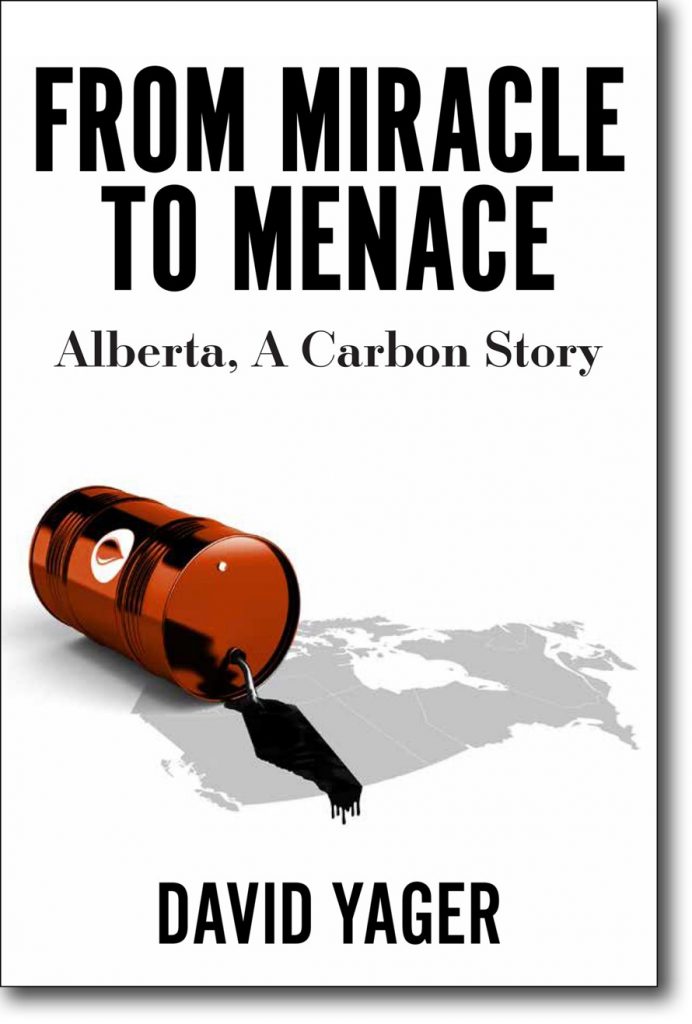
David Yager is an oil service executive, oil and gas writer, energy policy analyst, and author of From Miracle to Menace – Alberta, A Carbon Story. Find the book to www.miracletomenace.ca.
Share This:






















INSIGHT: Canada’s Economy Falling Behind Despite Misleading Headlines – Fraser Insitute