CDN NEWS |
  US NEWS







By Mahdi Sharif, SVP Product Eng. Glove Systems
A History Lesson
“In the heat of the moment, the normal human response to a novel threat is to apply the training one has learned for similar threats and to rely on proven tools and tactics at hand. This does not always work out. The Roman Empire fell because a new threat, the lightly armored mounted archer, was superior in combat against Rome’s slow, heavily armed foot soldiers. The Romans unwisely clung to their training and success formula but eventually fell after 300 hundred years. In the second world war, the German tactic of lightning war, or blitzkrieg, swept through country after country for two years until it met its match in the battle for Stalingrad. The desperation of the Russian people compelled them to try something new. Street by street fighting with constantly moving small bands of fighters able to outmaneuver the mechanized German tank forces and attacks on the supply line bringing fuel to the front. This phenomenon, the initial application of yesterday’s solutions and tools to unfamiliar problems to see if they work, is what many western societies and businesses are applying to the pandemic. It would be far more costly than it needs to be, but we have no choice. There is little value to be gained trying to fix the wiring while the house is on fire. Better just put the fire out.” – Geoffrey Can, Author
What is happening?
There are two important trends in the construction industry, in which the COVID19 pandemic has expedited the growth of both trends.
Prefabrication
Prefabrication has become an increasingly popular means of construction as it allows for greater automation and allows for more work to be completed in a controlled fabrication shop environment as opposed to a construction site. This means the majority of the fabrication of components will take place in fabrication shops, away from the actual construction sites. From 2016 to 2020, the Annual Compound Growth Rate (ACGR) for prefabrication has been 11.7% and 12.4% in U.S. and Canada, respectively ($197B to $590B in the U.S. and $38B and $116B in Canada).
Digitization
Efforts to digitize all aspects of the construction industry have been discussed and researched for many years. The most important of all is the utilization of Digital Twins. As defined by Brilakis and Haas, “A Digital Twin (DT) can be defined as a digital replica of a real-world asset. This asset can be a building, a tunnel, a bridge, or any other human-made asset of the built environment. A DT differs from traditional computer-aided design (CAD) and is not merely an Internet of Things (IoT) solution. It is based on massive, cumulative, real-time, real-world data measurements in multiple dimensions and uses the information of a digital model across the entire life cycle of an infrastructure”. But the efforts to digitize construction processes are not just limited to Digital Twins. Other areas of digitization includes and is not limited to, using AR and VR for training, AR and VR for improved designed communication, Advanced 3D imaging solutions for quality control and earned value tracking, and etc.
The challenges
Both trends, Digitization and prefabrication, have brought about challenges that the industry is struggling to deal with. These challenges include:
- When assemblies are being built offsite and have to be assembled onsite, advanced tolerance management systems need to be developed to calculate and avoid problematic tolerance interplay between different assemblies (commonly known as stacked tolerance).
- Tighter tolerances are required to build assemblies offsite and have them fit onsite.
- The current advanced measurement tools are hard to use and are expensive to operate
- Fabrication shops are not included in the digitization processes, and important data elements are getting missed.
COVID19
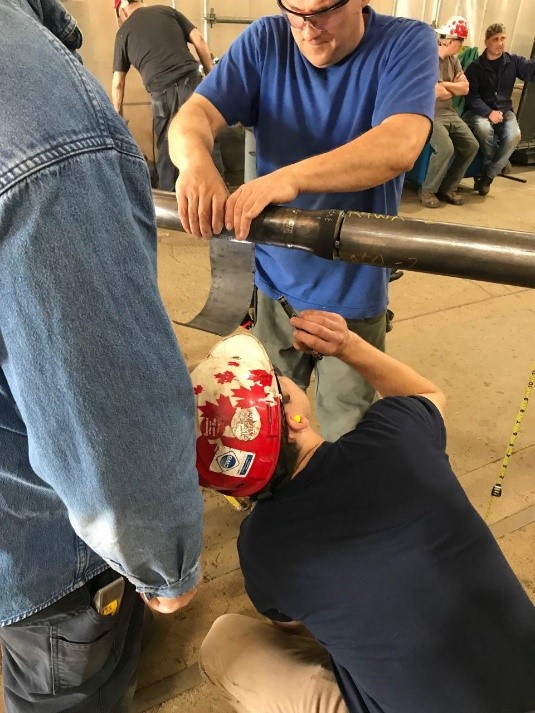
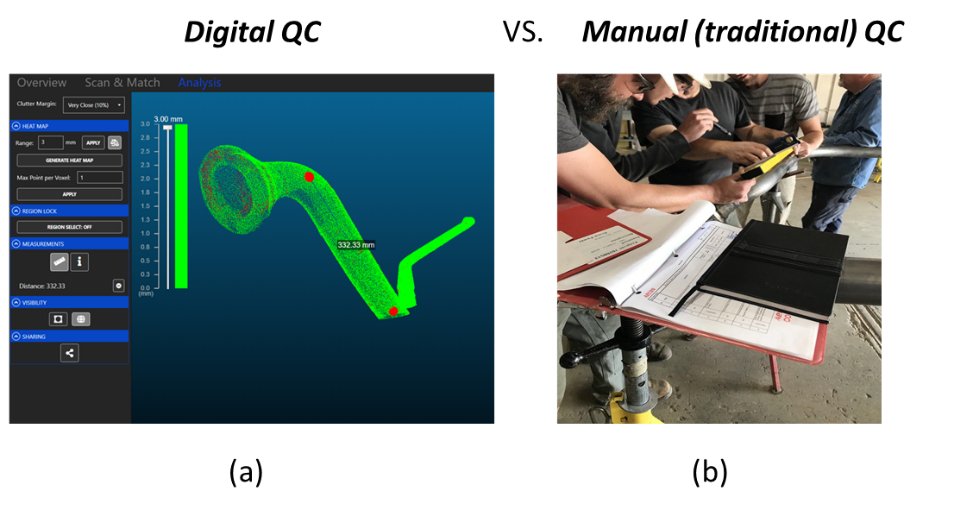
The COVID19 pandemic requires fundamental change in the way businesses can carry out their operations. As reported by McKinsey, The R&D spending in the modular secots has increase by 77% since 2013 and there is a $265 Billion annual profit pool awaiting disruptors. As per quality control in the oil and gas industry, the current methods for quality inspection are simply not well-suited to deal with the challenges that COVID 19 poses. As shown in the picture, three workers are working in close proximity to each other to measure the orientation of a pipe spool. Manual and traditional tools cannot provide the required accuracy, repeatability and documentation. That is why it is critical to digitize the quality control process. Digital measurement techniques can enable fabricators and project owners to:
- Properly manage tolerance interplays between assemblies and hence enabling fabrication shops and project owners to significantly reduce the risk of onsite rework.
- Provide a better tool to the fabrication worker that can keep up with the additional complexity due to the rise of prefabrication.
- Eliminate disputes between fabricator and project owner (or EPC depending on the contract) by permanent access to the as-built data.
- Increase the project owner’s visibility into the health of their assemblies without the need to travel.
- Eliminate quality control as the bottleneck in fabrication shops.
- The data is captured and can be used in the digital twin as an additional asset for project owners and potentially significantly reduce operational cost.
Glove Systems
Glove Systems technology is predicated on five years of research done at the University of Waterloo. Glove Systems is an easy-to-use 3D measurement and comparison platform designed for QA/QC of complex fabrication. Using the 3D model and a laser scanner, your QA/QC team can now ensure geometric compliance.
All measurement is stored in the cloud and can be inspected remotely. The remote inspection tool can increase the inspector’s safety by less travel and increase fabrication workers’ safety by reducing human traffic in fabrication shops. Click anywhere on the image below to view the remote inspection done on the assembly.
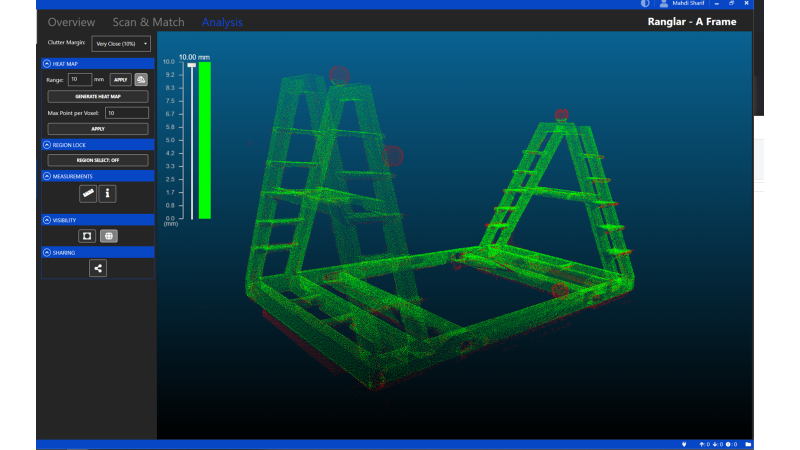
Figure 2. Click anywhere on the image to perform a remote inspection
The Proof
Fabricators
One might ask, for so many years measuring things the traditional way has worked for us, why should we bother changing it now?
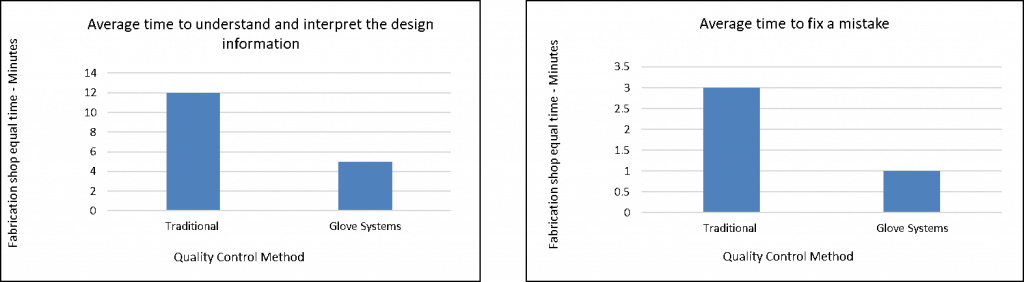
To answer that question, we ran a study where a professional group of pipefitters were hired and were asked to assemble a piping assembly with and without a 3D measurement system. The results of this published study should be a good reason for fabricators to consider changing and adopting 3D measurement systems. The study can be found here. Here is a quick summary:
- Reduced time to complete and build the assembly (varies depending on the situation)
- Reduced time to understand and interpret the design information
- Reduced time to fix a mistake
Project Owners (or EPCs)
The other end of the spectrum, are the project owners (or EPCs depending on the contract type). The question is, as an owner, why should you bother with forcing your fabricators to opt-in more advanced and transparent measurement systems. The answer to that question is as follows:
- Reduced Risk: All assemblies can be viewed and examined in 3D and prior to shipment. This will significantly reduce the risk of onsite rework due to geometric issues
- Increased safety: and pandemic resiliency: Owner won’t need to send inspectors around with the 3D remote inspection platform in place
- Higher Quality: 3D measurement systems can ensure assemblies are built to spec and the installation team can avoid hammering parts into their place. Glove Systems solution gives project owners access to the 3D as-built assets as they are being fabricated
- Lower Cost: Due to the higher productivity of the fab shops the total project cost can be reduced
- Lower waste: lower rework means lower waste and a greener operation
Free Trial
Glove Systems is now offering a 3-month free software license to qualified project owners and fabrication shops to take advantage of the Glove Systems platform for remote inspection and quality control. You can claim your offer by contacting us at [email protected]
Figure 3. See how easy it is to use Glove Systems for your remote inspection needs
Share This: