


 CDN NEWS |
  US NEWS







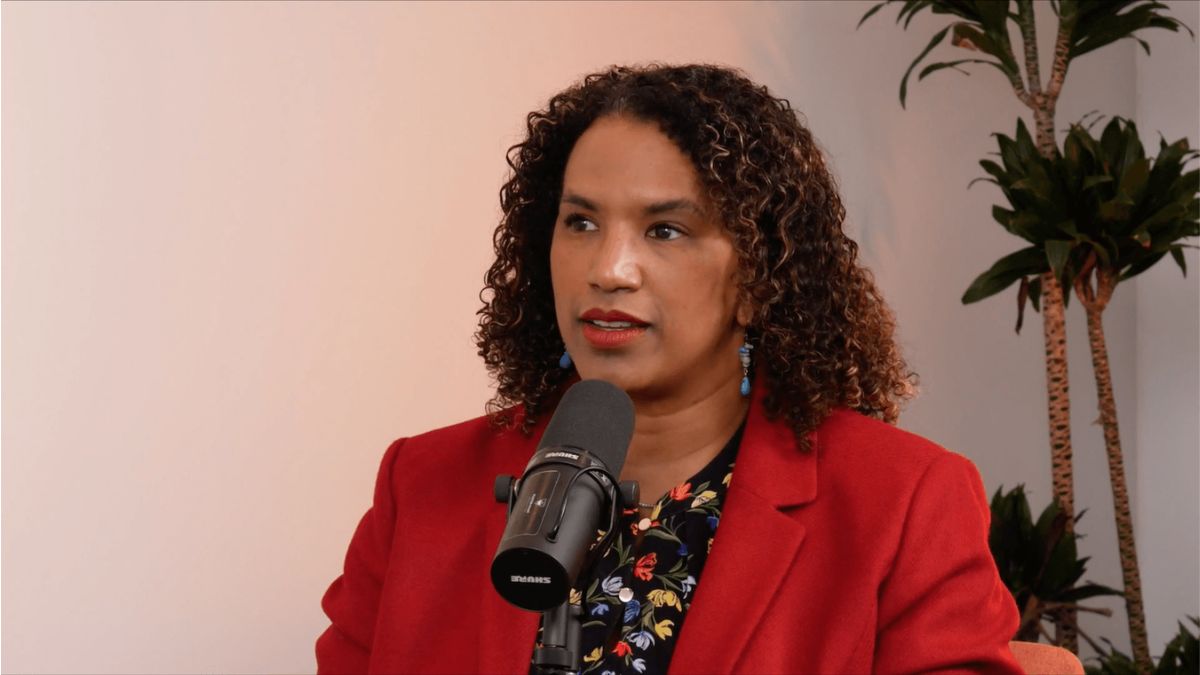
Shannon Joseph has spent the past year doing something Canadians rarely do. She listened to the customer.
Joseph chairs Energy for a Secure Future, a coalition backed by the Canadian natural gas industry. She returned to join Stewart Muir on the Power Struggle podcast this month, fresh off a run of international missions, speaking with ambassadors, trade delegations and First Nations leaders on the ground in Tokyo. She brought back a message that ought to settle a long argument in this country.
The world wants what we have. It has wanted it for years. And it’s running out of patience.
“A hundred and fifty per cent”
Joseph told Muir she put the question directly to the Philippines’ ambassador to Canada. Does his country want Canadian LNG?
“A hundred and fifty per cent,” he answered.
There’s a practical reason for that enthusiasm. Most of Canada’s Asian trading partners produce less than half the energy they use. They import the rest. Many bought it from Russia until the war in Ukraine forced a rethink.
Then came the Strait of Hormuz. Joseph said that disruption knocked out roughly a fifth of the world’s natural gas supply. That gas mostly generates electricity in Asia. Some countries held two weeks of storage. The conflict ran for four months, and the region still isn’t fully recovered.
Nations drew down their reserves to hold off a humanitarian crisis. Joseph’s point is that Canada, with the right infrastructure in place, could have spared them much of it.
These customers aren’t indifferent to emissions. Japan has net-zero commitments. So does South Korea. On a 2025 trade mission, Joseph toured a Tokyo power plant whose operators walked her through their plans to blend hydrogen into coal generation. They showed her which coal plants stay open if the gas doesn’t arrive.
Their conclusion, as Joseph heard it, was simple.
“At the end of the day, it wasn’t an option not to have the energy.”
But they won’t pay a premium for our virtue. Muir recalled sitting beside India’s high commissioner at a conference and hearing exactly that. Great production standards but it costs too much.
For Joseph, the lesson applies to every policy Canada writes at home.
“If we make our production more expensive, nobody’s going to pay for that. We’re going to pay for that.”
Clean production has become table stakes rather than a selling point. Companies that invest in efficiency, she notes, tend to save money doing it.
The road not taken
Much of the conversation delved into Energy for a Secure Future’s new report, When Our Nation Builds. It runs over 100 pages and Joseph calls it a labour of love. She walked Muir through its most interesting section, which asks a question almost nobody asks out loud.
What if the blockades had won?
Think back to 2019 and 2020 when rail lines shut down and a Coastal GasLink construction site was attacked by masked assailants carrying axes. Had that campaign succeeded, the roughly 180,000 people living between the Montney Basin and Kitimat would have lived with the consequences long after the demonstrators went home.
So the report modelled it. Before LNG Canada, the corridor was falling behind. Post-secondary attainment sat at 51% and stayed flat from 2016 to 2021. The rest of B.C. climbed from 61% to 66%. Household incomes trailed by about $3,000. Housing was cheap and poor.
Build LNG Canada and Coastal GasLink, and average annual income in the corridor rises by $19,000 by 2031. Build Cedar LNG, Phase Two and Ksi Lisims as well, and it reaches $26,000.
Joseph is careful to explain what’s driving that. The gains don’t disappear when the cranes leave. They come from the businesses and services that grow up around decades of operations.
One figure in the report is easy to miss and hard to forget. The corridor gains 215 additional speakers of Indigenous languages. Before the projects, that number was shrinking as elders passed on.
Crystal Smith, former chief of the Haisla, has told this story for years. She didn’t grow up speaking Haisla. Her sister now teaches it. The money came from the projects.
Muir has seen it himself, as he told Joseph. He sat in on a language class at Wet’suwet’en First Nation near Burns Lake, in a school built with pipeline revenue. Children. Elders. Knowledge moving between them while there’s still time.
Across the corridor, average incomes in participating First Nations rose 159% between 2019 and 2023. Own-source revenue from major projects now makes up about 30% of their budgets. Sixteen nations hold equity options. They spend the money mostly on education and housing.
Without the projects, that money doesn’t exist, and the nations go back to asking Ottawa for it.


Joseph puts the stakes plainly.
“When opportunities don’t come to some northern B.C. community, it’s not like 20 other things come to replace it.”
The people who drive a shutdown, she adds, rarely stay to live with the result. She calls that an ethical question, not just an economic one.
Where the money actually comes from
This is the part Canadians consistently miss, and Muir admits it’s the hardest piece to explain.
Everyone watches the terminal at Kitimat. Much of the public benefit is generated hundreds of kilometres inland. Joseph is unambiguous about where it originates.
“Royalties are the most important component of the way the public gets value from our resources.”
Most of the gas sits under Crown land, leased to companies that drill it. The province takes a share of every sale. That share pays for health care, education and roads.
Natural gas royalties in B.C. exceed those from mining and forestry combined.
The drilling also has to continue, because the pipeline has to stay full. That’s what keeps the money flowing year after year instead of arriving once. Hospitals. Roads. Nurses. Joseph mentions a CT scanner in Kitimat, and the Haisla Nation making a donation to the regional hospital themselves.
Then there’s the price. Canadian gas has long sold into Henry Hub and AECO, at a dollar-thirty or two dollars per thousand cubic feet. European spot prices touched $18. Asian prices ran around $16.
Without a way to reach those markets, Canada sold to the only buyer available, at whatever price he offered. Joseph’s response to that arrangement is a question.
“Why are we doing this to ourselves?”
Her word for the fix is optionality. Our customers want choices so they can manage their own risk. She thinks Canadians should want the same for themselves.
The world keeps using more
Later in the episode, Muir raised the Energy Institute’s 75th Statistical Review of World Energy. It found global energy supply grew 1.7% in a single year. Renewables led the growth. And fossil fuels still account for 86% of total supply.
That figure used to be 80%. After decades of effort and billions spent, the share went up.
Joseph isn’t surprised. Human well-being tracks energy use almost directly. India has 200 million people without reliable electricity, and a prime minister who has promised to fix that. Data centres worldwide already consume roughly what Japan does.
No country is going to meet that demand by using less. Some energy scholars have started calling what’s happening an addition rather than a transition, and the numbers seem to bear them out.
Which is why Joseph keeps returning to consistency. Canada spent years telling the world it wasn’t interested in building. Now the prime minister, the premier and First Nations leaders stand on the same stage. Asian partners tell her they’re glad the country changed its mind. They also want assurance it will hold for 20 years.
That’s the lesson Joseph carries out of the past three years.
“Things can change fast. But the proof is then in the consistency.”
Public support has been steady for over a year. Liberal and Conservative voters alike back building at rates above 70%. In a polarized decade, that’s remarkable.
But Joseph won’t call it settled. Leaders like Eva Clayton of the Nisga’a and Karen Ogen keep making the case, project by project, community by community. Somebody has to keep explaining why any of this matters, and it usually falls to the people living closest to it.
The world has been asking Canada the same question for years. We’re finally in a position to answer it.
Watch the video on Power Struggle
- Power Struggle audio and transcript
- Power Struggle website
- Shannon Joseph on LinkedIn
- Stewart Muir on LinkedIn
- Stewart Muir on X
Power Struggle on social media:
- Power Struggle on LinkedIn
- Power Struggle on Instagram
- Power Struggle on Facebook
- Power Struggle on X
Ian Biana writes for the Resource Works Accelerate team and can be reached at [email protected].
Share This:























BEYOND THE DEAL: What Comes Next for Energy Entrepreneurs? – Reece Tomlinson