CDN NEWS |
  US NEWS







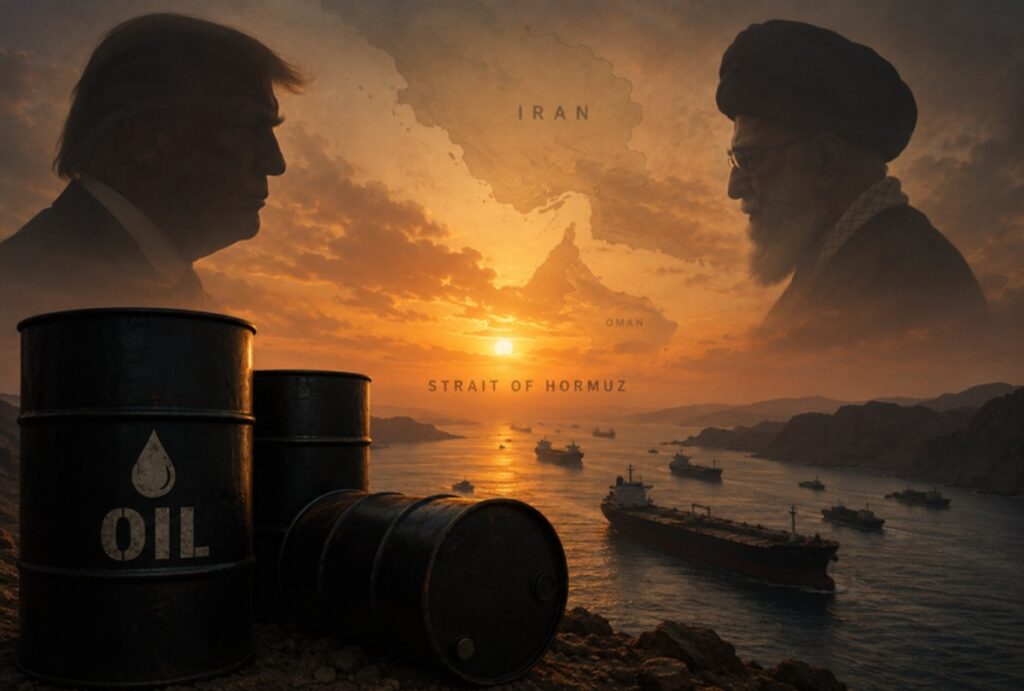
The general unreliability of all information presents a special problem in war: all action takes place, so to speak, in a kind of twilight, which, like fog or moonlight, often tends to make things seem grotesque and larger than they really are.
Carl von Clausewitz, On War (1832-4)
By Jim Warren
There is a disconnect between geopolitical analysts and oil industry economists. They view the US-Iran war through different lenses and they focus on different things. This means there are times when their assessments of oil markets are inconsistent and sometimes contradictory.
This helps explain the profoundly different predictions being made today about the impacts of the war in the Persian Gulf on oil markets and prices, the effects on the global economy, and the chances for a prompt return to free and unfettered shipping through the Strait of Hormuz.
The widely differing assessments of the impacts of the war on conventional energy markets and the global economy have understandably become fodder for debate among energy industry analysts and geopolitical pundits.
There are pessimistic pundits who assume the US-Iran war will drive oil prices into the stratosphere, triggering a worldwide recession. For instance, Rystad Energy’s Chief Economist, Claudio Galimberti, says if there was a period of several consecutive months in which the price of WTI crude is above $140.00 per barrel, it could send a large economy like the US into recession.
Some analysts from the “sky is falling” camp fret that WTI could hit $180.00 per barrel by the end of this summer. A few months with prices at level and we’d be into severe, worldwide recession territory.
Rystad Energy is far from alone in claiming we are experiencing “the worst oil crisis ever recorded.”
Others wonder that if this crisis is supposed to be the worst ever, why haven’t prices gone even higher than they have? Since 2008 oil prices have risen to levels as high or higher, on six occasions, than they have been for the past 138 days and the global economy never fell off a cliff. What’s different this time around?
The typical answer to that question is that the global economy is currently under far more stress than it was during those earlier price spikes. The principal culprits include the international trade war launched by the Trump government.
The optimist camp includes speculators in oil futures who predicted crude prices would return to pre-war levels following Donald Trump’s June 17 announcement of a 60-day ceasefire and an MOU with Iran that would ostensibly lead to a more permanent peace deal.
The popular geopolitical podcaster, Peter Zeihan, finds the optimism of oil futures traders puzzling. He wonders why most of the analysts he talks to, who are directly involved in oil production, are bracing for the likelihood of increased market volatility and the chance we will see much higher prices by the end of the summer. On the other hand, people from the world of finance are apparently convinced that oil prices were going to fall in response to the MOU and the improved prospects for peace.
I admit that the complex world of global oil markets and pricing is not my forte. But, after comparing oil prices with geopolitical events over the past 138 days, I’m having trouble understanding why so many people, working far above my pay grade, think peace is just around the corner.
In the weeks leading up to his June 17 MOU announcement, Trump is reported to have announced on 38 separate occasions that either a ceasefire or a peace deal was just around the corner, “peace is close at hand.” It was a matter of just one or two more weeks and we would be back to business as usual in the Strait of Hormuz. What made the June 17 announcement any different from the previous 38?
Perhaps the fact that the MOU signed by Trump and the Iranians gave Iran virtually everything it ever asked for and gave people greater confidence the deal would hold.
The vastly different answers provided by analysts are because of the disconnect between analysts who specialize in geopolitics and economic analysts who specialize in predicting where global oil prices are going. Economists who study oil markets and analysts who specialize in geopolitics see the world through different lenses. Economists assume people make rational decisions based on the logical assessment of market signals. Presumably, people who trade in oil futures are therefore rational.



Take the oil industry economist, Claudio Galimberti, for instance. He claims the war is unlikely to continue into 2027 because “No country can afford for the war to continue.”
Therefore, if economics says it must end it will probably do so in the coming months as opposed to later in the coming year. Galimberti’s prediction of a short war is based entirely on the assumption that economic fundamentals alone will produce this result.
Economic laws, like many business and management theories, can cease to apply when people are involved.
Geopolitical analysts, Peter Zeihan and Gwynne Dyer have identified several reasons outside the bounds of basic economic theory that will dictate the intensity and duration of the war. The role of Israel in the conflict is likely to have a decisive influence over outcomes.
Some of the previous ceasefires have come undone because of Iran’s insistence that Israel end its war and occupation of Southern Lebanon. Both Zeihan and Dyer claim that Israeli Prime Minister Benjamin Netanyahu is intent on keeping the war in Lebanon going.
Abandoning the war against Hezbollah could threaten to wreck the right-wing coalition that keeps Netanyahu in office. Should he be defeated in a confidence vote in the Israeli legislature he will be subject to a court ruling finding him guilty of corruption. The courts could send him to prison. He also faces a national election this October, and there are pundits who doubt Israeli voters will defeat a prime minister while the country is at war.
Donald Trump has a fair degree of leverage when it comes to getting Netanyahu to end the war in Lebanon—should he choose to use it. Israel is reliant on the US for weapons and defence systems like its Iron Dome which shields it from Iranian ballistic missile attacks. Nevertheless, Trump has thus far proven reluctant to threaten an arms embargo, at not least publicly. Trump is unwilling to alienate the millions of Christian-right MAGA supporters who are staunch supporters of Israel.
As things stand, the US can come to a peace agreement with Iran, but still be unable to control Israeli attacks on Lebanon or directly against Iran. And Iran will hold the US responsible if Israel does either.
Then there is the November midterms problem. American consumers are fed up with the high cost of living and believe the war with Iran is responsible for high gasoline and diesel prices. During the 2024 election campaign, Trump promised voters he would drive down the high cost of living, but subsequently failed to do so. If voters are exceptionally cranky this fall, the Republicans could lose control of the House of Representatives and there is a remote possibility the Democrats could form a majority in the Senate.
However, the Democrats will not garner the two-thirds majority in the Senate required to impeach Trump. While the presidency might be safe for another two years, there are Republican members of Congress who are afraid of being defeated over affordability issues, the war and a laundry list of other grievances. They are hounding the White House to end the war to reduce oil prices.
Furthermore, the evidence suggests that the US is in danger of depleting its weapons stockpile, which is estimated to be down by around half from where it was prior to the war.
And, we can’t forget that Trump is impulsive and erratic. His views swing from bombing Iran back into the Stone Age to negotiating the best peace deal in recent history. There is a chance he’ll get bored, declare victory and walk away from the Gulf.
Which prompts the question, why would anyone assume the war will be over any time soon simply because it is economically disruptive?
If we are looking for greater certainty in predictions about where the energy crisis and the war are headed there are research and management systems that would reduce or at least explain the disparity between the geopolitical and economic analyses related to the war in the Gulf and oil markets. The most obvious is the adoption of interdisciplinary analysis. This approach assumes complex problems are often best handled by teams of experts with knowledge and experience from each of the fields of human endeavour involved in any particular crisis.
The relevant fields in this case would obviously include economists, oil industry leaders, oil market analysts and geopolitical analysts. The list could be broadened as needed; perhaps to include political pundits, statisticians and economic historians, etc.
The important thing is that the research team frequently meets as a group and that they collaborate when it comes to developing their overall analysis, predictions and recommendations.
Of course if it is that easy you’d think people would be already doing it. Maybe they’re just doing it badly.
-30-
Share This: