


 CDN NEWS |
  US NEWS







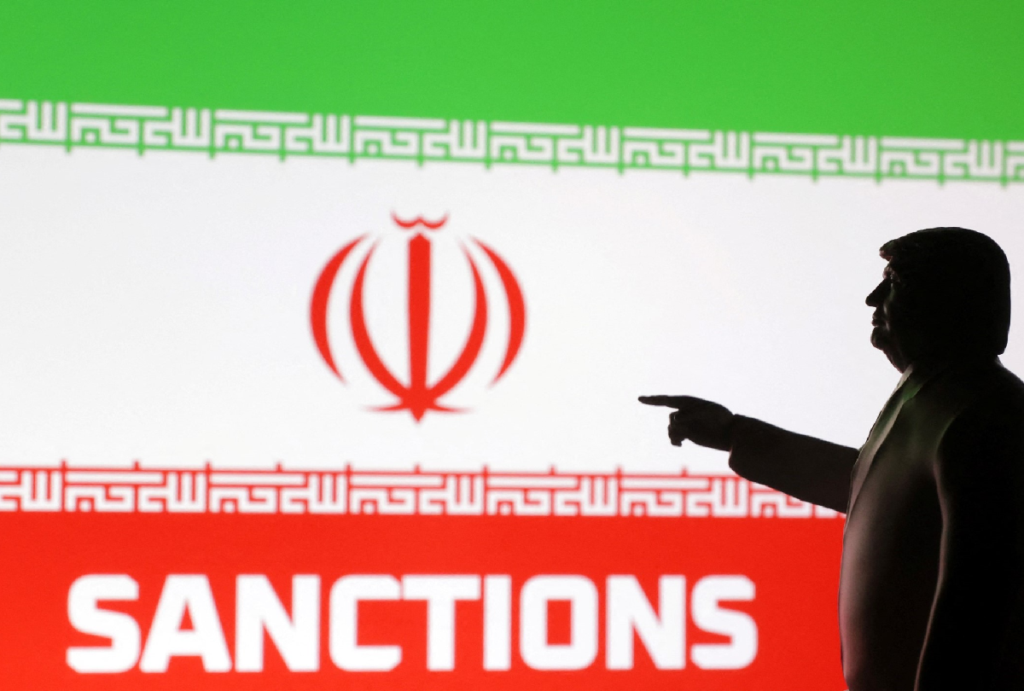
(Reuters) – The U.S. has started waiving some sanctions on Iran under their interim deal to end the war, but fully unravelling a tangled web of restrictions on the country’s activities and trade under any more comprehensive agreement will be much harder.
This is why any effort to lift sanctions on Iran could take years and why foreign investment might take a long time to return:
WILL SANCTIONS ON IRAN BE LIFTED?
Sanctions, trade embargoes and asset freezes have been imposed by the U.S., the United Nations, the European Union and other countries for decades over its nuclear programme, human rights record and support for groups around the region.
Iran now hopes to gain further sanctions relief through talks on its nuclear programme as the next phase of the interim deal unfolds.
Gaining long-term relief from sanctions is critical to the prospects of a ruling system that has faced repeated bouts of unrest over recent years including bloodily suppressed mass protests over economic woes in January.
Under a nuclear deal in 2015 most sanctions on Iran were lifted, but that agreement took years to negotiate and after an inconclusive war it may be much harder for both sides to bridge their differences again.
WHAT ARE THE UN SANCTIONS?
U.N. sanctions are tied to Iran’s nuclear programme and assessed violations of its obligations under the nuclear Non-Proliferation Treaty.
The U.N. Security Council passed resolutions imposing sanctions in 2006, 2007, 2008 and 2010.
They included an arms embargo, bans on the supply of some nuclear-related materials and technology and freezes on assets of some companies and individuals.
The resolutions also banned Iran from any activities to make ballistic missiles capable of delivering nuclear weapons.
While the resolutions froze funds and assets of the Islamic Revolutionary Guard Corps and the state shipping company, they did not bar Iranian oil exports.
After the Joint Comprehensive Plan of Action (JCPOA) nuclear deal was reached in 2015, the Security Council set out a schedule to lift its sanctions on Iran.
However, U.S. President Donald Trump ripped up the deal in 2018 and Iran stopped complying with some of its requirements. The U.N. sanctions were reimposed through a “snapback” mechanism last year.
HOW HARD WILL TRUMP FIND IT TO LIFT U.S. SANCTIONS?
Washington first sanctioned Iran in 1979 when revolutionary students seized the U.S. embassy in Tehran, holding diplomats hostage. Numerous additional sanctions have been put in place since then, including extensive measures against Iranian oil and gas exports, over Iran’s support for groups that the U.S. deems terrorist organisations and over the nuclear programme.
One big complication is that the IRGC, the single most influential entity in the country and deeply enmeshed with its economy, is designated by Washington as a terrorist organisation.



The sanctions are administered by the U.S. Treasury but as they come under different authorities and through different mechanisms, there is no quick, easy way to turn them all off.
Authority to impose sanctions derives from two laws in the 1970s that grant presidents emergency powers that have to be renewed each year, and from laws in 1996 and 2017 specifically targeting Iran and other countries.
Sanctions imposed by the president through executive orders can be reversed with a stroke of the pen by Trump. These include freezes of billions of dollars’ worth of Iranian assets, an arms embargo, a ban on all trade with or investment in Iran and on anybody buying the country’s oil.
Harder to remove are the sanctions that were imposed by Congress, which did not include waivers or exceptions based on Iranian conduct on human rights violations or Tehran’s support for groups Washington regards as terrorist organisations.
Many companies, individuals and government bodies are specifically designated and removing all those could take a long time.
DOES EUROPE ALSO HAVE SANCTIONS ON IRAN?
The EU placed embargoes on Iranian oil exports, froze assets held by the Central Bank of Iran and stopped the trade in precious metals and petrochemicals to and from Iran in 2012.
It imposed restrictions on foreign trade, financial services and the energy and technology sectors.
Some Iranian banks were disconnected from the SWIFT system for international payments in 2012 under EU directives, largely cutting off big parts of Iran’s financial system from other countries.
Although some sanctions were lifted under the JCPOA, they were restored later on. Further sanctions have targeted individuals and particular missile and drone components.
The EU has also sanctioned the IRGC and it imposed new sanctions this year over Iran’s blocking of the Strait of Hormuz.
WOULD FOREIGN COMPANIES RETURN TO IRAN IF SANCTIONS WERE LIFTED?
The complexity of the sanctions on Iran means that many companies would fear legal jeopardy about any return to the Islamic Republic without a very comprehensive lifting of sanctions.
Because so many Iranian companies and individuals have been designated, it could be difficult for companies to ensure they were not inadvertently breaching the rules.
They could also face lawsuits from attack victims, who could sue investors and companies for aiding designated groups.
WHERE DOES IRAN HAVE FROZEN ASSETS?
Iran has tens of billions of dollars sitting in foreign banks, mainly from exports of oil and gas, which it cannot reach because of the various sanctions on its banking and oil sectors.
Countries where Iran has had billions of dollars from oil sales sitting inaccessible in banks include South Korea, China, Japan, Luxembourg and Iraq.
By Angus McDowall in London; Editing by Matthew Lewis, William Maclean
Share This:





















INSIGHT: Canada’s Economy Falling Behind Despite Misleading Headlines – Fraser Insitute