CDN NEWS |
  US NEWS







By EnergyNow Editorial Staff
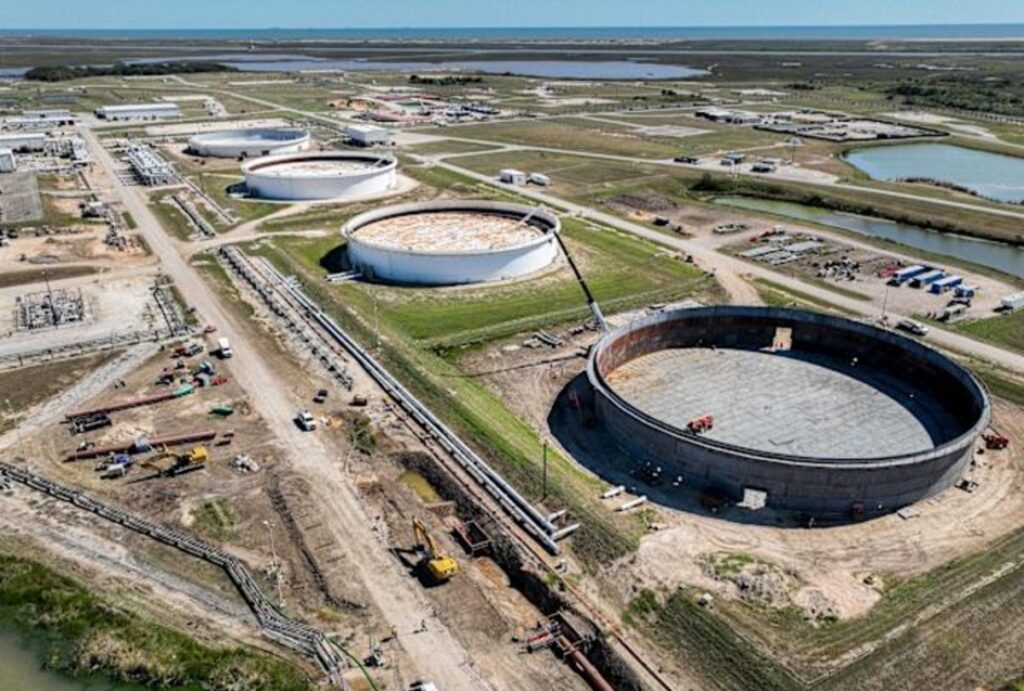
The U.S. Strategic Petroleum Reserve (SPR) is the world’s largest government-owned emergency crude oil stockpile. It was created after the 1973 Arab oil embargo to protect the United States from severe oil supply disruptions caused by wars, natural disasters, geopolitical crises, or major market shocks. The reserve is managed by the U.S. Department of Energy SPR Program and is stored in underground salt caverns along the Gulf Coast in Texas and Louisiana.
How Does It Work?
The SPR contains crude oil, not gasoline or diesel fuel. When a major disruption occurs, the President can authorize:
- Direct sales of crude oil to refiners.
- Emergency exchanges (loans) where companies borrow oil and later return it with interest in the form of additional barrels.
- Coordinated releases with allies through the International Energy Agency.
The reserve can release up to roughly 4.4 million barrels per day under ideal conditions.
What Is Considered a “Normal” Level?
The SPR’s authorized storage capacity is approximately 714 million barrels. Historically:
| Period | Inventory |
|---|---|
| Peak (2010) | ~727 million barrels |
| Typical pre-2020 range | 600–700 million barrels |
| Early 2022 | ~590 million barrels |
| April 2026 | ~402 million barrels |
| June 2026 | ~340 million barrels |
A level above 600 million barrels has traditionally been viewed as a comfortable strategic cushion. Today’s level is far below historical norms and represents less than half of total storage capacity.
How Has the Iran War Affected the SPR?
The 2026 Iran conflict has become one of the largest energy security events in decades.
The conflict disrupted flows through the Strait of Hormuz, through which roughly one-fifth of global oil supply normally moves. As global inventories tightened and prices surged, the United States and its allies launched coordinated emergency releases from strategic reserves.
In March, President Trump authorized the release of 172 million barrels from the SPR as part of a broader international effort involving approximately 400 million barrels of strategic reserves globally.
Since the war began:
- Global oil inventories have fallen sharply.
- U.S. strategic stocks have experienced record drawdowns.
- Several weekly SPR withdrawals have been among the largest in history.
- Total U.S. oil inventories (commercial plus strategic) have dropped significantly.
What Are Current SPR Levels?
As of June 15-16, 2026, the SPR contains approximately 340 million barrels, the lowest level since 1983.

To put that in perspective:
- Capacity: 714 million barrels
- Current inventory: ~340 million barrels
- Fill percentage: about 48%
The reserve is now at a 43-year low and roughly half full.
How Will the U.S. Rebuild the Reserve?
The Trump administration’s current strategy differs somewhat from traditional SPR replenishment programs.
1. Emergency Exchange Repayments
Much of the recent release has been structured as a loan rather than a sale. Companies receiving crude must return it later with a premium.
According to Energy Secretary Chris Wright, the government expects to receive roughly 1.28 barrels back for every barrel loaned, potentially adding 35–40 million barrels above what was withdrawn.
2. Future Direct Purchases
Once market conditions stabilize and prices retreat, the Department of Energy is expected to resume purchasing crude oil for the SPR. Historically, governments prefer replenishing when prices are relatively low.
3. Increased Domestic Production
The administration is also emphasizing increased U.S. production and exports as part of its broader energy strategy. Strong domestic production would make it easier to acquire barrels for SPR replenishment.
Key Debate Going Forward
The central policy debate is no longer whether the SPR should be refilled—it is how quickly.
Some analysts argue the reserve should be restored to at least 500–600 million barrels to provide adequate protection against future geopolitical shocks. Others contend that record U.S. oil production reduces the need for such a large emergency stockpile.
For energy markets, the challenge is significant: rebuilding the SPR from today’s 340 million barrels back toward historical levels would require purchasing hundreds of millions of barrels over several years, potentially creating additional demand in an already tight global oil market.
Bottom Line
The U.S. Strategic Petroleum Reserve was designed as a national energy insurance policy. Historically, inventories of 600–700 million barrels were common. After massive releases tied to recent supply disruptions and the Iran conflict, inventories have fallen to roughly 340 million barrels—the lowest since 1983. The United States plans to rebuild the reserve through repayment of emergency loans, future crude purchases, and increased domestic production, but restoring it to historical norms could take years.
Share This: