


 CDN NEWS |
  US NEWS







Province wants to increase electricity supplies by 50% by 2050
By This Article and More by Derrick Penner Here
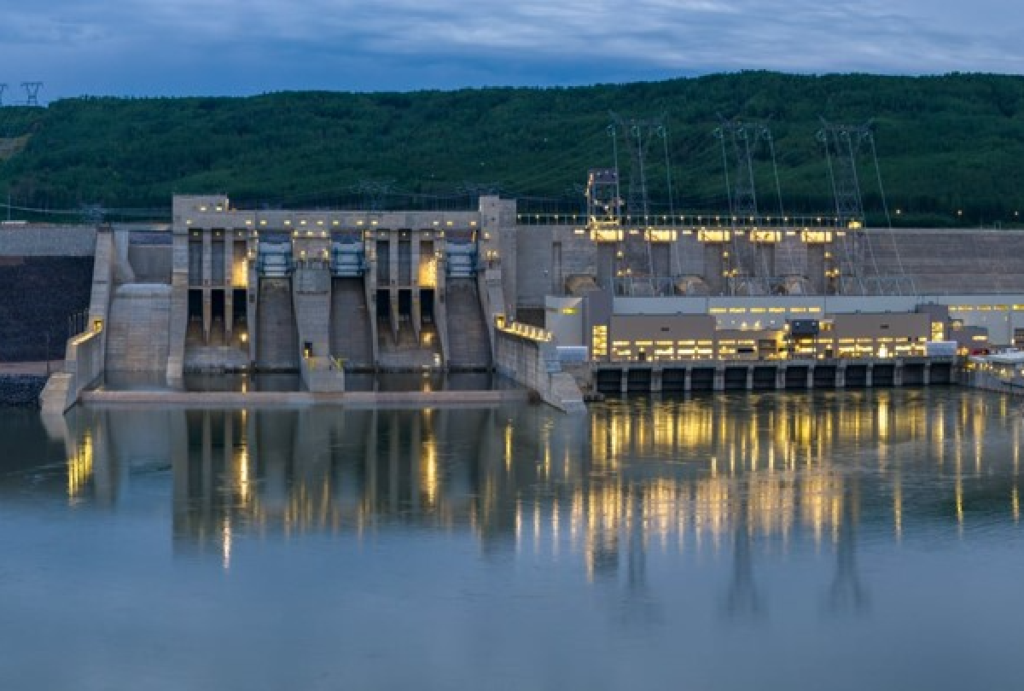
B.C. Hydro will consider building new hydroelectric megadams on the Peace River and on the province’s Central Coast as part of the long-term plan to increase electricity supplies by 50 per cent by 2050, Energy Minister Adrian Dix announced Monday.
The government-owned utility is evaluating the viability of a Site E dam on the Peace River, an estimated 750 megawatt facility some 60 kilometres east of the recently completed 1,100 megawatt John Horgan Dam, and up to 900 megawatts of generation near Bute Inlet on B.C.’s Central Coast.
The John Horgan Dam ended up costing about $16 billion.
“Our province is growing in an unprecedented way, equivalent and more to what we saw in the 1960s, which means the need for our clean electricity is soaring,” Dix said in the announcement.
After about 18 years of near flat electricity demand, Dix said “that’s changing and we’re responding.”
Dix said the province will have to lift parts of the ban on major hydro projects that former Premier Gordon Campbell wrote into his government’s Clean Energy Act, but considers such facilities essential as part of “B.C. Hydro’s defining opportunity to build on our clean-energy advantage.”
According to B.C. Hydro, Site E refers to one of five viable locations for dams on the Peace River identified in 1958 by B.C. Hydro’s predecessors for additional facilities downstream of the W.A.C. Bennet and Peace Canyon dams.
B.C. Hydro determined in 1978 that Site C, now the John Horgan Dam, was the best of the five, however Dix said the potential Site E facility was identified as among the next-best locations for major-hydro development in the process of searching out new baseload power.
No initial cost estimates were included in the plan Dix released alongside B.C. Hydro CEO Charlotte Mitha and B.C. Building Trades Council executive director Bryn Bourke.
“At first, you have to assess the viability of the project in detail,” Dix said.
The projects will require “deep, in-depth review, and that’s what we’re doing now.”



The province unveiled the potential new dams within a document titled Powering Growth, the next step in a series of announcements by B.C. Hydro that include commissioning a new call for power and relaunching its Power Smart program as Version 2.0.
B.C. is expecting its power needs to grow by 50 per cent by 2050 and Dix said the document highlights government’s three-pillar approach to meeting that need. It starts with conservation, the Power Smart 2.0 plan and optimization of its existing system, such as the addition of a sixth generating unit at the Revelstoke Dam along with upgrades to other power stations.
The third pillar, however, is building new facilities and Dix said that might include additional dams, along with potential geothermal and biomass power along with utility-scale battery systems to backup renewable power.
Dix said that B.C. has “generational opportunities” in mining, in port expansion to fuel Canadian exports and in developing renewable power to meet provincial emission reduction goals, but needs additional baseload energy to backup its system.
Critics and climate groups welcomed the spirit of the province’s move to expand electricity generation, but pointed out shortcomings in its elements.
The renewable energy think-tank Clean Energy Canada credited B.C. Hydro for including “all the right elements,” but lacked ambition in its target for growth.
Joanna Kyriazis, the group’s director of policy and strategy, said the 50 per cent assumption is already “out of step with federal electricity ambitions.”
“Without the right trajectory, B.C. risks having to make difficult choices between industrial electrification and the electrification of homes and transportation that will help save British Columbians money at a time when gas prices and costs of living are already high,” Kyriazis said.
Barry Penner, chair of the think-tank Energy Futures Initiative, said he was surprised to see the NDP government propose new dams, considering how it opposed the Site C dam.
“It’s good that the government is acknowledging we need firm dispatch-able power after years of telling us that wind power and solar was going to be enough,” said Penner, a former cabinet minister in the government that approved the now-John Horgan Dam.
However, Penner said that new additional dams still don’t address the potential supply gap that B.C. Hydro expects as early as 2030.
[email protected]
Share This:






















COMMENTARY: Here’s How to Help Secure Canada’s Energy Sovereignty – Fraser Institute