CDN NEWS |
  US NEWS







The chief executive of AltaGas Ltd. says the company is in talks with customers in India, Vietnam, Taiwan and other Asian markets to supply Canadian propane and butane as it expands its export infrastructure footprint on the West Coast.
Many places in Asia are “materially short” on those fuels, used widely for cooking and transport, Vern Yu said in an interview on the sidelines of the Global Energy Show this week. It’s a three-million-barrel per day market, of which the U.S. has historically supplied two thirds and the Middle East the rest.
“A lot of Asian countries are looking to diversify away from both the United States and the Middle East for different reasons — the United States because of trade grievances and the Middle East for security of supply,” Yu said.
AltaGas said in an investor presentation earlier this year that almost one third of global liquefied petroleum gas supplies, a subset of products that includes propane and butane, normally pass through the Strait of Hormuz, a narrow waterway that connects the Persian Gulf with the open sea. Tanker traffic has all but halted since the U.S. and Israel launched their war against Iran in late February.
The U.S. remains Canada’s main competitor in the Asian LPG market, but Canada has a lot working in its favour, Yu said.
“We have a significant transit time advantage versus the U.S. Gulf Coast. A Canadian barrel can get to Asia in less than ten days. It takes a barrel out of the U.S. Gulf Coast roughly 25 days to access the same market.”
Canadian LPGs are also the “cheapest in the world” because so much more is being produced than can be exported at the moment, said Yu.
The regulatory environment is also improving, with the creation of the major projects office last year to speed along projects deemed in Canada’s national interest, he said. AltaGas has not made use of the office to date. Yu said he’d like to see permitting for expansions to existing projects move more quickly than ones being built from scratch.
“We really have to distinguish greenfield from brownfield expansion,” he said.
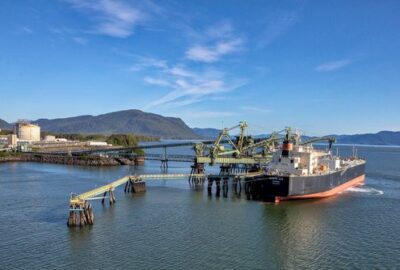
AltaGas opened Canada’s first propane export facility near Prince Rupert, B.C., in 2019, initially sending cargoes to Japan and South Korea and recently making inroads into China and other Asian countries. In April, it said its first cargo had been delivered to Indonesia.


Construction is about three-quarters complete on an adjacent project called the Ridley Island Energy Export Facility, which aims to start exporting both propane and butane later this year. There are plans for future expansions at that facility.
LPG molecules can be separated out of natural gas at processing plants — a big part of AltaGas’ business — or can be a byproduct of oil refining. Those products are not to be confused with liquefied natural gas, or LNG, which involves chilling methane so it can be shipped by sea in liquid form on specialized tankers.
The developer of the Ksi Lisims LNG project planned for the northern B.C. coast recently signed preliminary supply deals with two German utilities. Europe has been clamouring for alternative gas supplies since its dominant supplier, Russia, invaded Ukraine in 2022. The situation has worsened since the Middle East conflict cut off LNG cargoes.
There is no such dynamic happening in the LPG market, Yu said, as it’s quick and easy to ship propane from the U.S. Gulf Coast to Europe.
“There’s no real market for us to do European propane,” he said. “The demand in Asia is the biggest demand pool in the world. So we’re happy to sell into that market.”
This report by The Canadian Press was first published June 11, 2026.
Companies in this story: (TSX:ALA)
Lauren Krugel, The Canadian Press
Share This: