


 CDN NEWS |
  US NEWS







By Julio Mejía and Tegan Hill
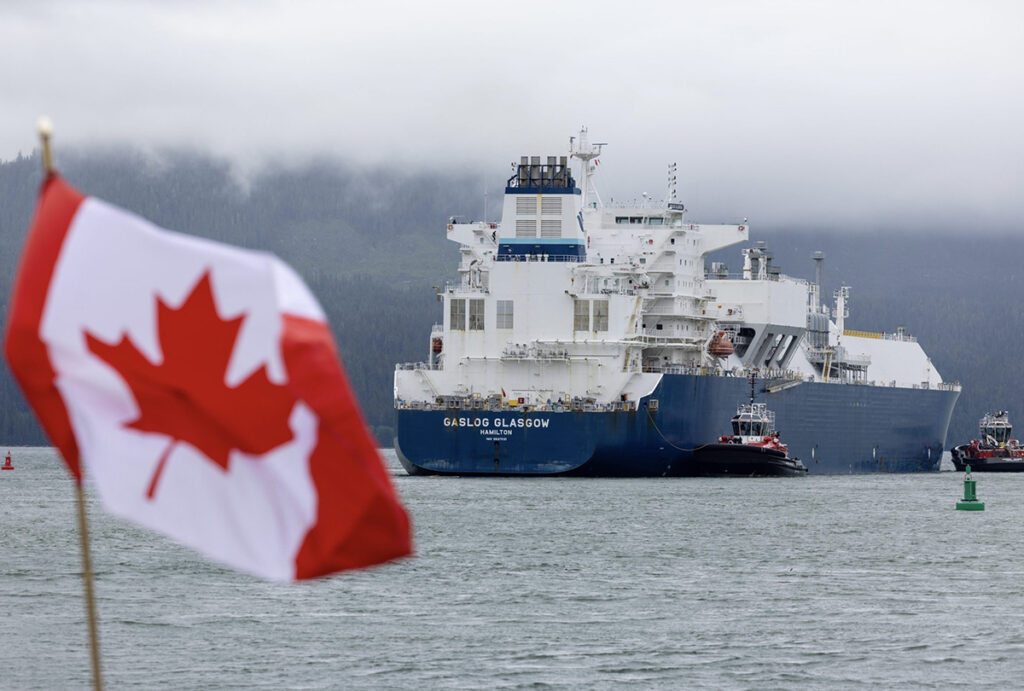
Iran’s blocking of the Strait of Hormuz, a vital energy corridor, is intensifying oil and gas price volatility driven by the ongoing war, underscoring the world’s need for stable reliable suppliers. While Canada has an opportunity to leverage its abundant resources for the benefit of Canadians and others around the world, Ottawa’s onerous, costly and unpredictable policies are in the way.
The Strait of Hormuz, between Iran and Oman, is the Persian Gulf’s only maritime passage and a critical export route for major energy producers including Saudi Arabia, the United Arab Emirates and Qatar. Its depth and width accommodate large-scale energy shipments, which comprise roughly one-fourth of global seaborne oil and one-fifth of liquefied natural gas (LNG) trade, mainly for Europe, China, India, Japan and South Korea.
For decades, the Iranian regime has used the Strait to exert pressure and advance its interests—and throughout the current war it’s acted on that leverage by targeting commercial tankers with drones, missiles and naval mines. As a result, since the war started oil prices have jumped by more than 40 per cent and LNG prices by roughly 60 per cent.
Again, Canada is well positioned to help boost global supply and contribute to global energy security, but it’s unable to secure the investment needed to expand its energy industry. Despite Canada’s immense oil and gas reserves, investment in the sector fell from $84.0 billion in 2014 to $35.7 billion in 2024—a 57.5 per cent drop (inflation-adjusted). And preliminary data suggest investment in 2026 will remain below 2024 levels.



So, how can Canada attract investment and become, in the words of Prime Minister Carney, an energy “superpower”? Simply put, remove bad policy.
Bill C-48, for instance, bans large oil tankers from ports on British Columbia’s northwest coast, undermining the business case for a new Pacific-bound pipeline from Alberta to expand exports to international markets.
There’s also Bill C-69, which introduced subjective criteria, including the effects on the “intersection of sex and gender with other identity factors,” in the approval process for proposed energy and infrastructure projects. Not surprisingly, under this bill the approval process has slowed significantly, with far fewer projects making it through. In its first five years, Bill C-69 had just one project complete the full assessment, taking about three-and-a-half years to do so. By contrast, the previous system approved 17 projects in its first five years.
And rather than remove these barriers, the Carney government introduced Bill C-5, which allows cabinet (and effectively the prime minister) to fast-track “national interest” projects outside the existing regulatory system. In other words, investors must convince a small group of politicians that their projects meet discretionary standards to earn cabinet’s favour. This is not only an invitation to corruption but a major source of uncertainty for investors. The recent agreement signed by Alberta and Ottawa only contains more stipulations and conditions for any potential future pipeline.
The Carney government also continues to cling to policies that impose massive costs on the energy industry—such as methane emissions reduction requirements—and is doubling down on measures that drive up the cost of producing, processing and transporting oil and gas. Specifically, in December the government opened consultations on increasing the industrial carbon tax, which companies pay per tonne of CO2 emitted, a move that will disproportionately affect carbon-intensive sectors such as oil and gas.
As conflict continues to broil in the Middle East, Canada has the potential to leverage its abundant resources, increase global energy supply, help ensure energy security and benefit Canadians and their economy. But to do so, Ottawa must remove barriers that prevent the development of Canada’s energy.
Share This:






















On The Verge: Energy Sector Primed for New Wave of Growth – ATB Economics