


 CDN NEWS |
  US NEWS







Michael Kovrig said the agreement will lead to unfair competition and the erosion of Canada’s industrial base
By Laura Dhillon Kane
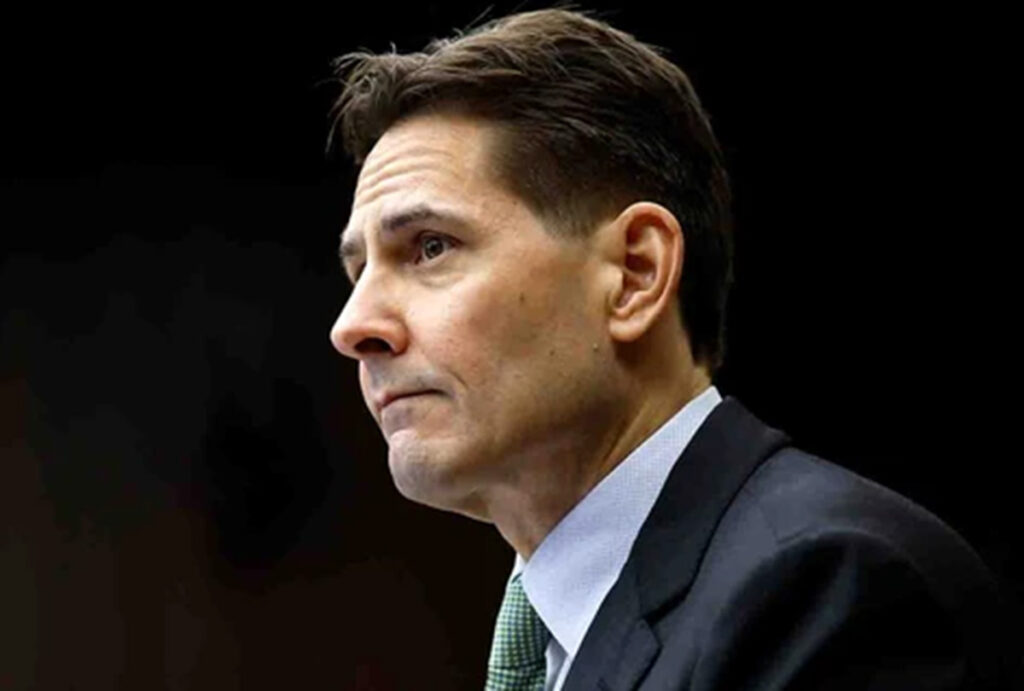
Michael Kovrig, founder of Global Network for Strategic Effects, attends a House of Commons committee meeting to discuss the implications of Chinese-made electric vehicles in Canada, in Ottawa on April 16, 2026. Photo by Blair Gable /Postmedia
A Canadian who was detained in China for nearly three years warned that Prime Minister Mark Carney’s automotive trade deal risks creating a strategic dependency that the Asian superpower can exploit for political coercion.
Michael Kovrig, a former diplomat who was imprisoned from 2018 to 2021, said Tuesday the agreement will lead to unfair competition and the erosion of Canada’s industrial base.
Carney announced during a January trip to Beijing that Canada would accept an initial quota of 49,000 Chinese electric vehicles at a low tariff rate, in exchange for China lowering duties on Canadian food items such as canola, seafood and peas. The prime minister has also outlined plans to court Chinese investment in Canada’s auto sector through joint ventures.
It’s a controversial policy for a number of reasons. United States officials all the way up to President Donald Trump have expressed concern about Canada’s embrace of Chinese EVs. Auto parts manufacturers and the unions representing factory workers are worried Chinese companies will eventually hollow out Canada’s automotive industrial base.
Kovrig said that’s a legitimate threat.
“Their objective is ultimately to dominate the marketplace, drive out local competition and make Canada dependent on importing Chinese EVs,” said Kovrig, founder of the geopolitical analysis firm StrategicEffects, at a Canadian Chamber of Commerce summit in Ottawa.



He called expectations of Chinese investment “really optimistic,” arguing that at best companies might open “knockdown kit” plants in Canada that merely assemble Chinese-made parts. “That doesn’t in any way help Canada develop a technological ecosystem or a supply chain.”
His remarks echo concerns within Canada’s auto sector that an influx of Chinese EVs could overwhelm a domestic industry already strained by U.S. tariffs. Bloomberg News has reported that Stellantis NV is considering building Zhejiang Leapmotor Technology Co. vehicles in Canada, though Carney’s industry minister said knockdown-kit operations are a non-starter.
Kovrig, who worked extensively in China and was advising at a think tank at the time of his arrest, said the country relies on low-wage workers — and in some cases forced labour — to produce cheap goods and secure dominance in emerging technologies.
“They want to control the tech stack and then use control of that tech for geopolitical dominance and leverage,” he said, arguing that China can undercut competitors, flood markets and create supply-chain dependencies that translate into political influence.
He pointed to Australia, saying the collapse of its auto-manufacturing sector and rise of imported Chinese EVs has left Australians “much more dependent on China than they would like to be.”
Carney’s Beijing visit and tariff detente with President Xi Jinping marked a shift after relations hit a low point during the detention of Kovrig and Michael Spavor. China arrested the two men after Canada detained Huawei Technologies Co. executive Meng Wanzhou on a U.S. extradition request. She reached a deferred prosecution agreement the same day the Canadians were released.
Kovrig cautioned against expanding trade with China during the current tariff conflict with the U.S., which has hammered Canadian exports. The U.S. remains the world’s largest consumer market and Canada is “fortunate enough economically” to be next door, he said.
“China is not a solution to most of our problems with the U.S.,” he said. “Deeper entanglement with China, for the most part, for most companies, brings more costs and risks and challenges than the likely benefits.”
Bloomberg.com
Share This:






















COMMENTARY: Ottawa Provides Glimmer of Hope and Streamlines Review Process for Energy Projects