


 CDN NEWS |
  US NEWS







The volume of crude will exceed pipeline space by this summer and will consistently exceed space by summer next year
By Robert Tuttle
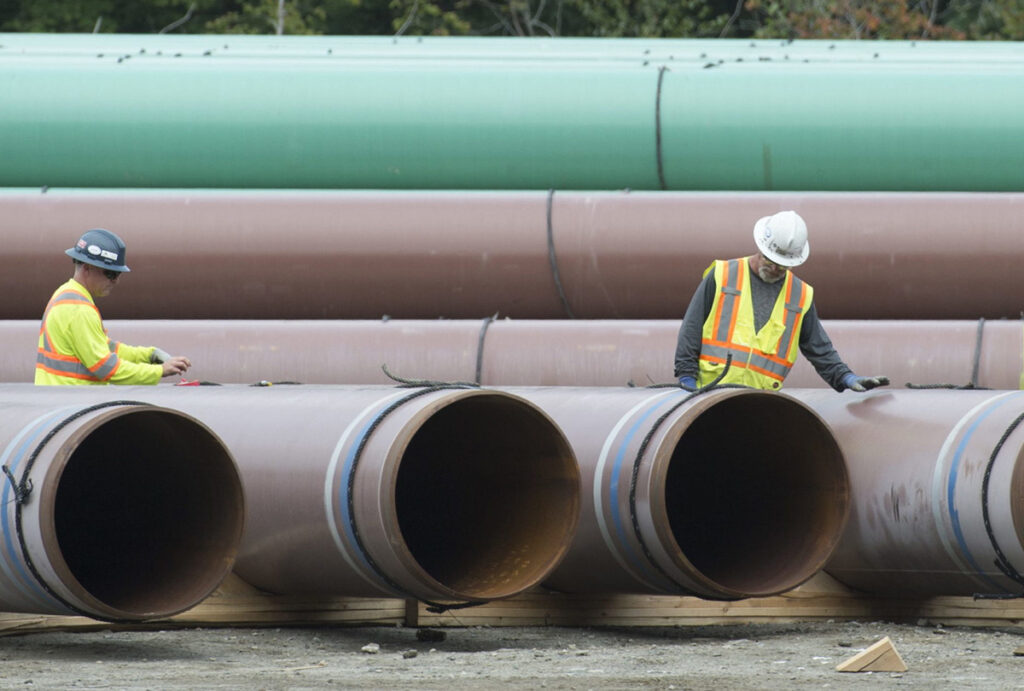
Trans Mountain Corp. is planning a series of expansion projects for its main pipeline that will add capacity beginning early next year just as export space out of western Canada becomes tight once again.
The government-owned company plans to add chemicals to the 890,000 barrel a day pipeline by the first quarter of 2027 that will allow crude oil to flow faster, Jason Balasch, vice president of business development, said at conference in Calgary on Tuesday. That will add 90,000 barrels a day to the system running from Alberta to the Vancouver area.
Trans Mountain, running from the oilsands in Alberta to the British Columbia coast, is working to expand capacity to 1.19 million barrels a day by decade’s end, just two years after the 1950s-era pipeline was tripled from 300,000 barrels a day in a project that took more than a decade to complete and cost $34 billion, six times more than was originally planned.
Balasch said a final investment decision on a project to dredge under the Second Narrows Bridge is expected by this summer with work that would start in the fall. That project will allow each oil tanker to transport more crude under the bridge, raising by 30 per cent the amount of oil that can be shipped off the line starting as early as the second quarter of 2027.
A third expansion involves adding almost a dozen pump stations, replacing 30 kilometres of pipe and adding new electric power to a remote section in British Columbia and will be operational by 2029. That year will also see a fourth project completed to add 35,000 barrels a day to a line running into Washington state.
Despite the high cost to build it, the line has allowed Canada’s oilsands producers to sell significant volumes to Asia for the first time, helping to lower the country’s dependence on the United States. Already 60 per cent of crude exported by tanker off of Trans Mountain is going to Asia. The ongoing war in the Middle East as well as U.S. military action on Venezuela at the start of the year are only making the pipeline more valuable, Balasch said.



“As unfortunate as some of those events are, it is a positive tailwind for our industry,” he said. “Both of those events demonstrate the need for global producers and consumers to have multiple market options.”
Trans Mountain has run below its maximum capacity since starting operation due to high costs associated with non-contracted space, but the utilization on the system jumped to as high as 96 per cent in November, according to Canada Energy Regulator data.
Canadian oil producers struggled for years with too few export pipelines, which forced companies to sell oil at ever larger discounts to the U.S. benchmark West Texas Intermediate. In 2018, the situation became so acute that Canadian heavy crude sold at a discount to WTI of almost US$50 a barrel versus about US$14 currently, prompting the Alberta government to impose limits on production.
The volume of crude to be exported will exceed pipeline space for about a month by this summer and will consistently exceed space on export lines by summer next year, Susan Bell, senior vice-president of downstream research at Rystad Energy, said at the conference.
Trans Mountain returned $1.7 billion to the Canadian government last year partly in dividends, Balasch said.
He also noted the reason for a dip in shipping last month. The number of tankers that left Westridge fell to its lowest since the system was expanded in February after the Second Narrows bridge became stuck in the down position for about a week, delaying the voyage of three tankers, Balasch said. About 60,000 barrels a day of oil that was scheduled to be exported in February was instead pushed into this month.
Bloomberg.com
Share This:






















COMMENTARY: Varcoe: ‘Do No Harm’: Should Alberta Step in to Fix Gas System Constraints, Given Past Energy Interventions?