CDN NEWS |
  US NEWS









By Resource Works
More News and Views From Resource Works Here
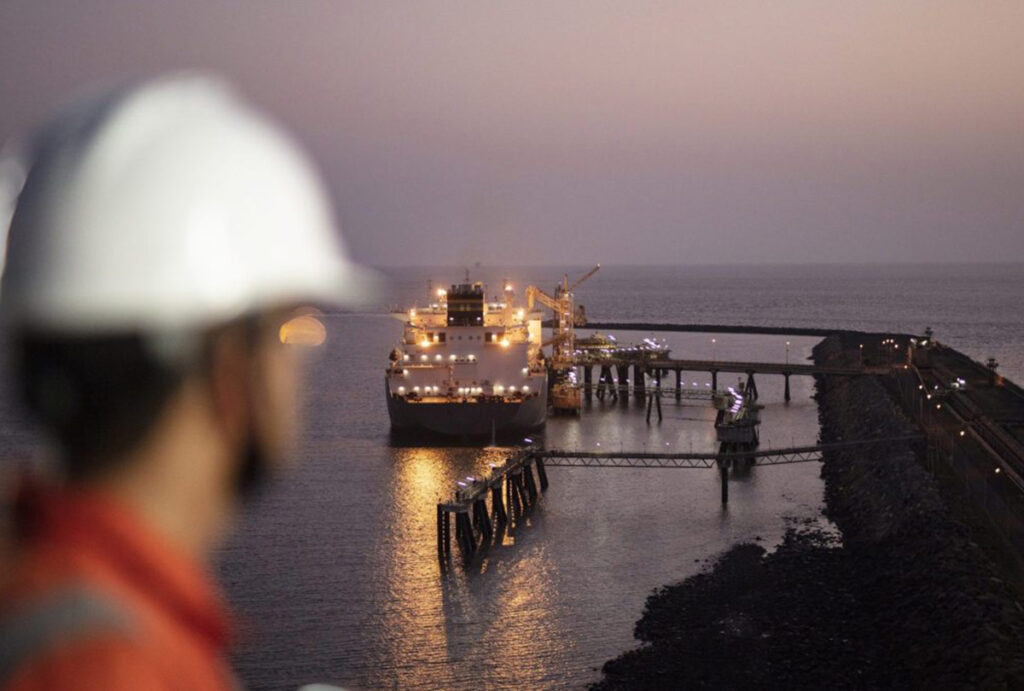
While Canada was building just one liquefied natural gas export terminal near Kitimat BC, the Americans were building 12.
That point from columnist Lorne Gunter in The Edmonton Journal underlines how badly Canada lost ground in 10 years of Justin Trudeau government.
And while we have hopes for some recovery under Prime Minister Mark Carney, we have yet to see major moves to get Canada back on the track of building and exporting the LNG the world wants and needs.
In its latest outlook, energy giant Shell sees world demand for LNG, led by Asia, increasing by 54%-68% by 2040, and 45%-85% by 2050.
The massive U.S. advantage
To update Gunter’s numbers on LNG plants, the US now has eight LNG export terminals in operation, another eight projects under construction, and a further 12 approved but not yet under construction.
The US set LNG export records in 2025, shipping 111 million tonnes of the fuel, almost 20 million more than its nearest rival Qatar and nearly 23 million more than it did in 2024.
While Canada is the world’s fifth-largest producer of natural gas it ranked 19th out of 24 countries in exporting LNG last year.
British Columbia’s export pipeline
We have only LNG Canada in operation, with around 60 export cargoes to date and an output capacity of 14 million tonnes, plus some modest FortisBC LNG exports (in containers). Its Tilbury LNG in the BC Lower Mainland can produce 250,000 tonnes.
Next in line is Woodfibre LNG in BC, which will be able to produce an annual 2.1 million tonnes when it goes online in 2027.
Later, the Haisla Nation’s Cedar LNG in BC aims to produce 3.0 to 3.3 million tonnes a year, starting in late 2028, and Ksi Lisims LNG, led by the Nisga’a Nation in BC, aims to start producing 12 million tonnes a year in late 2028 or 2029.
There are some expansion plans: LNG Canada’s partners are considering adding Phase 2, which would double output capacity to 28 million tonnes a year. Tilbury LNG has plans to expand to 3.4 million tonnes by 2027.
If all these plans all go ahead, Canada’s LNG production could hit 46.65 million tonnes a year by 2029, which would only be around 10% of the capacity we expect from the US by then.

And it would not be half of the 100 million tonnes that federal Energy Minister Tim Hodgson cites as a Canadian target.
The East Coast political roadblock
Gunter adds: “And neither Hodgson nor any other Liberal has even hinted at building terminals on the East Coast to take advantage of proximity to the enormous European gas market or constructing pipelines to feed Maritime terminals. . . .
“Why are the Liberals so silent about East Coast opportunities? Because any terminals built in Nova Scotia or New Brunswick would require Western oil or gas, and that would require a pipeline or two across Quebec which would jeopardize the Liberals’ 40-plus seats in that province.”
And while there has been talk of LNG projects in Quebec, and in Newfoundland and Labrador, no plan has become firm enough for Ottawa to send it to the Major Projects Office, which was set up to streamline and speed up the regulatory approval processes for such resource projects.
The Asian demand surge
While we accept that nuclear power and renewable energy will grow, we see world demand on the rise, especially after the strains on delivery and prices generated by the US-Israel war on Iran.
Says Shell: “We expect that much of the growth in LNG demand will take place in developing markets, particularly in Asia, where the use of natural gas is playing a critical role in lowering emissions.” It noted that in 2025, around 65% of total LNG imports went to Asia.
Shell said that while global gas consumption may have peaked in some regions like Europe and Japan and will peak for others in the mid-2030s, “global LNG demand is expected under most independent outlooks to continue to grow to 2040, if not beyond”.
Catching the second wave
Dane Gregoris, energy director at Enverus Intelligence Research, tells us that, despite past regulatory hurdles in Canada, he is optimistic about a “second wave” of projects due to a booming global appetite for natural gas.
It all offers Canada a rare opportunity to fix past regulatory mistakes and ignite economic growth, he says.
And while Canada missed the boat a decade ago during the first wave of LNG export opportunities from North America, CEO François Poirier of TC Energy also says the time is ripe to take advantage of the second wave.
“The opportunity has come back around again, because of geopolitics and just surging demand for natural gas. And so we have a chance to dominate, and we have to go after it.”
Our Resource Works view: Let’s make that a plan.
Don MacLachlan is a writer for Resource Works, a non-partisan organization that champions responsible resource development in British Columbia and Canada. Reach him via [email protected]
Share This: