CDN NEWS |
  US NEWS










Canada is endowed with rich resources, well-educated people and a reasonable infrastructure. Canada could choose to develop these opportunities because there is global demand for energy, minerals and agricultural products. Surprisingly, business investment, productivity, and our standard of living are all declining.
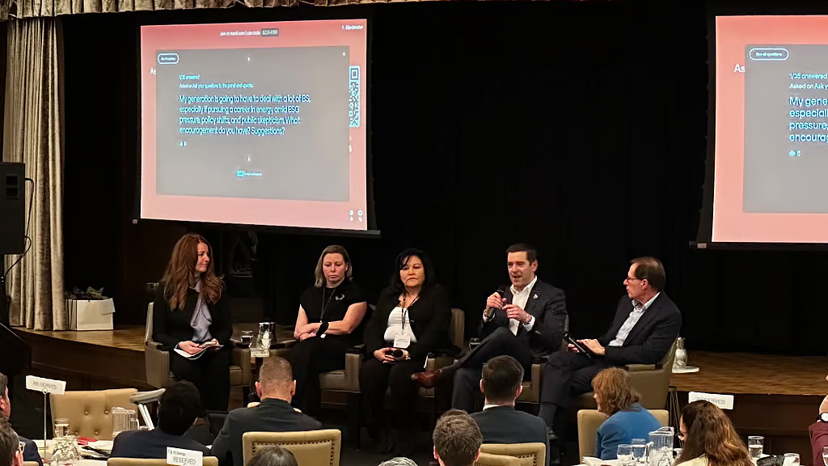
At a recent Canadian Energy Executive Association event, the panellists discussed these negative trends and what Canada can do to reverse them with an energy focus.
Human Opportunities
“Our objective is about human flourishing,” said Bryan Gould, Founder and Executive Chair, Aspenleaf Energy. “We can only flourish with a foundation of security and prosperity, and those require energy. It’s abundant, reliable, and affordable. Energy policy is about life. It’s about survival, opportunity, and dignity. It’s not about the MoU.”
Building Big Opportunities
“When we talk about building big things, we need to look back to remind ourselves of lessons learned,” said Trevor Ebl, President, Canadian Natural Gas Pipelines, TC Energy. “Trans-Canada Pipelines was incorporated through an act of parliament to build the Canadian mainline. It was not an easy decision. A lot of political will was needed to make that happen.”
As a result, Canada moved low-cost natural gas from the WCSB in Alberta across the prairies into the eastern provinces. The Canadian mainline created a multi-generational lifeline of low-cost, reliable natural gas for homes, businesses, and industry.
Fifteen years ago, we were on the starting blocks with the US on the LNG opportunity. Canada had about 18 proposed LNG facilities for the West Coast. The gun went off, and 15 years later, Canada has one LNG export terminal in service. Meanwhile, the US. has emerged as the world’s largest LNG exporter.
Canada still has the opportunity to become a significant LNG exporter if we remember the lessons for building big things. Canadian energy exports are a bigger opportunity than automotive, aluminum, and steel combined.
Commodity Opportunities
“We are at the beginning of a ten-year commodity cycle now. Good times should ensue for Canada,” said Heather Exner-Pirot, Senior Fellow and Director of Energy, Natural Resources and Environment, Macdonald-Laurier Institute. “The last eight years have been a bust. While we fared pretty well because production had never been higher, it was a time when construction wasn’t as widespread, and there weren’t as many jobs. For a lot of people, it didn’t feel like we were doing all that well.”
Good times should ensue for Canada. Gold and silver have reached record highs. Uranium prices have maintained highs for two or three years. The TSX oil and gas index recently hit an all-time high, surpassing records set in 2008 and 2011. Demand for critical minerals is barely keeping up with production.
If this MoU reaches what it should be and could be, Canada can become an energy superpower, not just the United States’ energy colony. I’m encouraged that the MoU led TMX to say we’re going to add another 360,000 barrels per day of export capacity, and led Enbridge to say we’re going to add another 400,000 barrels per day.
Natural Gas Opportunities
“We are seeing tremendous growth opportunities for natural gas around the world. Canada can be a big part of that,” added Trevor Ebl. “We see LNG exports as the number one demand driver, along with electrification, electricity generation, and data centers.”
The natural gas demand outlook in Canada is for a 40-45% increase over the next 10 years with current technologies. I expect some export consumers will soon pay a premium for LNG produced with lower emissions that Canada can achieve.
The federal government’s initiative to identify projects of national significance and the MoU are strong signals of change. However, there’s regulatory overreach, overlap and inefficiency in Canada. That situation needs to change for all development projects, not just the few on the national significance list.
Here’s an example that compares two TC Energy pipeline projects. Each is about 700 kilometres of 48-inch pipe. The Southeast Gateway expansion project in Mexico went from permitting application to in-service in 3.5 years. Coastal GasLink in BC required 10 years. That’s the competitiveness gap we need to close to attract investments to Canada.

First Nations Opportunities
“I grew up in northern BC. We’ve had major projects go throughout our territories with absolutely no benefits coming back to us,” said Karen Ogen, CEO, First Nations Natural Gas Alliance. “Our organization is trying to look at ways to change that narrative and build our economy while remaining sensitive to environmental issues.”
A lot of our people were just opposed to pipelines. However, Canada has so much potential. We are home to the fourth- and fifth-largest oil and natural gas reserves. Now I advocate for getting projects done. We can build big things with an Indigenous component.
This MoU will benefit all of Canada. It’s not just about Alberta and the federal government; it’s for all Canadians. I’m hoping we will turn the corner on Indigenous opposition to pipelines. This MOU is a starting place. It’s not going to be an easy road with the Indigenous people on the coast, but we will get somewhere.
Investor Opportunities
“Too many people forget that producers take risks in driving the energy engine. I’ve stewarded tens of billions of dollars in capital investment, with accountability to investors to deliver the results we promised,” added Bryan Gould. “Energy producers have to deliver returns to investors to keep capital flowing and deliver products to customers to keep revenue flowing.”
Producers don’t invest in lofty narratives, no matter how appealing those may sound. They invest in projects. Those projects live or die on economics, on risk, and on timelines. Investors require a continuous, risk-adjusted return. That return has to be high enough to justify taking the risk amid all these uncertainties. In a globally competitive market for investment capital, Canada cannot afford to impose additional avoidable disadvantages on itself.
Investors are not fat cats with exotic cars. Ours include pension funds, college endowments, an institution that sponsors medical research, and a world-class art museum. Investors are about helping everyday people and securing their lives.
Investors can’t ignore the commercial constraints imposed by the MoU. My concern is that the MoU does not address the key federal barriers that preclude a free-market approach to the energy industry. Key federal barriers have become conditional, reversible, or deferred.
What I like about the MOU is that it signals a change in direction. However, it’s way too small, way too slow, and it still has way too many impediments. I acknowledge that the MoU includes multiple concessions that reduce investment risk. The federal government shelved the proposed emissions cap and suspended the clean electricity regulations. However, we still have:
- A West Coast tanker moratorium.
- The indeterminant Impact Assessment Act.
- The Oilsands Pathways CCUS requirement.
The Pathways CCUS project is not a practical precondition for any stakeholder. The consequence is that the proposed crude oil pipeline is held hostage to the success of what will be the largest carbon capture project on the planet.
Climate Change Opportunities
“The discussion on climate change is horribly broken,” said Bryan Gould. “We need a better conversation about the actual science, the risks, the uncertainties, what we know, what we don’t know, and the trade-offs.”
The reality is, most nations of the world are going to do what they’re going to do. Emissions are rising and the developed world isn’t going to change that. The developing world now dominates emissions. Too many commentators want to ignore or brush away that reality.
I cannot understand why Canadians would want to self-sacrifice themselves on the climate change altar when the rest of the world isn’t going to follow. We need to be pragmatic by:
- Investing in technologies that will provide the energy for the future.
- Adapting because the climate is changing, not just because of humans, but also because of nature.
Yogi Schulz has over 40 years of experience in information technology in various industries. He writes for Engineering.com, EnergyNow.ca, EnergyNow.com and other trade publications. Yogi works extensively in the petroleum industry to select and implement financial, production revenue accounting, land & contracts, and geotechnical systems. He manages projects that arise from changes in business requirements, the need to leverage technology opportunities, and mergers. His specialties include IT strategy, web strategy, and systems project management.
Share This: