CDN NEWS |
  US NEWS









By Katarzyna (Kasha) Piquette
The war in Ukraine is accelerating a revolution in drones, sensors and autonomous systems. For Alberta’s energy sector, already built on robotics, AI and remote monitoring the lessons about innovation, resilience and infrastructure security may be closer to home than many realize.
I was born in the mid-1970s behind the Iron Curtain. When I came to Canada in the late 1990s, Eastern Europe was still in the early stages of its transformation from centrally planned economies to modern democratic states. Over the past three decades I have had the privilege of witnessing that transformation unfold. Countries that once struggled with outdated infrastructure and limited resources have built modern industries, vibrant technology sectors and globally competitive economies. It is a powerful reminder of what innovation, and determination can achieve in a remarkably short period of time.
During my recent trip to Kraków and Warsaw, meeting with colleagues and industry contacts, conversations often turned to how the war in Ukraine is reshaping technology, industry and even the economics of infrastructure. A common theme emerged in many of those discussions: the urgent necessity to innovate, cooperate and transform in response to rapidly changing realities.
One observation from a Polish colleague stayed with me. On today’s battlefield, the life expectancy of a modern tank can be measured in minutes once drones locate it.
A $10-million tank can now die in minutes to a $500 drone.
That simple equation is quietly transforming both the battlefield in Ukraine and the global technology landscape. Heavy armour, once the defining symbol of military power, is increasingly vulnerable to swarms of inexpensive, networked drones capable of locating and striking targets within minutes. The scale of the shift is striking. Independent battlefield tracking projects have documented thousands of destroyed Russian tanks and armored vehicles during the war, illustrating how rapidly expensive military equipment can be neutralized by lower-cost technologies. Attack On Europe: Documenting Russian Equipment Losses During The Russian Invasion Of Ukraine
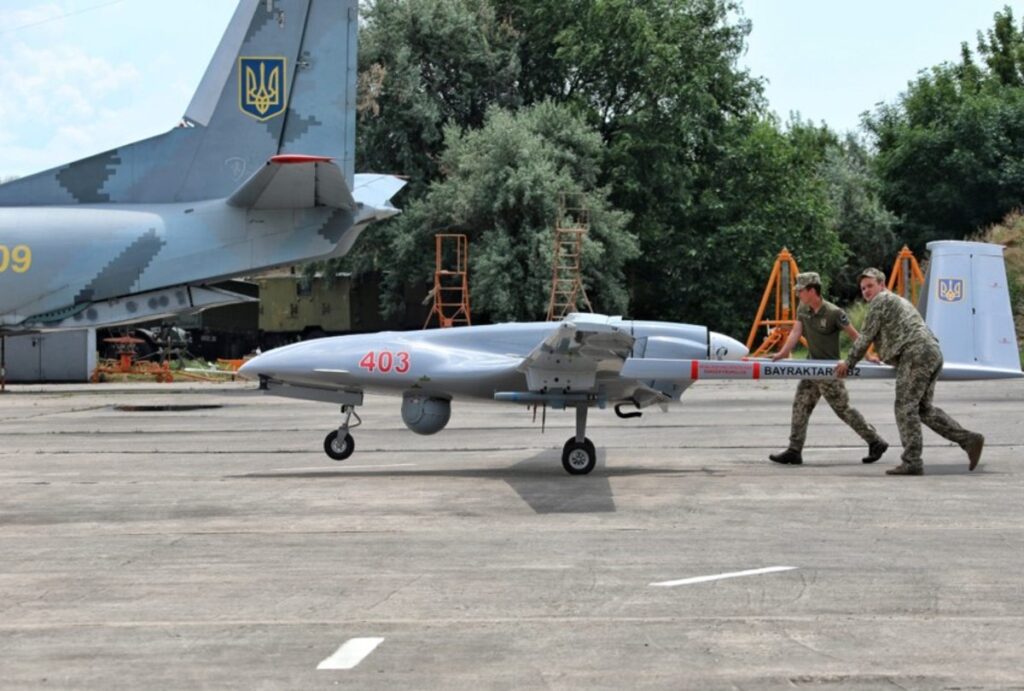
Ukraine has also rapidly become one of the world’s largest laboratories for drone innovation. Ukrainian factories produced more than 2.2 million drones in 2024, with production expected to reach around four million annually as the country scales its domestic defense industry. 4.5 Million Drones Is A Lot Of Drones. It’s Ukraine’s New Production Target For 2025..
These drones conduct reconnaissance, guide artillery fire, strike vehicles and disrupt logistics. In some sectors of the front, drones account for a large share of battlefield damage, dramatically shifting the balance between expensive equipment and low-cost technology.
But the transformation goes beyond factories. Ukraine has also blurred the line between soldiers and digital operators. Drone-pilot simulators allow volunteers to train in virtual environments before flying real missions, turning what looks like gaming technology into a new form of battlefield preparation.
For readers in the energy sector, this technological shift may feel surprisingly familiar.
Over the past decade the energy industry has undergone its own digital revolution. Sensors, robotics, remote monitoring, artificial intelligence and automation now play a critical role in operating pipelines, drilling rigs and energy infrastructure safely and efficiently.

Many of the technologies now shaping modern drone systems come directly from this world of industrial innovation.
This shift also raises an increasingly important question for the energy sector: infrastructure security. Pipelines, LNG terminals, power stations and refineries are complex systems often spread across vast and remote areas. The same drone technologies transforming warfare could also pose new risks to critical infrastructure, but they can also become powerful tools for monitoring, inspection and protection.
In other words, the same innovation that creates vulnerability can also strengthen resilience.
That is why this conversation matters for Canada, and especially for Alberta.
Alberta has quietly built one of the country’s fastest-growing technology ecosystems. The province’s tech sector contributes roughly $13 billion to Alberta’s GDP, with employment growing significantly faster than the provincial average. Calgary and Edmonton are increasingly recognized as emerging North American innovation hubs. Much of this innovation grew directly from the energy industry. Technologies developed for remote sensing, geospatial analysis, automation and operating in harsh environments are now widely used in robotics, artificial intelligence and autonomous systems.
Those same capabilities increasingly underpin the drone economy, and this is where the opportunity lies.
The drone revolution is not simply about warfare. It is about advanced manufacturing, software, sensors, artificial intelligence and materials science, all these industries expanding rapidly around the world.
Regions that build these supply chains today will capture both economic growth and technological leadership tomorrow. The battlefield in Ukraine is evolving every six months. Industrial strategies in many Western economies still move in cycles measured in decades.
For Canada, and for innovation hubs like Alberta, the real question is whether we recognize the scale of this transformation early enough to participate.
Because in the drone era, technological advantage no longer belongs to the country with the largest equipment.
It belongs to the one that can innovate and move fastest.
Katarzyna (Kasha) Piquette Canadian geopolitical and energy strategist and founder of Transatlantic Energy Ventures (formerly Canadian Energy Ventures), working on strategic partnerships across Canada, Poland and Ukraine.
Share This: