


 CDN NEWS |
  US NEWS







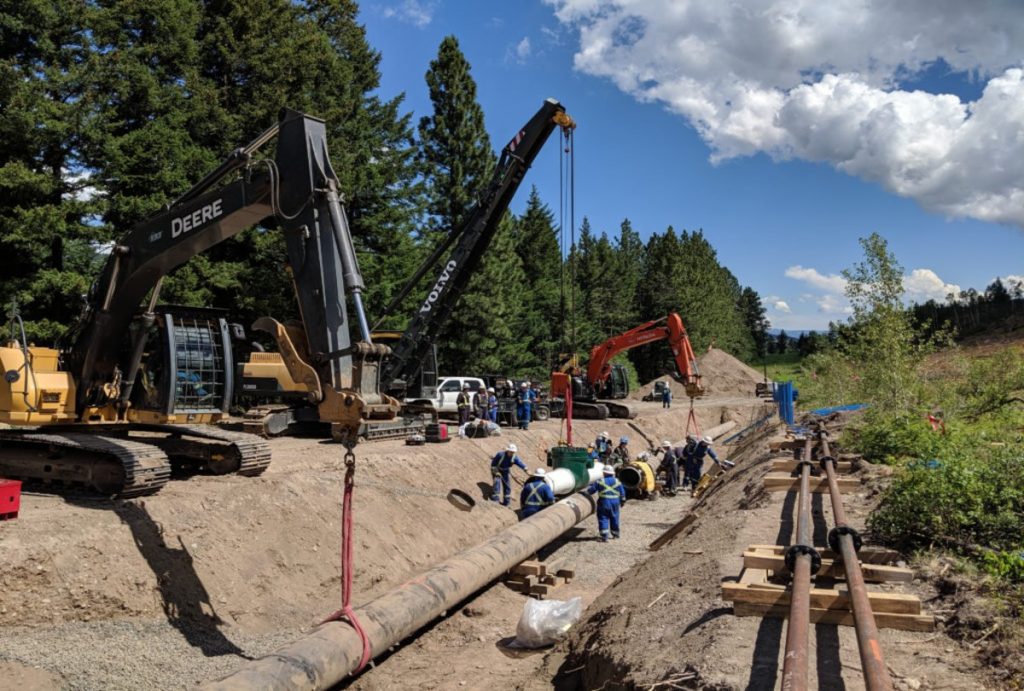
For a country that has been challenged by tepid productivity levels and is striving to diversify exports beyond the United States, these projects could provide a much-needed tonic
By This Article and More From Chris Varcoe Here • Calgary Herald
Why is so much oxygen being spent talking about Alberta’s push for new oil pipelines?
Well, there are more than 31 billion reasons to consider.
A new joint study by Studio.Energy and ATB Economics concludes that bolstering oil pipeline capacity in Canada could generate a massive bump in investment, increase exports and create more jobs.
By adding 1.5 million barrels per day of additional pipeline capacity out of Western Canada, the country would see annual real gross domestic product (GDP) higher by an estimated $31.4 billion, or 1.1 per cent on average, between 2027 and 2035.
When it comes to employment, the report indicates more pipelines, the proposed Pathways carbon capture network — a federal prerequisite for building a new oil artery to the Pacific Coast — and increased industry investment to fill the lines would support 112,000 additional jobs, on average, in Canada during the same time frame.
SUBSCRIBER EXCLUSIVE: FP West: Energy Insider brings you behind the oilpatch’s closed doors with exclusive insights from insiders every Wednesday morning.
Top of Form
For a country that has been challenged by tepid productivity levels and is striving to diversify exports
“There’s a big prize here, in terms of boosting investment and creating long-term economic prosperity,” said energy economist Peter Tertzakian, founder of Studio.Energy.
“I can’t think of anything else that would give such a large jolt to the Canadian economy over a 10-year period,” added ATB chief economist Mark Parsons.
The report looks at the economic implications of the Alberta government’s proposal to build a new bitumen pipeline that could ship one million barrels per day (bpd) to the Pacific Coast for export, along with plans by Enbridge, Trans Mountain Corp. and South Bow Corp. to increase capacity on their own systems.
The study assumes about half-a-million barrels of new export capacity will come online by 2035 from those systems, along with a greenfield pipeline that Alberta is examining — but it doesn’t have a private sector proponent.
Building all of these developments would require $41 billion of investment, including an estimated $35 billion needed for the new West Coast pipeline.
Filling these lines would require another $100 billion or more of spending to hike production, and an estimated $20 billion for the Pathways carbon capture project.
The report says these projects would bolster the economy across the country.
In Alberta, where the bulk of the extra production would take place in the oilsands, GDP is projected to increase by an average of 5.1 per cent relative to a base case between 2027 and 2035.
“We get a significant impact from the build-out, the construction of the pipelines and filling the pipelines . . . and then, as construction winds down, we get the lift from export,” said Parsons.
“It’s that one-two punch that’s been missing in the Canadian economy.”
ATB chief economist Mark Parsons speaks to media at the Calgary Economic Outlook event at the BMO Centre on Wednesday, Nov. 19, 2025. Brent Calver/Postmedia file
Oil demand in the future and commodity prices will play a factor, along with the willingness of the upstream industry to make investments to significantly grow production — and that requires regulatory certainty.



Article content
The study assumes a long-term price for West Texas Intermediate crude averaging around US$60 to $70 a barrel over a 10-year period.
Article content
With the war in the Middle East, oil prices have taken off this month. WTI crude closed Wednesday at $98.36 a barrel.
The study arrives as Canada is seeking new markets for its main exports. The startup of the Trans Mountain pipeline expansion in 2024 has proven that customers in Asia want oil from Canada.
It’s also helped narrow the price discount on Canadian crude.
“The big prize is the West Coast, because then we diversify, we’re able to supply our allies, and also hopefully shield ourselves from price differentials, as well as essentially getting even higher prices in the international markets,” said Tertzakian.
With the world increasingly focused on issues such as energy security, the discussion on building pipelines and growing production takes on added significance.
“What can we do within our control?” Parsons said. “We can scale up, and the world needs what we have.”
However, Janetta McKenzie of the Pembina Institute said the report assumes global oil and gas demand will always grow.
“If a private sector proponent sees the business case for a new pipeline, they are free to make that case,” she said in a statement.
“But with waning oil demand on the horizon, Canadians should not be obligated to take on any financial risk to support an extremely profitable legacy sector.”
University of Alberta energy economist Andrew Leach said there are benefits to Canada from increased pipeline access, but he doesn’t think looking at total construction spending as an economic benefit is the way to measure its true value.
If more export pipelines bolster the value of every other barrel by $1, that would lead to “a massive increase in royalties, export revenues and profits,” he noted.
“We want to build this because we want low-cost market access for our resources that increases the value of our resources.”
In a memorandum of understanding recently reached between Alberta and the federal government, Ottawa declared a new bitumen pipeline to Asian markets a project of national interest that can be considered by the federal Major Projects Office.
The governments also agreed to work with large oilsands producers on reaching a separate MOU by April 1 on a proposed carbon capture and storage network.
Speaking to reporters Wednesday, Premier Danielle Smith said talks are ongoing.
As for the report, the estimate is “pretty close” to what she would have expected from the economic analysis of a new pipeline.
“This is encouraging,” Smith said.
“I’m glad to see that this has validated the kind of work that we’ve done on this, and I hope that other levels of government will look at this with the urgency that we do.”
Chris Varcoe is a Calgary Herald columnist.
[email protected]
Share This:





















