CDN NEWS |
  US NEWS









The massive scale of electricity generation required by 2050 and why rationing power threatens our economic future
By Jim Rushton
By Resource Works
More News and Views From Resource Works Here
In today’s uncertain world, sovereignty goes well beyond the right to govern a nation’s people and territory. It now implies the capability to independently supply both the necessities of life and the expectations of its population, and to choose its trading partners and allies.
In Canada, the sovereignty discussion is focused on trade, artificial intelligence, intellectual property, and defence. Complete isolation is neither possible nor desirable, requiring strategies and decisions that ensure the most stable sovereignty possible.
Ideal arrangements are not guaranteed to last. At its core, stability and security depend on reliable alliances, trade relationships, and sufficient domestic inputs to sustain a prosperous economy.
The past decade has placed energy at the centre of the sovereignty debate. We have seen consequential mistakes when energy sovereignty is undervalued, as in Germany’s decision to terminate its nuclear program in favour of Russian natural gas.
Canada is in a good position. According to the International Energy Agency (IEA), “Canada’s electricity system is already among the cleanest in the world.” In 2024, the IEA reported that fossil fuels accounted for only 19.3% of Canada’s electricity generation.
To achieve net-zero by 2050, Canada projects that electricity demand will roughly double.
The Canadian Climate Institute has illustrated the scale of the transition required: the share of household energy coming from electricity would need to rise from about 24% in 2025 to roughly 96% by 2050.
Put another way, it would take roughly 130 projects the size of BC’s Site C dam.
Past power transitions
During the 1950s and 1960s, pipelines were built to move natural gas across the country. By the 1970s and 1980s, nuclear generation expanded while households were encouraged to shift heating and appliances from electricity to natural gas.
Boomers will remember the pitch: rebates for insulation and better windows, efficiency grants, and the promise that technology would reduce electricity demand. The success of that campaign was one reason Ontario Hydro laid off or retired thousands of construction workers in the early 1990s.
Today’s transition faces challenges
Canada’s approximate electricity generation mix is: hydro 55%, natural gas 15%, nuclear 15%, wind 7.5%, coal 3%, and solar, biomass, and oil/diesel at about 1% each.
Across the country, roughly 20% of the current supply comes from fossil fuels. Add another 100% to meet future demand, and the challenge of maintaining a sovereign, affordable, and reliable electricity supply becomes complicated.
The challenge is further complicated by the need for a greater presence in the remote North, including population growth, industrial activity, and defence capabilities. In the Arctic, especially, rising temperatures could create serious engineering challenges.
What energy sovereignty requires
Supply-chain sovereignty rests on a short list of essentials: access to the necessary intellectual property (IP), a reliable supply of inputs, sufficient manufacturing capacity, and an experienced engineering and trades workforce.
Canada has the labour force necessary to build nuclear, hydro, and natural-gas generation. It also has a full package of nuclear IP and secure access to gas and steam turbines through established international supply chains.
Canada also has access to the critical minerals and the skilled labour required to install wind and solar generation.
Whether Canada becomes competitive in manufacturing wind turbines or solar panels for global markets is a separate industrial policy question.
The relative scale of each option
Hypothetically, if Canada doubled its electricity supply with a single generation technology, what would it look like?

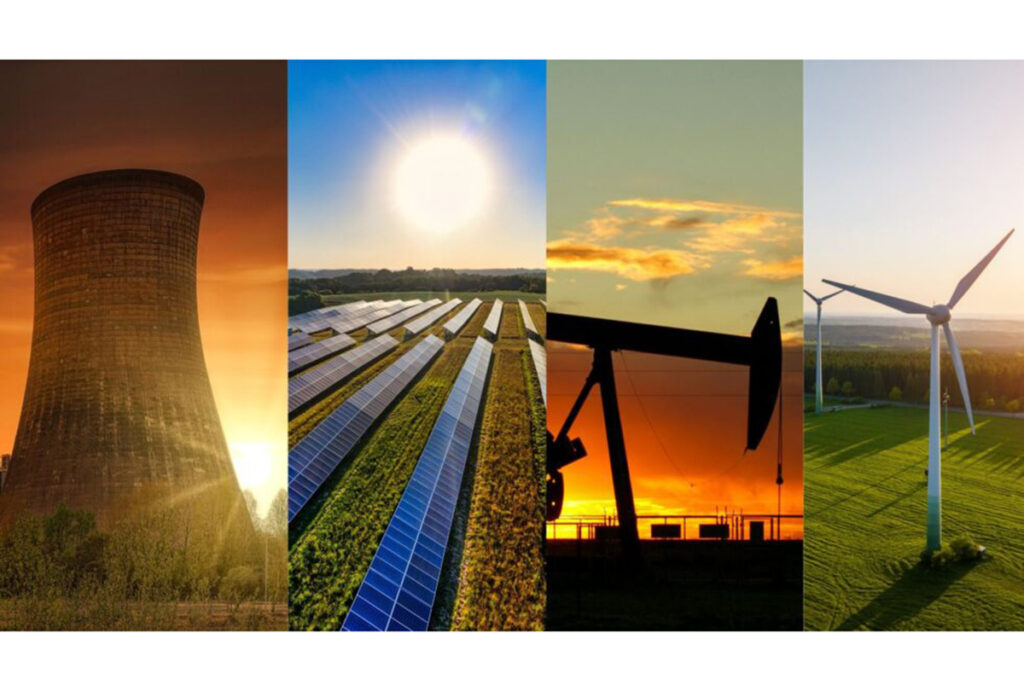
Roughly speaking, it could mean the equivalent of 130 BC Site C dams, 80 large nuclear reactors, 100 large natural-gas plants, 450 wind farms the size of Buffalo Plains Wind Farm, or 850 solar facilities the size of the Travers Solar Project.
Obviously, this isn’t going to happen, but it does paint a picture of the scale of infrastructure involved. Small modular reactors are not included in this comparison but are expected to also play a role.
Timeline
Doubling Canada’s electricity supply in just under 25 years will be challenging, whatever the mix, judging from experience.
Roughly speaking, BC’s Site C takes about a decade, large nuclear plants take six to ten years, and natural-gas plants take two to three years.
The Buffalo Plains Wind Farm took about two years to construct, and the Travers Solar Project took 18 months. Solar panels typically decline about 15–20% over their lifetime.
Lifespan
Hydro dams typically operate for 80 to 100 years or more, nuclear plants 60 to 80 years, natural gas plants 30 to 40 years, and wind turbines and solar facilities roughly 20 to 30 years.
Cost
Capital costs vary widely, ranging roughly from $1,000–$2,000 per kW for natural-gas plants, $900–$1,800 for utility-scale solar, $1,500–$2,500 for wind, $4,000–$8,000 for large hydro, and $7,000–$12,000 for nuclear plants.
Levelized costs show wind and solar backed by natural gas are often the lowest-cost option when supply is needed for longer than a few hours, followed by hydropower.
Emissions
Lifecycle emissions—including mining, manufacturing, transportation, construction, fuel supply, and operations—are roughly 490 g CO₂e/kWh for natural gas, 40–50 for solar, 20–25 for hydro, and 10–15 for wind and nuclear (Our World in Data).
(Note: g CO₂e/kWh = grams of greenhouse-gas emissions per kilowatt-hour of electricity.)
The buildout will require a mix of firm, flexible, and intermittent power.
Avoid energy scarcity
Yet in British Columbia, legislation tabled on October 20, 2025, proposed to “address growing demand for electricity from emerging sectors by enabling energy connections while placing limits on the power available for data centres and AI, and enabling hydrogen production for export…”
Whatever the merits of the decision, the fact remains that a systemic shortage of electricity has developed. You can run, but you cannot hide from the truth—this is rationing.
It is hard to imagine reaching net-zero by 2050 without more judicious public investment and an “all-of-the-above” approach.
On cost and reliability, natural gas combined with wind and solar performs best. On emissions, nuclear with wind and solar is the clear winner.
Is it responsible for British Columbia to drop natural gas while banning nuclear power from the mix?
Keep in mind
Is it responsible for British Columbia to drop natural gas while banning nuclear power from the mix?
Today, the world is a mess of mass migration, trade wars, civil wars, territorial wars, and regime-change struggles—with more likely to come.
Of all possible scarcities, food and energy are the most disruptive economically and politically.
It would be naive to think Canada is immune.
Jim Rushton is a 46-year veteran of BC’s resource and transportation sectors, with experience in union representation, economic development, and terminal management. Reach him at [email protected].
Share This: