CDN NEWS |
  US NEWS







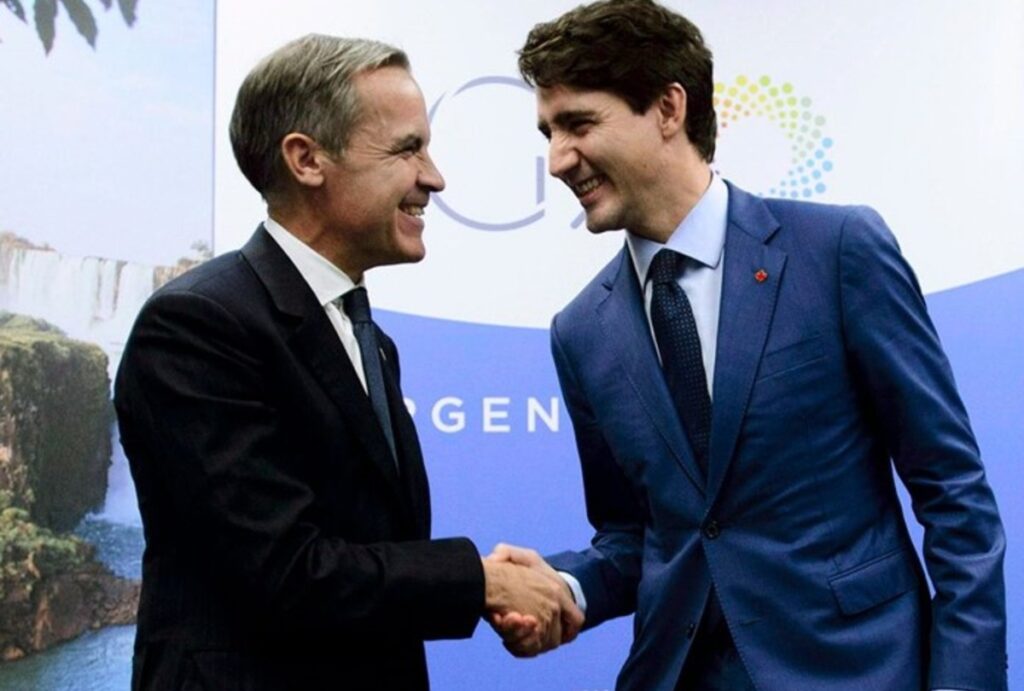
Prime Minister Carney has repeatedly criticized his predecessor’s spending habits since entering the political world last year. He said the Trudeau government spent “too much” and then launched a spending review of his own after being elected, attempting to rein in government largesse. However, despite Carney’s criticisms of Trudeau’s fiscal record, he has largely adopted the same strategy, as federal spending and debt are forecasted to sharply increase again in his first year even though some limited savings were found in the spending review.
The 2025 budget revealed that federal program spending (total spending minus interest costs) is projected to increase by $36.2 billion in 2025/26. To put this in perspective, this is a 7.3 per cent increase in annual spending—nearly two-and-a-half times the combined rate of inflation and population growth. It’s also the largest year-over-year increase in spending since the onset of COVID in 2020/21.
Moreover, the Carney government plans to spend $63.4 billion more in total than the Trudeau government planned from 2025/26 to 2028/29 due to the introduction of considerable new spending commitments on defence and housing. The reality that spending is only set to rise under the Carney government stands in stark contrast to the prime minister’s pointed criticism of Trudeau spending too much.
This additional spending will increase the amount of borrowing in Ottawa and add to the debt burden faced by current Canadian taxpayers and future generations. Federal spending is expected to exceed revenues over the next five years resulting in deficits ranging from $56.6 billion to $78.3 billion. Then consider the scale of deficits under Carney’s forecast compared to Trudeau’s final one. The Carney government expects to run combined deficits from 2025/26 to 2028/29 that are more than double the size of the shortfalls the Trudeau government planned for.
Higher spending and larger deficits will grow the mountain of total federal debt to $2.35 trillion this year and potentially to more than $2.9 trillion by the end of the decade. This year alone, inflation-adjusted federal debt will increase by $2,275 for every man, woman and child and reach the second-highest point in Canadian history at $56,432 per person (behind only 2021/22). This rising debt burden will likely result in higher taxes, fewer services or some combination of both in the future.



This is historically significant. A recent study shows there are seven prime ministers in Canada’s history who have not faced a world war or recession during their tenures. There are only three prime ministers who increased federal debt per person under those fortunate circumstances: Mackenzie Bowell, John Abbott and Mark Carney (with the caveat that it is still early in his tenure).
Prime Minister Carney is slated to increase per-person debt by 4.2 per cent this year. Of those prime ministers who did not experience a war or recession, only Mackenzie Bowell (4.7 per cent) increased per-person debt more during his tenure than Carney is projected to in his first year. For comparison, Prime Minister Abbott also did not experience a war or recession during his tenure and per-person debt increased by 0.7 per cent. Four other prime ministerial tenures (Joe Clark, Lester Pearson, Paul Martin and John A. Macdonald’s first tenure) saw declining per-person debt during a period when there were no world wars or recessions.
At the current trajectory of spending and debt, it’s possible that Carney will be the only prime minister this century or last to increase federal per-person debt over his tenure without the presence of war or economic retreat.
Prime Minister Carney was right to find fault with his predecessor’s spending and borrowing practices. The problem now, however, is that he appears unwilling to depart from Trudeau’s strategy. And the mountain of debt is only going to get bigger.
Share This: