CDN NEWS |
  US NEWS







By Annika Segelhorst and Elmira Aliakbari
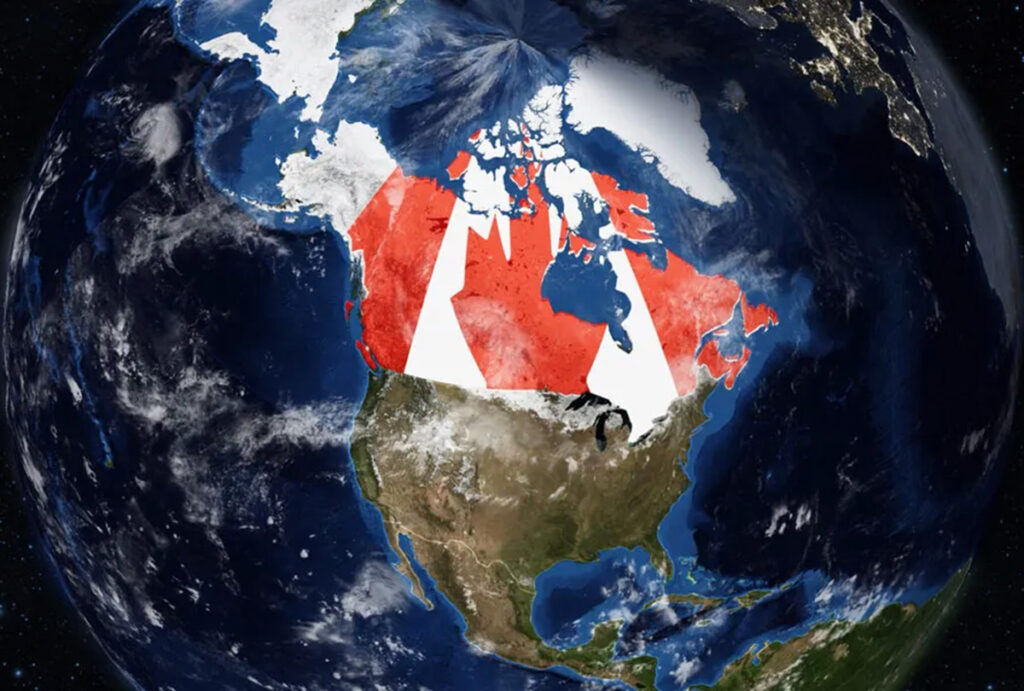
Since signing the Paris Agreement of 2015, Canada’s leaders have prioritized an accelerated transition away from fossil fuels and attempted to replace traditional energy sources (e.g. oil and gas) with renewables and low-carbon energy sources. In 2021, Canada’s leaders committed to the specific objective of achieving net zero greenhouse gas (GHG) emissions by 2050, which means reducing emissions to very close to zero within the next 24 years.
One significant challenge is the compressed timeline for making net-zero a reality by 2050, which is unrealistically short based on evidence from earlier energy transitions. Moreover, Canada’s domestic decarbonization efforts, even if fully realized, would have only a miniscule effect on global temperatures.
Since Canada signed the Paris Agreement in 2015, policies aimed at reducing our carbon emissions have amounted to more than $158 billion in spending by the federal government and four provinces—British Columbia, Alberta, Ontario and Quebec. But despite the cascade of taxes, regulations and massive subsides to phase out fossil fuels over the past decade, Canada’s reliance on fossil fuels has not declined. In 2015, fossil fuels accounted for 64.6 per cent of Canada’s energy consumption. By 2024, that share had increased to 66.3 per cent. The International Energy Agency (IEA) recently reported that fossil fuels are poised to remain the world’s dominant energy form past 2050, under current policies.
This outcome should not be surprising. Past evidence shows that energy transitions can take generations, according to leading expert Vaclav Smil—far longer than what Canada has pledged to achieve by 2050.

For most of human history, people relied on burning biomass like wood, crop residues and dung for heating and cooking. Coal finally surpassed biomass as the leading fuel source in the late-1800s, but its share of the total energy supply did not peak until the mid-1960s. It took 100 years after oil was first commercially extracted for oil to represent more than one-quarter of world fossil fuel consumption in the late 1950s. Natural gas did not reach this milestone until the 1990s, about 130 years after commercial extraction began.
Energy transitions take generations (not decades) because they involve the turnover of the capital-intensive systems which underpin our entire economy. Power grids, factories, and transportation networks are designed to last for decades, and to dramatically speed up their replacement would mean massive economic and social costs. According to Smil’s study, reaching global net-zero emissions by 2050 could require annual spending equivalent to more than one-fifth of national income in affluent countries like Canada.
Even if Canada was willing (and able) to bear such massive costs, the impact on climate outcomes would be virtually undetectable unless other countries reduce their own emissions at a similarly aggressive pace. Canada only accounts for less than 2 per cent of global emissions, limiting our capacity to meaningfully alter the global climate outcome independently.
In his Nobel Prize acceptance lecture, economist William Nordhaus highlighted how climate outcomes depend on collective actions on emission reductions across countries, rather than the actions of any single country acting alone. If emissions continue to rise in regions where future growth in energy consumption is concentrated, such as parts of Asia and Africa, net-zero pledges from relatively small emitters like Canada are ineffective. In 2023, China accounted for 35 per cent of global emissions and India overtook the EU to become the third biggest global emitter. Emissions in both countries continued to grow in 2024. Although Africa accounted for only 5 per cent of the global emission total in 2025, energy demand across the continent is expected to more than double by 2050, reflecting trends in economic development and population growth. Against this backdrop, future Canadian emissions reductions would have an even more minute influence on global totals.
Historical evidence about earlier energy transitions raises serious questions about the feasibility of achieving zero emissions within the current timeframe. Even if Canada were to dramatically reduce its emissions, our small share of global emissions and the continued growth of emissions in large countries mean the impact on Earth’s climate would be minimal, yet the damage to Canada’s economy could be extreme.
Share This: