CDN NEWS |
  US NEWS







By Ron Wallace
Overview
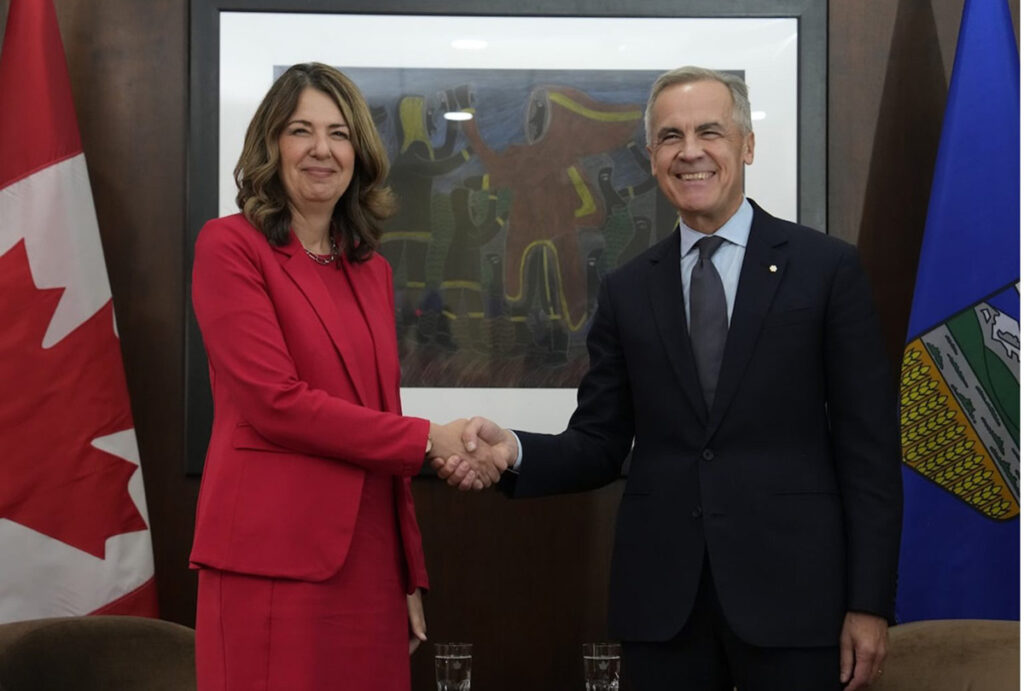
In a three-part series, former National Energy Board Member, Dr. Ron Wallace, examines the history and factors that have led to the signing of the Canada-Alberta MoU.1
After a decade of conflict on energy policy, the MoU signed on November 27, 2025, between Alberta and Ottawa has been being framed in some quarters as a breakthrough in federal-provincial relations. Notwithstanding that exuberant praise, the MoU presents a series of political, legal, economic and strategic dilemmas for the parties that are yet to be resolved.
“Over the past decade, Alberta’s key industries have faced repeated economic attacks from federal policies.” This excerpt, taken from a letter sent by Premier Smith to the Prime Minister shortly after the election of his minority Liberal government, summarized the frustrations of Alberta’s government, industry and Albertans after a decade of activist federal policies designed to engineer a “Net Zero” economy. The letter set in motion a series of backroom negotiations that extended over a period of five months, that led to the November 27, 2025, signing of the MoU.
Advertised as a “Grand Bargain” it sets out conditions under which the federal clean energy regulations would be suspended for Alberta, that would allow carbon capture projects to use CO2 for enhanced oil recovery (EOR) and consider a possible carve out from Bill C-48 (the Oil Tanker Moratorium Act passed in 2019 that restricted Canadian passage from northern B.C. coast) by making “needed adjustments to the tanker ban when the new pipeline to Asia is approved by the major projects office.”
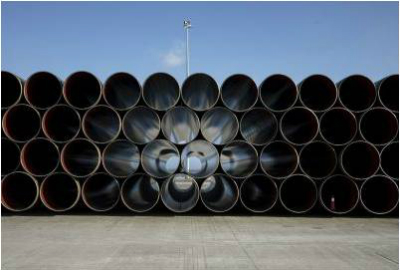
In short, the MoU sets out conditions under which a new bitumen pipeline from Alberta to a west coast port could be declared as a “priority project of national interest”, one that would be referred to the newly created federal Major Projects Office created to speed up regulatory approvals for infrastructure, energy and mining investments. The MoU also stipulated certain conditions, not the least of which was Indigenous consultation and opportunities for co-ownership.
On the one hand, Prime Minister Carney, a former banker and international champion of policies for Net Zero, has inherited a government that brought a disproportionately heavy regulatory burden on Canada’s oil and gas sector as compared with most other major producing countries. This despite the fact that Canada’s upstream emissions intensity is already lower than many major global producers including Venezuela, Libya, Iran, Algeria, Nigeria, Russia and Qatar. None of those producers – including the US – have imposed conditions to “decarbonize” their oil production.
Coming at a time of unprecedented economic challenges from the Trump administration that include international sanctions and a recent intervention in Venezuela, the Carney government is faced with policy choices that will affect Canada’s fiscal health and that could potentially threaten the foundations of Confederation.
As Stuart Muir recently opined:
“How, critics ask, can Mark Carney – former climate envoy, central banker and champion of decarbonization – now endorse LNG expansion and pipelines? The short answer is that Canada ran out of room for fantasy. This is not a conversion story. It is a collision between aspiration and a world that no longer indulges it.”
On the other hand, Premier Smith of Alberta, representing the province that has been an economic powerhouse for Canada (one that contributes 17% of Canada’s total GDP with only 12% of the population and one of the largest contributors to national economic growth in 2024) is attempting to deal with federal emissions policies that have obstructed, or at least muted, economic development within Alberta’s core industries – all of which are essential to the Canadian economy. These tensions have shaped not only the feasibility of external, interprovincial negotiations but internal political risks that she must also manage.
While the MoU agreement unquestionably represents a remarkable advance in federal-provincial relations, one that has been widely viewed as a meaningful gesture of goodwill toward western Canada, some consider that Carney and Smith have signed an MoU that offers optics, not certainty, with significant hidden costs and regulatory burdens coming at a time when investor confidence in Canada has significantly declined. Indeed, many have argued that the MoU is structured in a way that concedes significant regulatory discretion to Ottawa in ways that may discourage future investment. Hence, Smith is faced with advocating for an MoU that she must know lacks the certainty needed to resolve all the concerns of private sector investors: MoU’s signals intent, not certainty, are non‑binding and insufficiently detailed for investors who seek want regulatory clarity, durability and enforceability with timelines, cost‑recovery mechanisms and predictable permitting pathways. Some may consider that the MoU offers little more than a political compromise between Ottawa and Alberta presented as an investment-grade commitment.
Alberta has also pledged to support Ottawa’s reconciliation goals through potential Indigenous partnerships while those rights-holders and the British Columbia government appear actively to be working to block plans for any new bitumen pipeline to the coast. In short, Carney and Smith are facing opponents that have chosen to confront the authority of a federal government seeking to reduce interprovincial trade barriers and facilitate access to international energy markets. Smith must navigate all these contradictions simultaneously while undoubtedly accepting the reality that the MoU is little more than a symbolic agreement – one that, in a contractual sense, has been assailed as being politically fragile. In a turbulent international environment marked by falling oil prices, the MoU makes concessions on climate policies that her political base has traditionally opposed while simultaneously counting the Alberta industry to deliver the world’s largest carbon capture utilization and storage (CCUS) project. Her position is further complicated by a federal Opposition party that has taken the position that the MoU is meaningless, contending that the Liberals have no intention to build a new pipeline.
Throughout the debate, Premier Smith has consistently argued that Canada needs to develop an “alternate reality” one in which Canadian pipelines to international export markets advance global energy security and work to preclude “economic self-destruction.” At a time when Canada is facing mounting deficits, she cited data indicating that the Trans Mountain Expansion (TMX) had increased Canadian GDP by 0.25 per cent in its first quarter of operation.
Carney is also faced with internal challenges from a Cabinet previously dedicated to the wholly unrealistic ideal of achieving net zero for Canada, a development marked by the resignation of federal environment minister and Quebec lieutenant Steven Guilbeault. In short, both Carney and Smith have crafted an agreement that faces enormous challenges with timelines that may extend beyond electoral cycles – and hence may not survive political turnover.



The MoU could be viewed as a “framework agreement” in which many details, with critical deadlines, have yet to be finalized. For example, a Carbon Pricing Equivalency Agreement is to be negotiated by April 1, 2026, in which Alberta must agree to escalate its levy on large industrial emitters under its TIER Program to a “minimum effective rate” of $130 per tonne. In addition to a condition to reduce methane emissions by 75 per cent by 2035, the MoU also stipulates that by April 1, 2026, an agreement must be reached with the Pathways Alliance Group for their proposed $16.5 billion CCUS project in northern Alberta – an agreement that would presumably dispense with an emissions cap. Parallel with these negotiations, Alberta has announced its intention by July 1, 2026 to make an application as a proponent to the Major Projects Office seeking a “national interest” determination for a new bitumen pipeline.
Part 1 of 3: First, the “Good”
“It’s a great day for Alberta. It’s a great day for Canada. At the core of the agreement, of course, is a priority to have a pipeline to Asia…The way we’re going to do that is in combination with the Pathways project, which will be the largest carbon capture project in the world.” Prime Minister Carney, Calgary, November 27, 2025.
Since the April 28, 2025, federal election the Carney government, in face of heightened challenges from the Trump administration, has implemented aggressive plans to bolster Canada’s economic competitiveness and sovereignty. These policies signal a pivot to new economic priorities, a change that University of Calgary economist Trevor Tombe describes as a “down-ranking of non-economic concerns and the moving up the priority list of economic outcomes,” with controversial legislation aimed at fast-tracking approvals for major projects that are deemed to be in the “national interest”.
A newly created Major Projects Office (MPO) under the leadership of former Trans Mountain Corp. chair Dawn Farrell has been given a mandate to accelerate regulatory approvals for infrastructure, energy and mining investments. At the same time, Hon. Tim Hodgson, a former Goldman Sachs Group Inc. banker who played a key role in the negotiation of the Canada-Alberta MoU, has moved to the centre of the federal government’s efforts to expedite big-ticket energy projects.
A new bitumen pipeline to the west coast was Alberta’s key issue in seeking the MoU. While Alberta appeared to have been adamant about dropping a proposed emissions cap and the Clean Electricity Regulations (CER), the federal government apparently insisted on changes to the Alberta industrial carbon tax system along with assurances for the development of the Pathways decarbonization project. In news that initially thrilled Alberta oilpatch observers, but which promptly led to a resignation within the Carney Cabinet, the MoU proposed to “suspend” the highly contentious Clean Energy Regulations and the proposed regulations for an oil and gas sector greenhouse gas pollution cap.
In addition to subsequent turbulence within the Carney cabinet, there were parallel accusations of “betrayal” from the Green Party (because the MOU opened the door to federal tax credits for enhanced oil recovery (EOR)). Alberta Liberal MP Rob Oliphant responded by stating that Carney is “maintaining the values we’ve always held while responding to a very, very difficult economic situation” with Government House leader Steven MacKinnon adding: “I think it offers a number of pathways to major environmental advances in Western Canada, in Alberta notably – these include things like carbon capture, like a better spreading out of renewable energy across the Prairies through interconnects.”
Former Senator André Pratte (2016-2019) argued that while the MoU required Carney to “spend a significant part of his political capital in Quebec” he considered that Carney took the right approach in seeking an agreement with Premier Smith because the agreement did not require the abandonment of previously set federal climate objectives. Specifically, he contended that any projects would have to be approved under the Building Canada Act in ways that would provide opportunities for Indigenous co-ownership.
After a decade of conflict on energy policy, one that involved two major Supreme Court references (on carbon pricing (2021) and impact assessment (2023)), the MoU has been framed by some as a breakthrough in federal-provincial relations. The Osler law firm, for instance, describes the MoU as an “unequivocal signal” that the era of intergovernmental conflict may be ending and that it signals a clear reset in the relationship between the two levels of government. They noted how investor confidence in Canadian energy infrastructure had long been undermined by these conflicts and expressed a view that the MoU could represent a foundational, dual‑track strategy to expand oil exports and scale CCUS within a more predictable regulatory environment.
Osler also highlighted the global significance of the Pathways project within the MoU. They considered the CCUS project to be a gateway to future Canadian oil export growth while simultaneously reducing investment uncertainty and restoring regulatory predictability. With expected emissions reductions of 13.9 Mt CO₂ by 2030, rising to 62 Mt CO₂/year by 2050, and with parallel commitments to achieve net‑zero by 2050, they argue that the MoU is not just a single-project deal but one that could act as a comprehensive energy and economic strategy that “dramatically enhances the attractiveness of Canada as a destination for energy capital”.
A key element of the MoU was a “suspension” of the Clean Energy Regulations (CER) should Alberta significantly hike its industrial carbon price. This “suspension”, in turn, has accelerated considerations of potential, significant developments in Alberta that involve gas-fired electricity generation facilities to power new data centres – an opportunity sought by Alberta as part of an ambitious plan tailored to attract $100 billion in investment.
In a major policy shift, the MoU could promote significant oilfield development and accelerate decarbonization by explicitly including Enhanced Oil Recovery (EOR) under the umbrella of federal Investment Tax Credits (ITCs) for CCUS. By extending the federal CCUS Investment Tax Credits to include EOR projects, previously excluded, the MoU effectively brings Canada into alignment with the long‑standing U.S. treatment of EOR under the 45Q regime, closing a competitive gap that had disadvantaged Canadian producers. This change could trigger billions in new investment in Alberta because equal ITC treatment would materially improve netbacks and reduce breakeven thresholds, enabling EOR projects to proceed on the same economic footing as pure sequestration hubs. EOR projects require large, multi‑year capital planning cycles and many investors had awaited policy clarity before committing to the development of EOR reservoirs in Alberta, many of which have already been mapped with decades of operational history. Inclusion within the ITC provisions for CCUS means that these projects may be scaled faster than greenfield CCUS hubs and would extend the life of mature fields. If the MoU does indeed open the door to significant investment in EOR it could represent a material step forward not just for the industry but for the province.
As Garyk also noted:
“Mark Carney’s victory, assumed to signal more of the same climate orthodoxy, did the opposite. It opened space for conversations Ottawa had refused to entertain for years. Suddenly, new pipelines, regulatory resets, and unapologetic discussions about national prosperity weren’t fringe. They were on the table. For a country starved of realism in its energy debates, that shift mattered.”
After a decade of escalading conflicts between Alberta and the federal government over energy and emissions policies, the November 27, 2025, MoU unquestionably represents a breakthrough in the direction of federal-provincial relations. It also demonstrates an act of significant political courage on the part of both leaders. This alone may help to restore the faith of Canadians in responsible federalism in which Ottawa respects jurisdictional boundaries while engaging provinces and Territories as partners, avoids unilateralism, and ensures that fiscal arrangements are predictable and fair. The new terms to potentially allow Enhanced Oil Recovery (EOR) and to suspend the Clean Electricity Regulations (CER), represent a significant potential economic “win” not just for Albertans, oil producers and prospective developers of new data centers, but for the entire Canadian economy.
[1] The formal title of the agreement is: “Memorandum of Understanding between the Government of Canada and the Government of Alberta: Agreement to strengthen energy collaboration and build a stronger, more competitive and more sustainable economy.”
Share This: