


 CDN NEWS |
  US NEWS







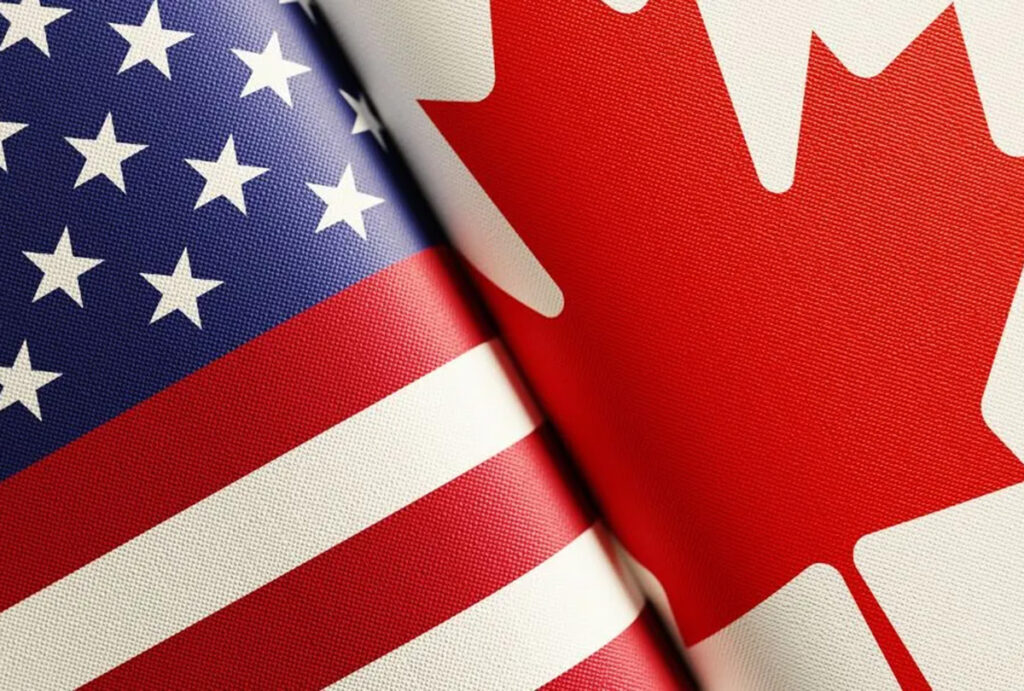
The year 2025 will be remembered as the year Canada survived President Donald Trump.
Twelve months ago, the president-elect vowed to employ economic force against this country, as a means to annex Canada as a 51st state. But Canada has endured the tariffs, and the annexation talk is now off the table.
There are still huge hurdles to overcome. The 47th president vows to renegotiate or even terminate the United-States-Mexico-Canada (USMCA) free trade agreement. The November 2025 National Security Strategy envisions Canada and other Western hemispheric states as virtual vassals of the U.S.
And the president’s sheer unpredictability confounds confident prediction of what we can expect in the years ahead.
Nonetheless, after 12 traumatic months, the stars are aligning in Canada’s favour, as Trump’s influence begins to wane. Forces supporting continental free trade grow stronger and Trump grows weaker, raging against the dying of the light as he approaches the lame-duck phase of his presidency.
Having gotten through 2025 intact, the worst of the Trump presidency for Canada may be over.
The country weathered the Trump tariffs better than expected. There was good reason to fear that the steel, aluminum and other sectoral tariffs imposed on Canada and other countries last spring would plunge our already lacklustre economy into a full recession. But it quickly became clear that most Canada-U.S. trade remained protected under USMCA. As a result, the country appears to have managed to avoid a technical recession in 2025, and per-person GDP is widely expected to finally increase after years of decline.
The next great threat to Canada’s economic future will be the 2026 review of the USMCA. The Trump administration plans to “revise it, review it or exit it,” in the words of U.S. trade representative Jamieson Greer.
But leaving USMCA might be politically and economically impossible for the U.S. While the president insists that prices “are coming down tremendously,” inflation appears to be running at about 3 per cent, partly due to the impact of tariffs against a Federal Reserve target rate of 2 per cent.



Unhappy voters punished Republicans in off-year and special elections. As the 2026 midterms approach, both businesses and Congressional leaders may assert greater pressure on the White House to protect supply chains and avoid further trade disruption. Further, the Supreme Court could declare some of the Trump tariffs unconstitutional, although the administration has other means of imposing them. And though nothing is certain, any Democratic gains in the House or Senate in the mid-terms could make Congress more assertive and the president less powerful.
In response to Trump’s threats, Canadian provinces have moved, albeit far too slowly, to lower non-tariff barriers and encourage internal free trade. The Carney government is seeking to diversify trade. And Canadian boycotts of American products, especially alcohol and of travel to the U.S., are causing real economic harm in the U.S.
Ottawa’s substantial increase in defence spending could encourage further cooperation with countries seeking to establish a new world order in the wake of the new American unilateralism.
Add it all up, and there’s reason to hope the worst is behind us.
This does not give grounds for complacency—quite the opposite. Bilateral talks aimed at reducing U.S. tariffs are moribund. The threat to the USMCA is real. Canada must work with Mexico to protect as much of that agreement as it can, recognizing that some changes are inevitable.
The provinces are proceeding far too slowly in eliminating internal regulatory and other non-tariff barriers.
And Canadian governments and businesses must continue to diversity trade in both Europe and the Asia-Pacific, while recognizing that the U.S. will always be, by far, this country’s most important trading partner.
The National Security Strategy invokes what it calls the Trump Corollary to the Munroe Doctrine. That corollary vows to “deny non-Hemispheric competitors… the ability to own or control strategically vital assets in our Hemisphere.” Under no circumstance should we agree to permit the U.S. to veto non-American investment in Canada.
Carney was right when he said last March “the old relationship we had with the United States based on deepening integration of our economies and tight security and military cooperations is over.” But a new relationship must be forged, one that protects the economy and Canadian sovereignty while maintaining the best possible relationship with the U.S.
We still face hard choices. But having survived Donald Trump’s first year as president, we can hope the road ahead will be at least a little bit smoother.
Share This:





















