


 CDN NEWS |
  US NEWS







By Jason Clemens and Elmira Aliakbari – Fraser Insititute
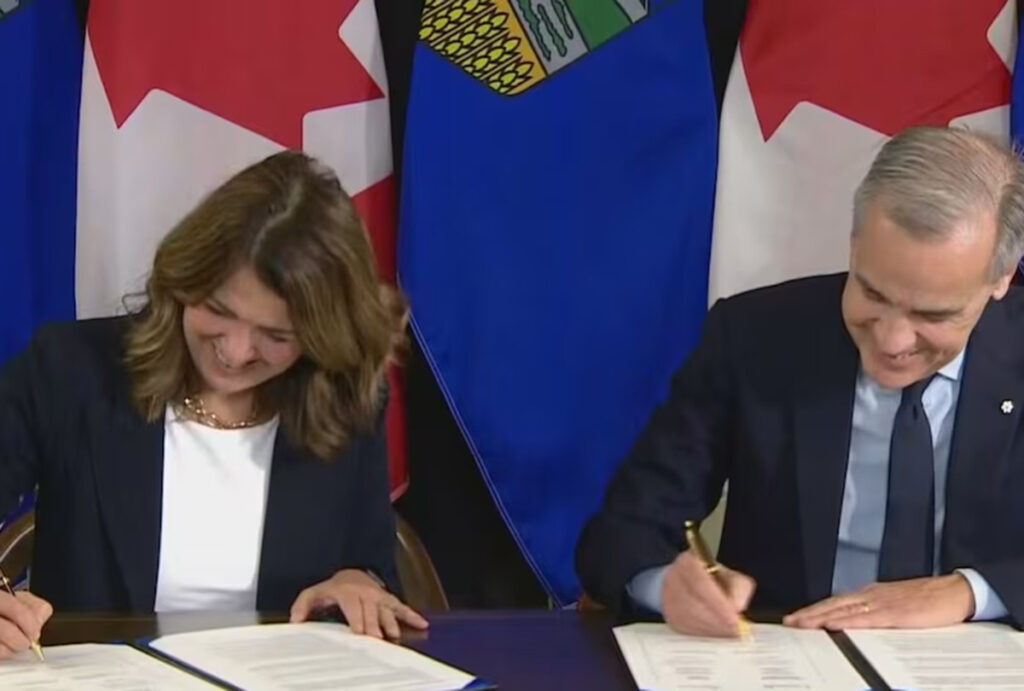
The federal and Alberta governments recently jointly released the details of a memorandum of understanding (MOU), which lays the groundwork for potentially significant energy infrastructure including an oil pipeline from Alberta to the west coast that would provide access to Asia and other international markets. While an improvement on the status quo, the MOU’s ambiguity risks creating an oligopoly.
An oligopoly is basically a monopoly but with multiple firms instead of a single firm. It’s a market with limited competition where a few firms dominate the entire market, and it’s something economists and policymakers worry about because it results in higher prices, less innovation, lower investment and/or less quality. Indeed, the federal government has an entire agency charged with worrying about limits to competition.
There are a number of aspects of the MOU where it’s not sufficiently clear what Ottawa and Alberta are agreeing to, so it’s easy to envision a situation where a few large firms come to dominate the oilsands.
Consider the clear connection in the MOU between the development and progress of Pathways, which is a large-scale carbon capture project, and the development of a bitumen pipeline to the west coast. The MOU explicitly links increased production of both oil and gas (“while simultaneously reaching carbon neutrality”) with projects such as Pathways. Currently, Pathways involves five of Canada’s largest oilsands producers: Canadian Natural, Cenovus, ConocoPhillips Canada, Imperial and Suncor.



What’s not clear is whether only these firms, or perhaps companies linked with Pathways in the future, will have access to the new pipeline. Similarly, only the firms with access to the new west coast pipeline would have access to the new proposed deep-water port, allowing access to Asian markets and likely higher prices for exports. Ottawa went so far as to open the door to “appropriate adjustment(s)” to the oil tanker ban (C-48), which prevents oil tankers from docking at Canadian ports on the west coast.
One of the many challenges with an oligopoly is that it prevents new entrants and entrepreneurs from challenging the existing firms with new technologies, new approaches and new techniques. This entrepreneurial process, rooted in innovation, is at the core of our economic growth and progress over time. The MOU, though not designed to do this, could prevent such startups from challenging the existing big players because they could face a litany of restrictive anti-development regulations introduced during the Trudeau era that have not been reformed or changed since the new Carney government took office.
And this is not to criticize or blame the companies involved in Pathways. They’re acting in the interests of their customers, staff, investors and local communities by finding a way to expand their production and sales. The fault lies with governments that were not sufficiently clear in the MOU on issues such as access to the new pipeline.
And it’s also worth noting that all of this is predicated on an assumption that Alberta can achieve the many conditions included in the MOU, some of which are fairly difficult. Indeed, the nature of the MOU’s conditions has already led some to suggest that it’s window dressing for the federal government to avoid outright denying a west coast pipeline and instead shift the blame for failure to the Smith government.
Assuming Alberta can clear the MOU’s various hurdles and achieve the development of a west coast pipeline, it will certainly benefit the province and the country more broadly to diversify the export markets for one of our most important export products. However, the agreement is far from ideal and could impose much larger-than-needed costs on the economy if it leads to an oligopoly. At the very least we should be aware of these risks as we progress.
Share This:





















