


 CDN NEWS |
  US NEWS







By John Ibbitson and Livio Di Matteo
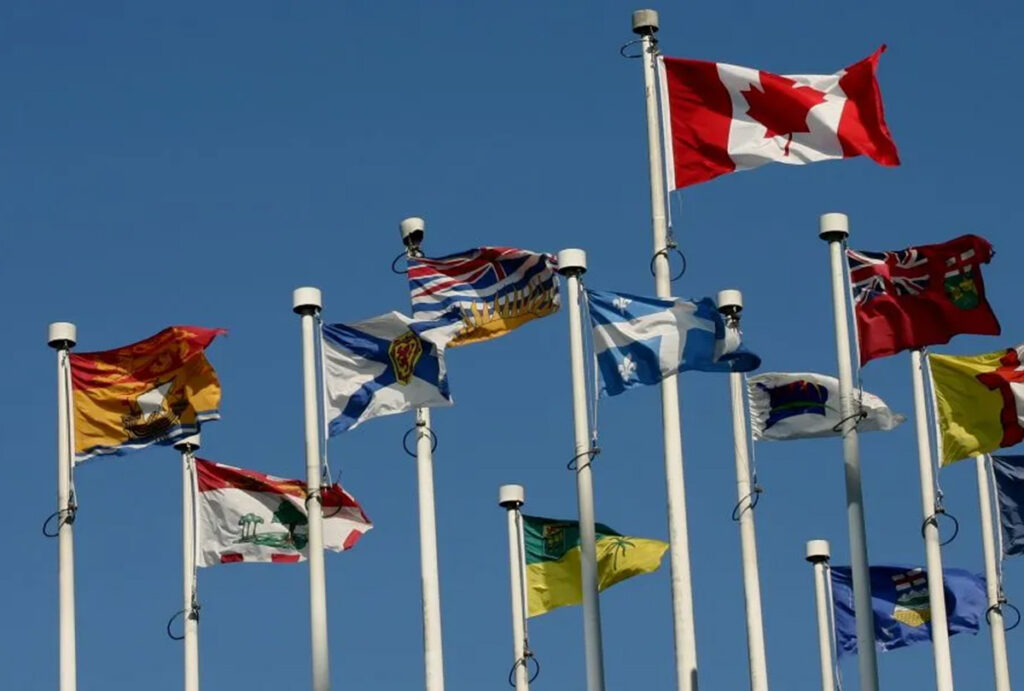
Fiscal federalism in Canada is in perpetual conflict between a federal government that often uses its spending power to assert authority in areas of provincial jurisdiction, and provincial governments that resist those intrusions.
In studying the history of that conflict, we concluded that, while federal intrusions may have been necessary during periods of national crisis, Canada usually works best when the two levels of government stick to their constitutional lanes. Federal intrusions into areas of provincial jurisdiction often create political tensions that at times have threatened to break the country apart. To understand the evolution of fiscal federalism, it is necessary to remember that Confederation was in many ways a divorce.
In 1840, Great Britain united the colonies of English Upper and French Lower Canada into the united Province of Canada. But the province proved to be anything but united. The English and French had been at war with each other, on and off, since the Norman conquest of Britain in 1066. How were these two perpetually warring peoples to inhabit a single political space? As it turned out, they couldn’t.
One unstable government followed another, with French and English, conservatives and liberals, in perpetual conflict. By 1864, the future of the colony was in grave doubt, as a powerful United States wound down its civil war. On both sides of the border, some advocated the annexation of the Canadian colonies to the United States. To prevent that, the leader of the Reform, or Liberal, Party in Upper Canada, George Brown, agreed to join a coalition with his political enemy, John A. Macdonald’s Conservatives.
Brown and many of his colleagues envisioned two separate, self-governing provinces that would invest “some joint authority,” as Brown put it, with responsibility for areas of mutual interest. It was in this respect that Confederation was as much a separation as a union.
As the leaders of the coalition, in collaboration with their counterparts in Nova Scotia and New Brunswick, deliberated on the shape of the new dominion, the American precedent—in which powerful states and a relatively weak central government contributed to the outbreak of civil war—caused the fathers of Confederation to fashion a much more powerful central government than Brown had initially envisioned.
In the decades after Confederation, Ontario premier Oliver Mowat successfully appealed to Britain’s Judicial Committee of the Privy Council, then Canada’s highest court, to interpret the British North America Act in ways that favoured provincial rights. The court agreed with Mowat that Confederation should be considered a compact of sovereign provincial governments, rather than as a union under a powerful central power.
So, what were the powers allotted to each level?
The federal government was given sovereign power over borders, defence, and later foreign policy. It was authorized to make laws that advanced “peace, order and good government” in the national interest. This included trade, commerce, the post office, national transportation, criminal justice, Indigenous peoples, and all forms of both direct and indirect taxation. The provinces are responsible for crown lands, natural resources, hospitals, municipalities and social services, as well as property and civil rights. They are authorized to raise revenue through direct taxation.
The federal and provincial governments exercise join authority in areas such as agriculture, immigration, public health, and later environment and pensions. In practice, from the time of the 1890s, when Wilfrid Laurier’s government sought to recruit immigrants to populate the Prairie provinces, Ottawa has played the senior role in immigration.


As the country evolved, two realities developed.
First, the federal government had greater fiscal resources than the provincial governments, while those governments had greater responsibilities than they could finance, especially as the role of government in education, health care and other social services grew in importance. This led to the first federal fiscal transfer, the Dominion Subsidies, and all the transfers that came after, including equalization.
Second, in times of national emergency, the federal government increased in power, at the expense of provincial authorities. The First World War brought about the federal income tax. The Great Depression resulted in the creation of federal unemployment insurance. And Ottawa assumed vast fiscal and other powers during the Second World War, while also taking responsibility for providing services to veterans.
The decades that followed that war were defined by the gradual expansion of national social programs, especially in health care, welfare and housing, with varying degrees of grumbling from provincial governments. This expansion was accompanied by growing separatist sentiment in Quebec, culminating in the near-death experience of the 1995 referendum. The year 1995 also saw the federal government embarking on a path to eliminating its deficit. Central to that plan was the consolidation and reduction in fiscal transfers to the provinces. However, those consolidated transfers gave the provinces greater autonomy to spend the reduced revenues as they saw fit.
Once the books were balanced, the governments of Jean Chrétien and Paul Martin sought to reassert federal authority over social transfers, especially in health care, but with limited success. The following decade, Stephen Harper practised what could be called passive federalism, with little interference by Ottawa in areas of provincial jurisdiction. The years 2006 through to 2015 witnessed a greater level of federal harmony than at any time since the 1950s.
But when Justin Trudeau became prime minister in 2015, he aimed to reassert federal influence through conditions-based transfers and through federal regulations, especially in health care, child care and the environment, with increased spending largely financed through deficits. Our research reveals that federal transfers to the provinces, with strings attached from Ottawa, reached $100 billion in 2023/24, an increase of almost 60 per cent from 2014/15.
In areas of sole federal jurisdiction, spending increased more modestly. Spending on defence, for example, grew by 43 per cent. Federal spending areas of shared or even sole provincial jurisdiction rose significantly more, such as the 200 per cent increase in primary and secondary education.
The COVID-19 pandemic offered another demonstration of a national emergency enhancing federal authority. Ottawa essentially took sole control of pandemic income supports and vaccine acquisition and played a large role in the imposition of vaccine mandates.
Predictably, federal-provincial tensions increased. By the end of the Trudeau government’s decade in power, the Bloc Québécois had returned as a federal separatist party, while the Parti Québécois seemed destined to become the next Quebec government, with the party determined to hold a third referendum.
Resentments are hardly less fierce in Alberta and Saskatchewan, with both provincial governments passing their own sovereignty acts, and with a referendum on separation in Alberta entirely possible. The government of Mark Carney seeks to lessen internal trade barriers while also stimulating national infrastructure and housing construction. Time will tell what extent this government heightens or weakens tensions between Ottawa and the provinces.
The evidence, both historical and empirical, appears plain to us. There’s bound to be tension between the resources and responsibilities of the federal and provincial governments given the oft murky nature of our constitutional divisions. But while in times of crisis the national government must come to the fore, the federation operates more smoothly when the various levels of government respect each other’s jurisdiction. When they don’t, the invariable result is a political traffic jam at best and national discord and political rupture at worst.
Share This:






















INSIGHT: Canada’s Natural Resource Sector is at the Heart of the Government’s ‘Export & Diversification’ Plan