


 CDN NEWS |
  US NEWS









by EnergyNow Staff
Overview, Developers, Advantages, Disadvantages, and Commercialization Timeline
Small Modular Reactors (SMRs) represent an innovative approach to nuclear power generation. Designed to be compact, scalable, and flexible, SMRs are gaining significant attention in Canada as a potential solution to meet future energy needs while supporting climate goals.
What Are Small Modular Reactors?
Small Modular Reactors are nuclear fission reactors with a smaller footprint compared to traditional nuclear power plants. Typically, SMRs generate up to 300 megawatts of electricity per unit, compared to 1,000+ megawatts from conventional reactors. Their modular design allows for factory fabrication and easier transportation, installation, and integration into diverse environments, including remote communities, mining operations, and existing energy grids.
Potential for Power Generation in Canada
Canada’s vast geography, remote communities, and ambitious climate targets make SMRs particularly attractive. They offer a low-carbon alternative to diesel and coal, especially in remote and northern regions where grid connectivity is challenging. SMRs could help decarbonize heavy industries, provide reliable baseload power, and support the integration of intermittent renewable energy sources like wind and solar.
The federal government, through Natural Resources Canada, has identified SMRs as a key technology in its climate strategy. Provinces such as Ontario, Saskatchewan, New Brunswick, and Alberta have signed agreements to collaborate on SMR development, aiming to deploy these reactors for electricity generation, district heating, and industrial uses.
Who Is Developing SMRs in Canada?
- Canadian Nuclear Laboratories (CNL): CNL is leading research and demonstration projects, including hosting SMR prototypes at the Chalk River Laboratories in Ontario.
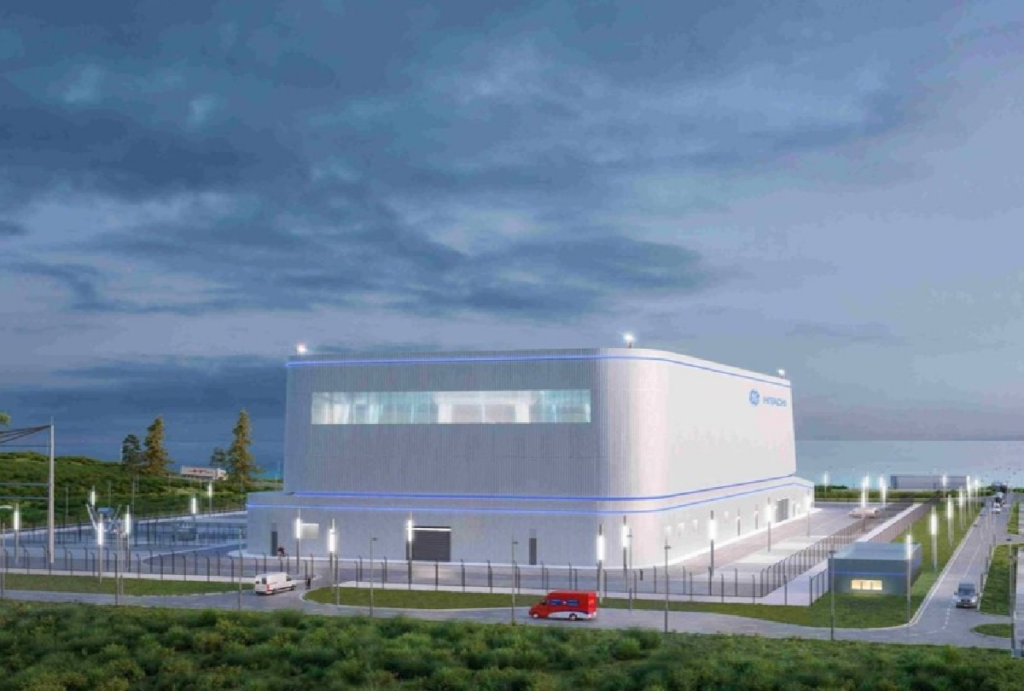
- Ontario Power Generation (OPG): OPG is advancing the deployment of an SMR at its Darlington site, partnering with US-based GE Hitachi to develop the BWRX-300 reactor.
- SaskPower: Working closely with OPG and other partners, SaskPower is exploring SMR deployment to support Saskatchewan’s decarbonization targets.
- NB Power: New Brunswick is supporting two SMR demonstration projects with ARC Clean Energy and Moltex Energy, focusing on advanced reactor designs.
- Global Companies: Several international firms, including GE Hitachi, Terrestrial Energy, and NuScale Power, are engaged in Canadian SMR projects, often in collaboration with local utilities and government agencies.
Advantages of SMRs

- Scalability and Flexibility: Modular design allows for incremental capacity additions based on demand.
- Reduced Capital Costs: Smaller size and factory manufacturing can lower upfront investment and construction risks.
- Enhanced Safety: Passive safety systems and modern design features reduce the risk of major accidents.
- Decarbonization: SMRs provide zero-emission electricity, helping Canada meet its climate targets.
- Support for Remote and Indigenous Communities: Reliable, clean power can replace diesel generators in off-grid areas.
- Industrial Applications: SMRs can supply process heat for industries such as mining, oil sands, and hydrogen production.
Disadvantages of SMRs
- Regulatory Challenges: New reactor designs require rigorous safety approvals, which can be lengthy and complex.
- Economic Uncertainty: While capital costs may be lower, the overall cost-effectiveness depends on successful large-scale deployment and market acceptance.
- Public Perception: Nuclear energy continues to face opposition and concerns about safety, waste, and environmental impacts.
- Waste Management: Although SMRs produce less waste than large reactors, long-term disposal solutions are still needed.
- Technology Readiness: Most SMR designs are at the demonstration or pre-commercial stage, with few operational reactors worldwide.
Canada’s SMR Roadmap and Action Plan Suggest a Phased Approach to Commercialization:
- 2020–2025: Licensing, regulatory reviews, and initial demonstration projects. OPG and GE Hitachi aim to have the Darlington SMR operational by the late 2020s.
- 2025–2030: First-of-a-kind commercial SMRs expected to be operational, with additional demonstration units in New Brunswick and Saskatchewan.
- 2030–2040: Wider deployment across provinces, scaling up to industrial and remote applications.
Small Modular Reactor (SMR) Projects in Canada – The Darlinton New Nuclear Project
The Darlington New Nuclear Project is leading the way in the advancement of Small Modular Reactor (SMR) technology in Canada – the future of nuclear power generation.
On July 7, 2023, the Ontario government announced it will work with Ontario Power Generation (OPG) to commence planning and licensing for three additional SMRs, for a total of four SMRs at the Darlington new nuclear site. Pending regulatory approvals to build three additional units, the total output of the Darlington New Nuclear Project would be 1,200 megawatts; enough electricity to reliably and safely power about 1.2 million homes, and help our community and the Province meet increasing demand from electrification.
Site Preparation Progress – Late summer 2025 Update
Site grading for Units 2, 3 and 4 is now complete, effectively preparing the footprint for the DNNP site’s subsequent SMR units. The pre-assembly building – the large tent-like structure covering approximately 5,000 square meters, with a 3,000-square-metre sheltered working area – is now complete and ready to support final assembly of the structural components for the first SMR unit’s Reactor Building. Installation of deep foundations progressed well over the summer, with piling completed for the Radiation Waste building, Control and Service buildings and heavy lift crane pad, and piling work commenced for the Turbine building. The ring beams – a circular beam that sits atop the shaft piles providing structural support – for the Launch and Reactor building shafts are now complete with rock excavation and anchor installation underway. Conventional construction continues with the Fabrication Building reaching the 80% mark and on-site warehousing more than 50% complete.
Given the complexities of regulation, technology development, and public consultation, a realistic timeline for full-scale commercialization is the early to mid-2030s. The first operational SMR in Canada could be running by 2029–2030, with broader adoption following over the next decade.
Small Modular Reactors have significant potential to transform Canada’s energy landscape by providing clean, reliable, and flexible power. While there are challenges to overcome, including regulatory hurdles and public acceptance, concerted efforts by governments, utilities, and technology developers are positioning Canada as a leader in SMR innovation. The coming decade will be critical in determining the pace and scale of SMR commercialization and their contribution to Canada’s climate and economic goals.
Share This:





















COMMENTARY – DOOMBERG – Geopolitical & Energy Predictions with Amazing Prescience – Maureen McCall