CDN NEWS |
  US NEWS









The U.S. will remain a crucial trade partner for Canada, but the country needs to ‘find new markets for our products and new products for our markets,’ Tiff Macklem said
By Chris Varcoe – See More Articles From Chris Varcoe Here
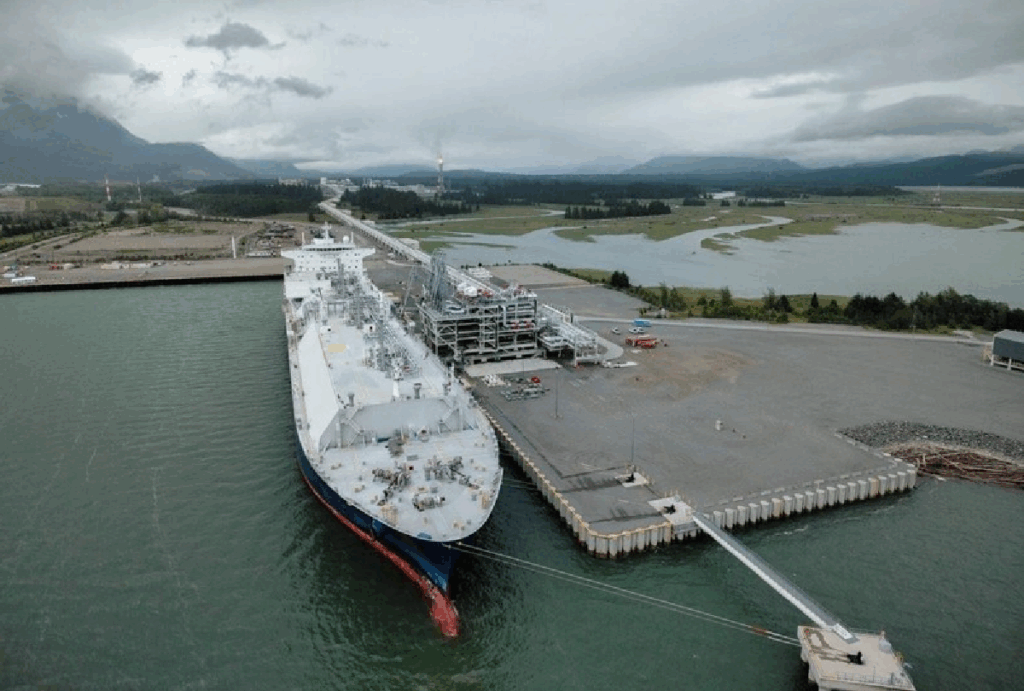
Bank of Canada governor Tiff Macklem has a couple of potential tonics for the tariff turbulence in the economy, aiming to find ways to bolster productivity and competitiveness in the country.
And he points to the Trans Mountain expansion (TMX) project and LNG Canada startup as recent developments that are making a difference in the country by growing and diversifying our exports.
“Two examples that I think are having a material impact on the Canadian economy — the TMX pipeline expansion and the first shipment of LNG Canada on July 1 — these are macro significant for the country,” Macklem said in an interview.
“They are increasing our ability to get our energy overseas. And they also mean we’re getting a better price for our product because we’re not as dependent on a single U.S. market.”
As Canada adjust to tariffs from its largest trading partner, the ramifications of a new relationship with the United States are immense and Canadian leaders “need to chart a new course,” Macklem said Tuesday in a speech to a Saskatoon business audience.
The governor of the central bank pointed out the economic fallout from U.S. tariffs has created a “whipsaw.” Economic growth started out reasonably strong this year as businesses prepared for the levies.
However, the economy contracted during the April-to-June period, as exports dropped.
The U.S. will remain a crucial trade partner for Canada, but the country needs to “find new markets for our products and new products for our markets,” Macklem said during his address.
“We need to improve our productivity to compete globally. And we need to attract foreign capital.”
U.S. tariffs were imposed earlier this year on sectors such as copper, steel, aluminum, and autos, although other goods compliant with the Canada-United States-Mexico Agreement (CUSMA) have avoided being hit.
For a trading nation like Canada, what can be done about the situation to make the economy more resilient?
A mandatory review of CUSMA is slated for next year, but it’s unclear what the outcome will look like.
Last week, the Bank of Canada cut its key policy rate as inflation has eased, but monetary policy has limitations when it comes to softening the trade turmoil.
Canada can stay the course when it comes to the tariff damage — facing higher costs and less income — or take steps to improve the country’s productivity.
In the short term, this includes continuing efforts to bulldoze trade barriers between provinces, harmonize the accreditation of labour standards and find ways to reduce the cost of doing business across Canada, he said.
Efforts to improve transportation links in the country — such as rail lines and pipelines — and enhance port capacity to reduce Canada’s dependence on the U.S., but will take time.
Decisions on these projects and such measures fall outside the purview of the Bank of Canada, he noted. They land squarely within the realm of governments and business.

Yet, projects such as LNG Canada and TMX have shown what is possible, successfully attracting investment, creating jobs and increasing long-term government revenues.
In the interview, Macklem pointed to the benefits flowing from the expansion of the Trans Mountain pipeline — running from the Edmonton area to Burnaby, B.C. — which nearly tripled its capacity.
While it was way over budget — costing $34 billion to complete — it has significantly bolstered oil shipments to markets outside of the United States for Canada’s single-largest export.
It’s also compressed the price differential between benchmark West Texas Intermediate (WTI) crude and Western Canadian Select (WCS) heavy oil.
A report last month by Alberta Central chief economist Charles St-Arnaud found TMX helped shrink the discount on WCS crude during its first year of operations and increased oil revenues in Canada by an estimated $13 billion.
More than 97 per cent of all oil exported out of the country two years ago headed south of the border, but Canadian crude sent to other markets — primarily to Asia — has increased since TMX began operating last year.
These markets now make up about eight per cent of all oil shipped out of Canada, St-Arnaud said Tuesday.
“The lesson is (that) being able to have more than one buyer allows you to sell to the one that offers you the better price,” he said. “That applies to anything we produce in Canada.”
In August, 25 oil tankers left Trans Mountain Corp.’s Westridge Marine Terminal, with eight headed for California and 11 destined for China, according to a report by RBC Capital Markets.
Since the start of last year, oil shipments from Trans Mountain have also gone to Japan, Singapore, South Korea, Indonesia and Brunei, along with the U.S. states of Alaska and Washington, it found.
“The vast majority of our oil exports still go to the United States. The TMX expansion didn’t change that, but it did, on the margin, open up new overseas markets,” Macklem said in the interview.
“That (had) not only the direct effect of getting to those markets, but also it’s had an indirect effect on the price for all our oil.”
It illustrates the importance of having sufficient infrastructure able to move products to international customers — and it’s become part of the discussion surrounding the federal major projects list that was initially unveiled by Ottawa this month.
“Canada has to recognize that we have had it pretty good for quite some time,” said Business Council of Alberta president Adam Legge.
“It made us complacent, and now it’s a big wake-up call that we need to diversify our trading.”
Macklem believes key changes can improve competitiveness and productivity. The country also needs to take a concerted look at what would make Canada more investable.
“We can live with the fact that trade with the United States is going to be a lot more costly . . . (and) our incomes are going to be lower, or we can do something about it,” he said.
“Structural reform is hard. We’ve been talking about it for a long time. We could have done it without the U.S., but now the urgency is greater, because if we don’t do it, we’re looking at a lower standard of living.”
Chris Varcoe is a Calgary Herald columnist.
[email protected]
Share This: