


 CDN NEWS |
  US NEWS







Why it matters
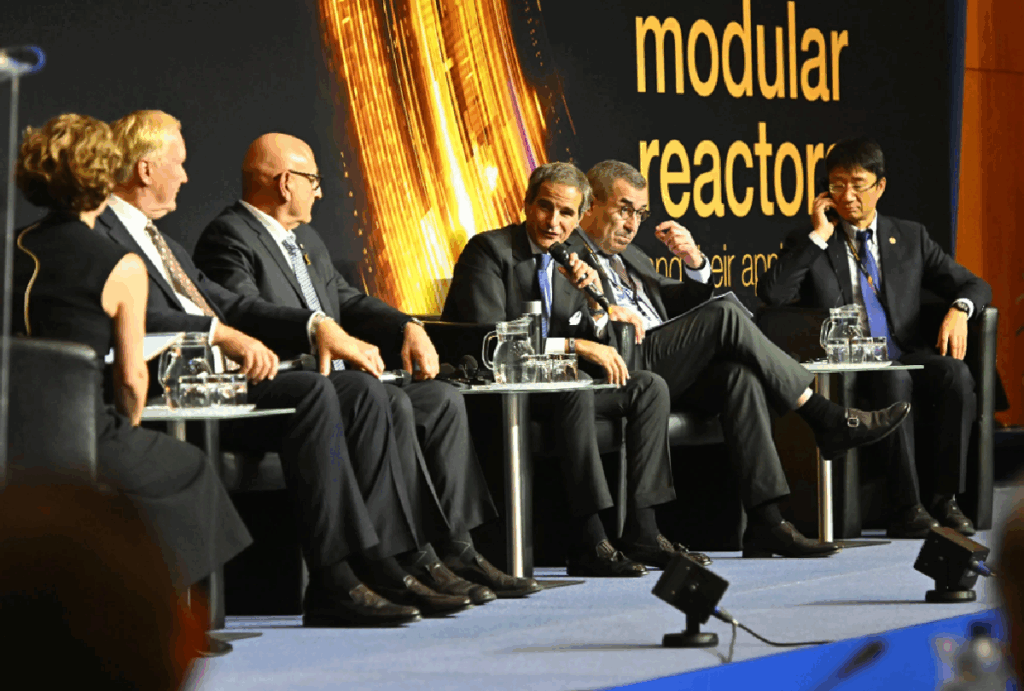
As the world races to reduce emissions and shore up energy security, nuclear fission is staging a global comeback. Small modular reactors (SMRs) are advancing from concept to construction — and in 2025, Canada made bold moves to claim a leadership role. But with China accelerating, and energy sovereignty back on the global agenda, Canada must act with urgency and clarity.
A global resurgence in fission
Nuclear energy, once seen as a relic of the past, is quickly becoming a pillar of future energy systems.
Governments around the world are turning to fission for its reliability, non-emitting output, and potential to decarbonize heavy industry. The International Atomic Energy Agency (IAEA) reports over 50 SMR designs in development globally, with several already operational in China and Russia — and dozens more approaching deployment.
In 2025, we saw a turning point.
- China ramped up its nuclear buildout, commissioning new SMRs and asserting export ambitions.
- The United States expanded its advanced reactor investment, while Europe moved to classify nuclear as climate-aligned.
- Energy security — once assumed — returned to the geopolitical spotlight. And with it, the value of sovereign supply chains and non-intermittent, dispatchable energy.
Canada’s 2025 breakthroughs
Canada didn’t sit still. In fact, 2025 marked our most significant year in nuclear advancement in a generation.
- Ontario Power Generation broke ground on the Darlington New Nuclear Project, the continent’s first commercial SMR using GE-Hitachi’s BWRX-300 design.
- Saskatchewan and Alberta advanced their SMR roadmaps, with site selection, regulatory alignment, and federal partnerships moving forward.
- New federal funding and interprovincial collaboration accelerated timelines and capacity building.
- Indigenous-led energy conversations grew, with communities in Saskatchewan and Ontario exploring equity participation, jobs, and long-term energy sovereignty.
These are not symbolic gestures. They’re infrastructure commitments — supported by industry, government, and increasingly, local communities.


Fission and the question of sovereignty
Nuclear is no longer just an environmental or economic issue. It’s a sovereignty issue.
In a world where geopolitical rivals dominate uranium refining, fuel processing, and reactor exports, Canada’s ability to build, power, and regulate our own nuclear future is a rare advantage. We are one of the few countries with:
- Domestic uranium (mined largely in Indigenous territories)
- Deep operational experience and global regulatory credibility
- A nuclear supply chain that can scale — if we choose to invest
- A growing model of Indigenous co-ownership and leadership
Done right, nuclear energy isn’t just a tool for decarbonization. It’s a pillar of energy security, reconciliation, and long-term economic resilience.
The economic case for fission
Let’s talk numbers.
Small modular reactors offer more than clean power. They can:
- Stabilize regional grids while integrating renewables
- Power remote and industrial operations, replacing diesel
- Enable hydrogen production for transportation and heavy industry
- Drive high-skill job creation in trades, manufacturing, and engineering
- Unlock Indigenous economic partnerships where legacy energy systems have failed
In Saskatchewan alone, expanded uranium development, advanced SMR siting, and local fabrication could generate thousands of jobs and create new revenue streams for First Nations and Métis communities.And globally, the race is on: the first countries to master and export modular reactor systems will shape the next century of energy trade.
What Canada needs to do next
If we want to lead, not follow, we must take strategic steps — now:
- Streamline SMR permitting without compromising safety
- Back Indigenous partnerships with funding and equity models
- Anchor SMR manufacturing in Canada, not overseas
- Educate the public on nuclear’s role in climate, economy, and safety
- Protect and grow uranium processing capacity, ensuring Canadian control from resource to reactor
This isn’t about romanticizing nuclear. It’s about owning our future — economically, environmentally, and strategically.
Share This:





















INSIGHT: Canada’s Natural Resource Sector is at the Heart of the Government’s ‘Export & Diversification’ Plan