CDN NEWS |
  US NEWS









By Grady Munro and Jake Fuss
The Deterioration of Canada’s Finances Internationally
- In recent years, governments in Canada greatly expanded their role in the overall economy through more debt-financed spending. However, a larger government and rising debt burden impose costs on Canadians and the economy.
- While past research studied the extent to which the size of government and government debt have risen in Canada in recent years, this analysis compares Canada’s experience with that of other advanced countries internationally over the decade from 2014 to 2024.
- In 2014, total government spending in Canada represented 38.4% of the national economy (measured by GDP), which ranked 25th highest out of 40 advanced countries. By 2024, total spending had risen to 44.7% of GDP (or 17th highest).
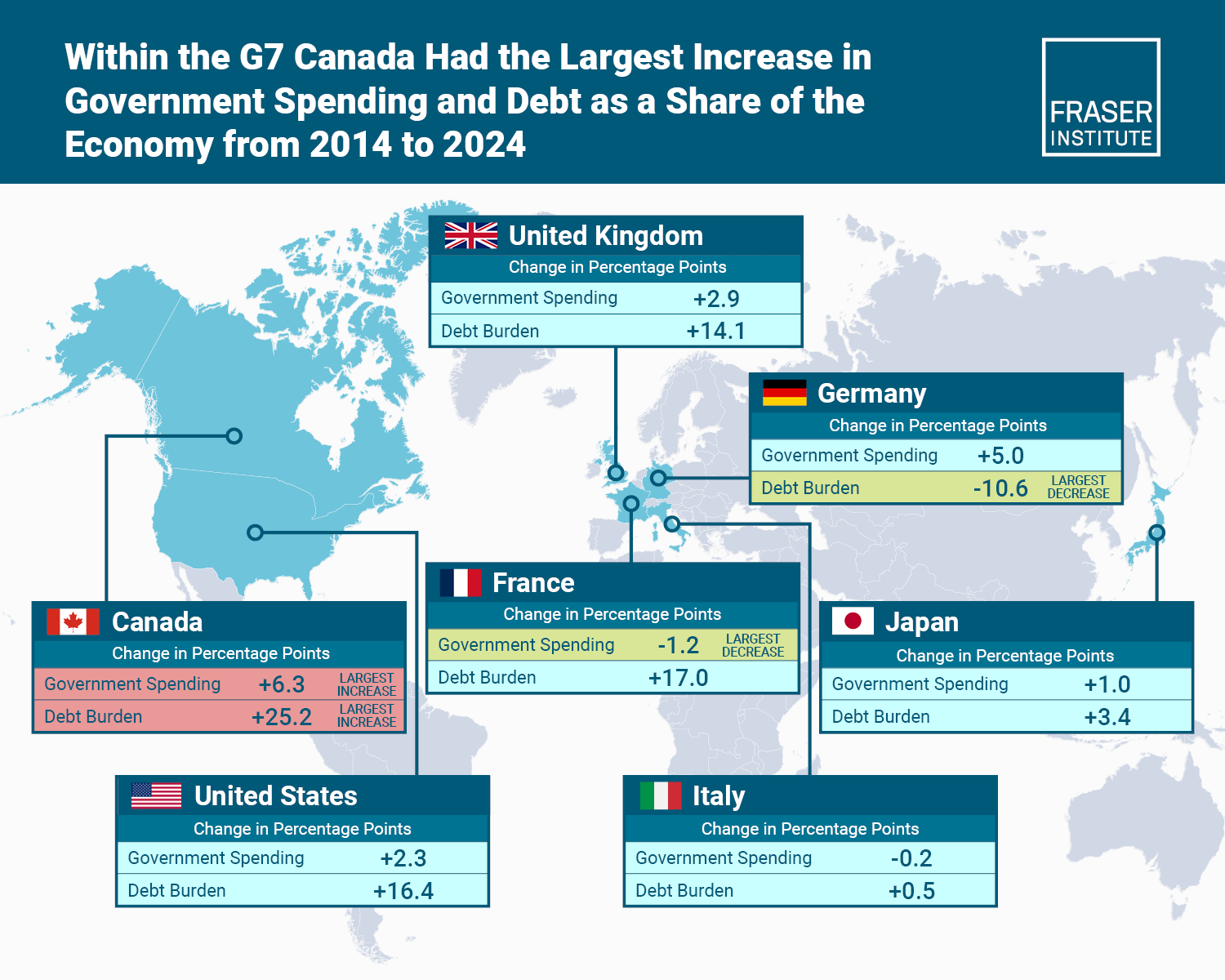
- While Canada’s size of government is middle-of-the-pack, it saw the second-largest increase of any advanced economy during this period and the largest increase in the G7.
- Looking at the debt burden, Canada’s gross government debt represented 85.5% of GDP in 2014, which ranked 14th highest out of 40 advanced countries. By 2024, this burden had risen to 110.8% of GDP (or 7th highest).
- This increase in Canada’s gross debt as a share of the economy was the third-largest increase of any advanced country and the highest in the G7. For comparison, 20 advanced countries have lowered their debt-to-GDP since 2014.
- Simply put, over the past decade, the size of government in Canada and the overall government debt burden have grown faster than nearly every other advanced economy in the world.

Share This: