CDN NEWS |
  US NEWS









By Julio Mejía and Elmira Aliakbari
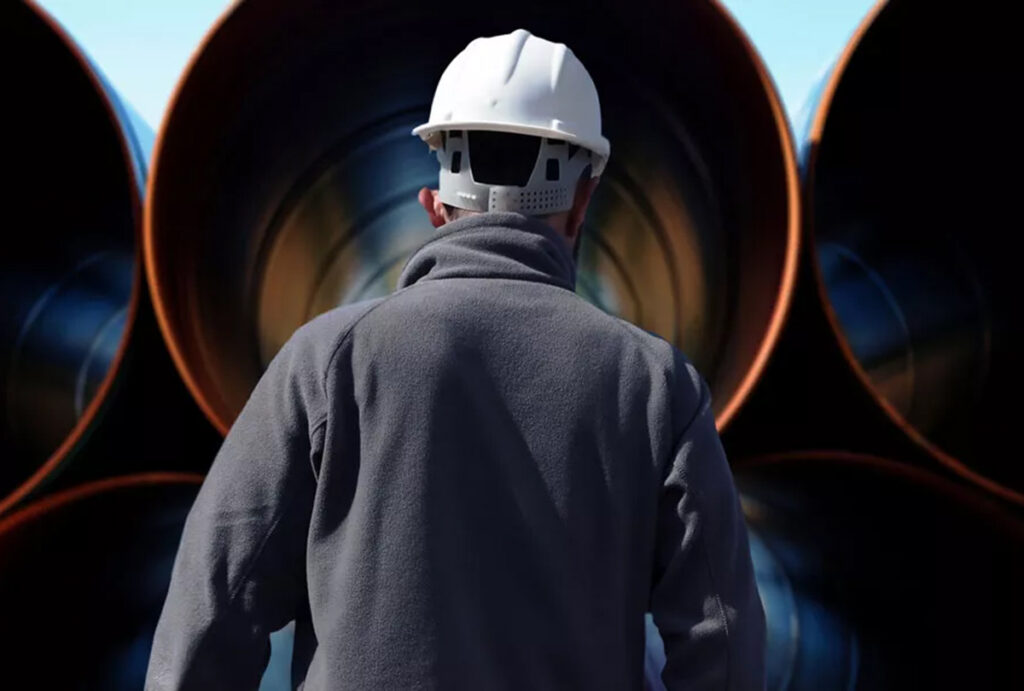
The Carney government continues to send mixed signals to Canada’s energy sector. Earlier this month, less than 48 hours after Prime Minister Carney expressed conditional support for new pipelines, Steven Guilbeault, a high-profile member of Carney’s cabinet, dismissed the need for additional pipeline infrastructure, claiming that the Trans Mountain pipeline is operating at “about 40 per cent capacity” while also citing a lack of private-sector interest in building east-west pipelines due to an upcoming peak in oil demand.
But claims about the Trans Mountain pipeline from Guilbeault—former Minister of Environment and Climate Change, now Minister of Canadian Identity and Culture—are inaccurate. They also overlook a key point—despite regulatory hurdles, the energy industry maintains a strong interest in building pipelines to meet the growing global demand.
Canadians may recall the Trans Mountain Pipeline project—running between Strathcona County, Alberta and Burnaby, British Columbia—was marked by delays and overruns. After the Trudeau government purchased it from Kinder Morgan for $4.5 billion in 2018, costs ballooned to $34 billion. Since its opening in May 2024—five years behind schedule—the pipeline has reached 89 per cent capacity utilization (more than twice what Minister Guilbeault claimed), with projections showing it could approach 96 per cent in the near future. In short, more pipeline capacity will be needed soon.
Minister Guilbeault’s statements about peak oil demand are also off the mark. For starters, the Energy Information Administration forecasts that global oil consumption will keep growing through 2050—not just until 2028-2029 as Guilbeault claimed. Firms such as Goldman Sachs and GlobalData suggest that oil demand is set to rise well beyond 2030. Meanwhile, the Organization of the Petroleum Exporting Countries (OPEC) goes even further, forecasting that global oil demand will continue growing past 2050 while stating there’s “no peak oil demand on the horizon.” Simply put, it’s shortsighted for the government to undermine infrastructure projects when multiple credible forecasts point to increased demand.

Moreover, pipelines transport more than just crude oil—they also deliver natural gas to domestic markets and coastal ports for export. Even the International Energy Agency (IEA), which Guilbeault cites as his source, projects that global demand for liquified natural gas (LNG) will continue to grow steadily through 2050. This strong LNG demand presents a significant opportunity for Canada to become a major LNG exporter and provide cleaner burning fuels. But to seize this opportunity, we need infrastructure to get our energy to tidewater.
Furthermore, Guilbeault’s claim that there’s no interest in building east-west pipelines also contradicts industry sentiment. A recent survey by KPMG, a leading audit and consulting firm, found that more than 80 per cent of Canadian energy and natural resource CEOs support additional pipelines and infrastructure on both the west and east coasts to access international markets.
Currently, most of our oil and natural gas exports go to the United States. This dependence on the U.S. for energy exports has made Canadian energy producers vulnerable to U.S policy changes (as seen with the recent threat of U.S. tariffs on Canadian energy). Building more pipelines would reduce our reliance on a single buyer and open access to Canadian refineries and ports, enabling us to export oil and gas to other markets, including both Europe and Asia.
In fact, it’s not just the industry that calls for more energy infrastructure. Recent polls indicate that most Canadians support building additional oil and gas pipelines to all coasts, and LNG facilities, to diversify energy exports beyond the U.S. Yet, federal polices continue to stand in the way of critical energy infrastructure. For instance, Bill C-69, also known as the Impact Assessment Act, has created massive uncertainty by introducing subjective criteria including “gender” implications into the evaluation of major energy projects. Similarly, the federal government’s greenhouse gas emissions cap, which exclusively targets the oil and gas sector, deters investment by effectively requiring a reduction in production and, in turn, reducing the need for new infrastructure.
Minister Guilbeault’s inaccurate statements and the Carney government’s continued mixed signals deepen the uncertainty for investors. Rather than creating confusion with conflicting statements, the federal government should provide clarity through a competitive regulatory framework—one that allows investors, guided by market realities, to determine when and where pipelines are truly needed.
Share This: