


 CDN NEWS |
  US NEWS







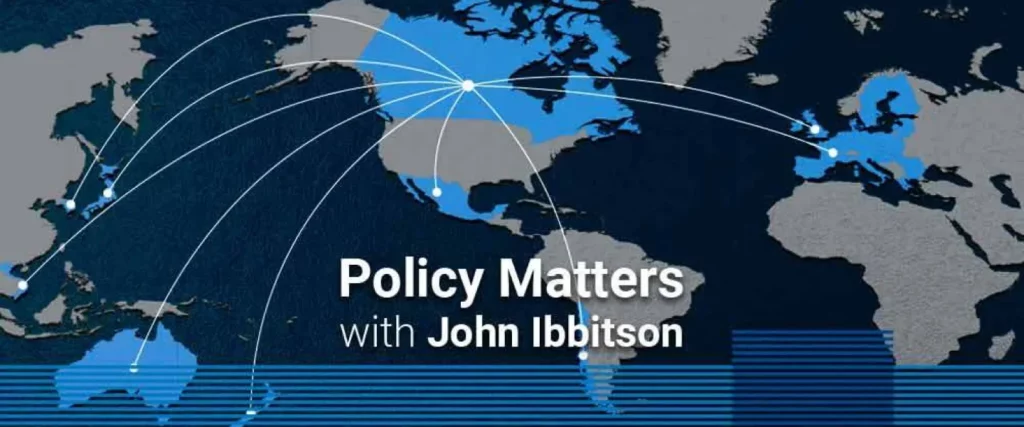
President Donald Trump threatens the Western alliance by eroding democracy at home, imposing tariffs abroad, and retreating from America’s role as global leader, steward and enforcer. Preserving the alliance in the face of this retreat is the greatest challenge Western countries face. Canada is uniquely positioned to meet that challenge.
We could be the bridge, if we have the will.
There was a time, not so long ago, when the advance of global trade and security appeared to be moving from strength to strength, with Canada at the very centre.
In 2013, President Barack Obama called for a free trade agreement between the United States and the European Union. At the time, Canada was well advanced in negotiations for what became known as CETA, the Comprehensive Economic and Trade Agreement between Canada and the European Union.
CETA went beyond reducing tariffs on everything from steel to wheat. It also facilitated trade in services, investment opportunities, labour mobility and intellectual property rights.
Stephen Harper’s Conservative government and the Obama administration were also active participants in the Trans-Pacific Partnership talks, which involved 12 Pacific countries, from Japan to Chile to Australia to Malaysia.
Like CETA, the TPP talks embraced improved market access for services and investment as well as goods, while promoting labour mobility and protecting intellectual property rights. It was possible to imagine an ambitious two-stage scenario. First, European and North American countries would reconcile CETA, the North American free trade agreement and the future EU-U.S. agreement into a single North Atlantic accord stretching from Mexico to Estonia.
Second, the members of the North Atlantic trade area and the Trans-Pacific Partnership would establish a comprehensive Atlantic-Pacific trade agreement that would encompass more than half of global GDP, including virtually the entire developed world. “Canada and the United States could become the lynchpin in a trilateral trading bloc with Europe to the East and the Trans Pacific Partnership to the west,” I wrote at the time.



Every country that aspired to trade with the world would want access to the world’s largest and most powerful trading bloc. India would want to join. China would want to join. South Africa and Brazil would want to join. A truly global free trade agreement seemed possible, with Canada at the heart of things.
But the talks between the U.S. and Europe were already in trouble when Trump won his first term. As 45th president, he iced the negotiations, withdrew the U.S. from the Trans-Pacific Partnership talks, and began imposing tariffs on friend and foe alike. His term as 47th president has been dominated by tariffs and threats of tariffs.
Trump presents a clear and present danger to Canada’s economy and security, and to the economy and security of the Western alliance. Preserving some portion of that alliance in the absence of American support is the most urgent challenge of our time.
But consider: Even though the U.S. abandoned free trade with Europe, Justin Trudeau’s Liberal government secured provisional ratification of CETA in 2017. And even though the U.S. left the TPP talks, the remaining states secured the Comprehensive and Progressive Trans-Pacific Partnership in 2018.
An Atlantic-Pacific trade agreement remains possible, even without the U.S. Many members of the CPTPP including Japan, Singapore, Vietnam, Chile, Mexico, Peru and New Zealand have free-trade agreements in place with the EU, or are in advanced stages of negotiation. Britain, which has free trade with the EU, became the first non-Pacific member of the CPTPP a few months ago.
Canada could work with its allies to forge a common Atlantic-Pacific trade area. We could also work to increase collective security in both the Atlantic and the Pacific, helping Japan, South Korea, Australia, New Zealand and other allies to deepen defence commitments with the United Kingdom and Europe.
We could help hold the West together. For this to happen, we must make the effort, and that effort includes sacrifice.
While working with the U.S. to modernize NORAD, we must convince our NATO and Pacific allies that we are serious about working with them toward collective security. That means bringing spending on defence swiftly to at least 2 per cent of GDP, recognizing that this floor may already have become a basement, and that we will need to make further investments.
Canada’s standing in the world has suffered because we talked about a rules-based international order, but failed to do our part to defend it. Now, the opportunity presents itself not only to contribute, but to lead.
Share This:




















SETTING OFF ALARM BELLS: Carney’s EU Deal Threatens Alberta, Energy, & Sovereignty – 170,000 Reasons to Reject Canada’s EU “Associate Membership” – The Nemeth Report