


 CDN NEWS |
  US NEWS







By Jim Warren
On the bright side, at least President Donald Trump’s threat to impose 25% tariffs on Canadian oil and gas, might have alerted some Central Canadians to the critical importance of oil and gas to the national economy. Trump’s tariff pronouncements may also have forced the Laurentian elite to rethink the wisdom of allowing anarchy to reign in our immigration system and border management.
Any nation hoping to be a serious player in the areas of international trade and diplomacy needs to meet several critical criteria. Without them a country can have difficulty marketing its goods and services to the world and in retaining meaningful economic and political sovereignty. One of the key criteria is for a country to have a good measure of control over its borders. But there are other elements critical to having effective sovereignty and independence. Having access to versatile, readily transportable energy commodities like oil and gas is one of those essentials. Accordingly, oil and gas are considered strategically important industries.
Lacking any of the major building blocks of strategic economic sovereignty, like the steel and aluminum industries and a thriving manufacturing sector, as well as a highly developed transportation sector and the energy industries needed to support all the other sectors can leave a country vulnerable to domination by others. The vulnerabilities can lead to economic and political crises for a country during trade wars, international disputes leading to trade sanctions and embargoes, shooting wars and big natural disasters. A lack of strong trade and military alliances can make matters even worse.
It’s not like there wasn’t a mountain of evidence underlining the strategic importance of oil and gas in the last few years. How smart was it for Angela Merkel to allow Russia, a state run by a psychopath and his team of criminal oligarchs, to control a major portion of Germany’s energy supplies? The Ukraine gets it. After its war with Russia began, the Ukrainian government allowed Russian gas to be piped across its territory to Eastern Europe for nearly two years. This was because they realized messing with a commodity critical to bordering states such as Hungary, Slovakia and Romania was politically hazardous.
It is true that a country can still have a thriving economy even if it is missing one or two items from the basket of strategically important industries. Singapore, for example, needs to import fossil fuel but is still considered one of Southeast Asia’s economic tigers. This is only possible because it has several other economic engines that perform exceptionally well.
Looking back several decades reminds us that Japan risked entering a World War to obtain the petroleum they needed. To get it, the Japanese concluded they needed to conquer parts of Indonesia. (Similarly they wanted Southeast Asia for its rubber.) They knew these were actions the US wouldn’t tolerate, but they decided they had to do them anyway.



While we’re on the topic of World War II, it is instructive to recall Hitler fought it with one hand tied behind his back. Germany had no oil of its own and gasoline refined from coal and the oil available from their Romanian ally were never enough. That’s why the Germans placed such great hopes on capturing Russia’s Caspian oil fields in 1943. Similarly, Hitler invaded Norway to ensure access to Swedish iron ore—another strategic commodity Germany lacked.
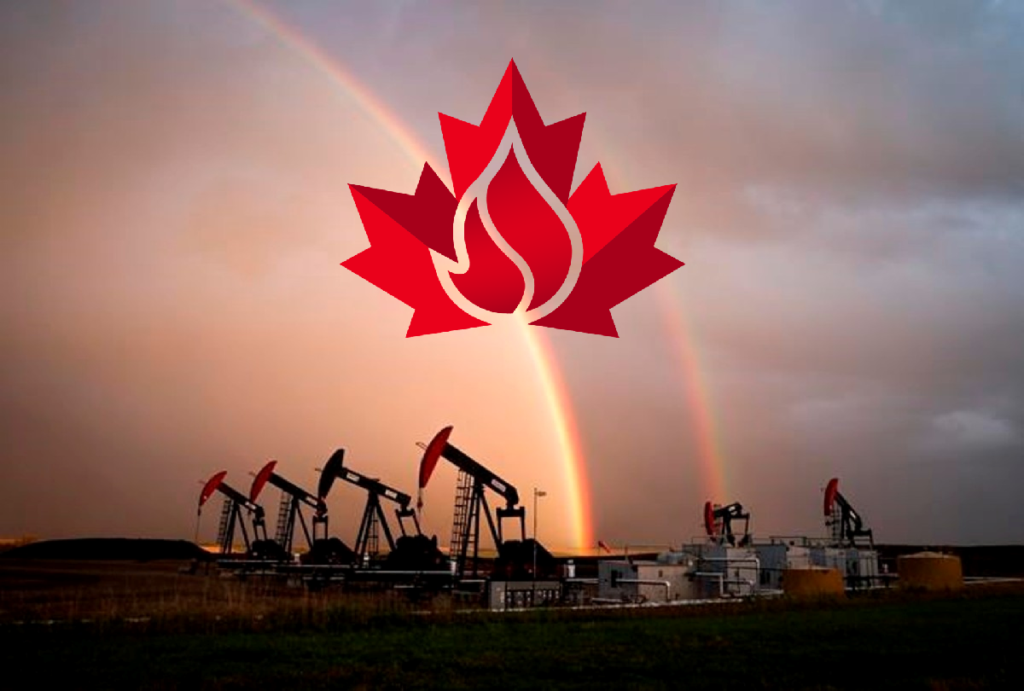
Oil is strategically vital to Canada, not simply because we rely on it domestically, but because it is our most important export.
Canada’s oil revenues along with the taxes and royalties collected from those revenues are derived primarily from the oil we export to the US. Our export revenues for 2022, following the worst of the COVID-19 years, were $123 billion. They accounted for 15.8% of all Canada’s exports and 6.6% of GDP. The following year saw exceptionally high oil prices globally. That year the value of Canada’s oil production hit $139 billion and accounted for 7.1% of GDP. Remove even half of those revenues from the Canadian economy for very long and we’re in economic depression territory.
So, thanks for the wake-up call President Trump. The fact Trump has indicated he will postpone his final decision until February 1, is of some comfort. Danielle Smith met with him at Mar-a-Lago to make the case against tariffs on Canadian crude. Smith is among the most knowledgeable and capable people there are when it comes to oil and gas production and trade. We couldn’t hope for a better advocate for the producing provinces. She’s certainly a cut above Justin Trudeau and anyone else in his cabinet. Let’s hope Smith managed to convince Trump how imposing tariffs would have an inflationary effect on the price of oil in the US.
US tariffs will not initially cripple Canadian oil production or exports. That would only happen at the point Trump’s drill baby drill policies start seriously boosting American production. It could happen sooner if US refiners can locate an alternative source not affected by tariffs—oil from Guiana’s offshore oil field perhaps. The overarching problem is that Canada’s oil industry is currently vulnerable to a stroke of the pen by whichever party is in office in the US.
There is an obvious way to prevent being in this sort of situation in the future – diversify our export opportunities by building more pipelines to tidewater. In my last column I focused on the difficulties involved in getting a pipeline built to the Atlantic coast. The challenges identified focused on the barriers thrown up by Quebec’s politicians and environmentalists. Trump’s ongoing tariff pronouncements suggest it would be in Canada’s national strategic interest to use whatever legal measures are required to sweep those barriers aside in both Quebec and British Columbia to get new tidewater pipelines built.
There is plenty the federal government can do to override the demands of municipalities, special interest groups and provincial governments in support of high national purposes and in emergencies. Section 91 of the Constitution gives Parliament broad, albeit somewhat vague, powers to do what needs to be done “to make laws for the peace, order and good government of Canada” in all matters not exclusively the jurisdiction of the provinces. And, you would think that if the heavy hand of the Emergencies Act can be used to prevent horn honking and traffic snarls in Ottawa, it could be employed to prevent the environmentally sanctimonious from blocking projects critical to our economic and political sovereignty. Of course doing any of this will require voting the Liberals out of office.
Sorry Premier Ford, retaliatory tariffs and export taxes can’t be the only tools employed; especially when they cause self-inflicted wounds. Unfortunately, until we have more export opportunities for oil and gas we may need to limit our counter-attacks on Americans to misleading travel directions and poor restaurant service.
Share This:



















