


 CDN NEWS |
  US NEWS







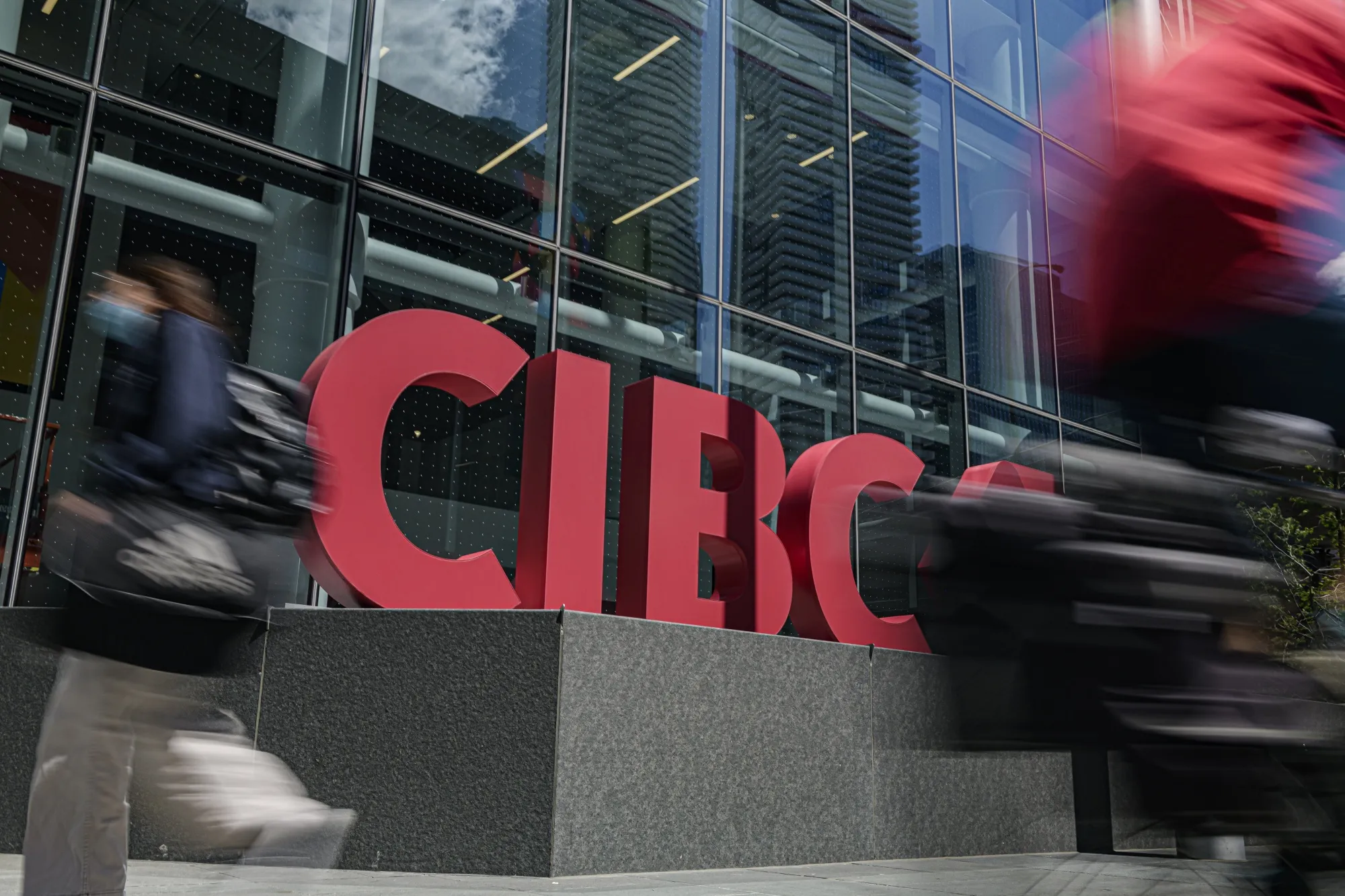
I’m Christine Dobby, Bloomberg’s Toronto-based banking reporter, and you’ll find me in your inbox every Friday. This week, we’re talking with CIBC’s chief executive officer, visiting the billionaire behind fashion retailer Groupe Dynamite and learning the secrets of short sellers. Plus, how many Canadian families made this year’s list of the top 25 richest in the world?
Canada’s Crisis, Dodig’s Cure
If you want a prescription for Canada’s troubled economy, you could do a lot worse than to ask Victor Dodig.
The country is endowed with an incredible store of resources — oil, potash, natural gas, uranium — some world-class university programs and proximity to the planet’s largest economy. It remains a magnet for ambitious immigrants. Yet Canada is also clearly in a funk.
If you measure the economy on a real per-capita basis, there’s been a recession for almost two years. Business investment is weak, and as for being America’s neighbor, well, that’s a mixed blessing right now.
Dodig, who recently passed his 10th anniversary as CEO of Canadian Imperial Bank of Commerce, sat down to talk about a number of subjects, including trade, US relations and the flight of capital south of the border. It quickly turned into a plan of action.
Canada needs a sharper focus on productive economic policies to stop it from falling ever-further behind the US, according to Dodig.
“When the country next door to you is saying ‘We’re going to make it easier for you to invest,’ our economic and moral obligation is to do the same,” he told me in an interview this week.

First, let’s make free trade within Canada a reality, he said. Internal barriers to trade across 13 provinces and territories cost the economy more than C$30 billion ($21 billion) in annual gross domestic product, according to a 2020 study.
There has been decades of hand-wringing over this (and yes, this is why you can’t have wine shipped from that lovely British Columbia winery directly to your home if you live in Ontario). Nothing seems to get resolved. It’s an easy win, Dodig said. Just get it done!
Second, there’s plenty of capital in Canada, but we need to shift how it’s allocated, he said. That means making it easier and more attractive for investors to back emerging ventures at home, instead of taking their cash piles elsewhere.
The US is light years ahead on that front, but that can be changed, he argues. “We have a real moment in time here to do that.”
Dodig’s idea is to create and expand tax structures that encourage riskier bets on new healthcare, technology, artificial intelligence and defense companies.
There’s already a model for this in one of the oldest Canadian industries — mining. Junior mining companies can raise equity by issuing flow-through shares that allow them to pass on certain expense deductions directly to investors, who get an immediate break on their income-tax bills. Flow-through shares don’t get much attention, but that kind of financing fuels a lot of early-stage exploration for minerals.
This structure should be extended to other growth sectors, Dodig said, as a way of pulling risk capital into new companies and emerging technologies.
(And by the way, with Donald Trump putting pressure on NATO countries to ramp up military spending, defense is now a big economic opportunity, the CEO said. “How about we build some of that in Canada?”)
Finally, the government needs to clean up legislation and regulations to make them simple to understand and use, he said.



Canada’s Economy: Two Years in Reverse Gear
He drew a contrast between the easy-to-access funds for projects under the US Inflation Reduction Act and the C$15 billion Canada Growth Fund, which has been criticized for being opaque and slow to put money to work.
But here’s the elephant in the room (and for once it isn’t Trump): Canada’s political landscape is in a state of “suspended animation” at the moment, Dodig said. Little is getting done in Ottawa. The Trudeau government, lacking a House of Commons majority, is finding it hard to get legislation through.
Dodig was careful to note that elections “will naturally come when they come,” but he came back to his points about how policymakers need to move with urgency.
The CIBC boss doesn’t want to get political, but when I asked him about election timing — after he rattled off that list of “what we need to do today” — he replied: “Sooner than later is always better, just to create certainty.”
“I would like to see more clarity so that we can move forward. Yes.”
Look for more from my interview with Victor Dodig in the coming days.
By the Numbers
The loonie has been on a notable losing streak, dropping about 7% against the US dollar this year to tumble below the C$1.42 mark on Thursday, one day after the Bank of Canada’s move to slash another 50 basis points off its key policy rate. The dollar was also hurt by Bloomberg’s report that the government is examining the use of export taxes on major commodities it exports to the US, if Trump starts a full-scale trade war.
Bank of Canada Governor Tiff Macklem pointed out the Canadian dollar isn’t unique — most other currencies have also slumped against the unstoppable greenback. To that point, consider the Australian dollar, which has dropped by about 2% relative to the Canadian dollar since Trump’s election, Bank of Montreal Chief Economist Doug Porter wrote. (Side note: a 2015 petition to rename the Aussie currency the “dollarydoo” seems to have gone nowhere.)
It CAD Be Worse
Australian dollar has dropped against loonie since the US election
“What makes this relative weakness especially notable,” Porter wrote, is that Australia’s central bank “has yet to budge on interest rates. In fact, at 4.35%, the policy rate is a meaty 110 bps above the BoC’s rate.” Half a year ago, Australia’s rate was 65 basis points below Canada’s.
Australia hasn’t faced specific tariff threats from Trump, but its currency has been weighed down by concerns over China’s outlook and some signs that the country’s central bank could soon turn dovish, according to Porter.
Up and Down Bay Street
- Succession, but without the drama. Billionaire Andrew Lutfy, who recently took fast-fashion retailer Groupe Dynamite Inc. public, tells Mathieu Dion he chose that course of action after realizing he had no logical successor. He also tried on private equity options but decided they weren’t the right fit.
- Minding the money movers. Canadian MPs took aim this week at Interac Corp., the widely used money-transfer service and main provider of debit payments in the country. Several lawmakers complained about a lack of transparency over its ownership, which includes the Big Six banks, and said more scrutiny of its pricing model is needed even as Interac said it was moving to a flat-fee model, Thomas Seal and Melissa Shin report.
- Short sellers’ secret talks. A little noticed Toronto lawsuit is exposing a variety of alleged contacts and even alliances between bearish researchers and investment firms, Tom Schoenberg reports.
What’s Next
The federal government’s fall economic statement comes out Dec. 16 (that’s bumping right up against winter — just saying). Most economists predict Finance Minister Chrystia Freeland will not meet all the fiscal pledges she outlined last year. In fact, she has all but admitted the government won’t hit its deficit target of C$40.1 billion for the already-finished 2023-24 fiscal year.
Also that day, more Macklem, as the central bank governor gives his year-end speech in Vancouver.
Canada’s financial institutions regulator will make its semi-annual announcement on bank capital on Dec. 17. It held levels steady in its last decision in June.
Alberta Premier Danielle Smith speaks about “energy, resource and climate” at the Empire Club in Toronto the same day. She will be joined by Newfoundland and Labrador Premier Andrew Furey, who just struck a landmark 50-year, C$34 billion energy deal with the province of Quebec.
Share This:






















On The Verge: Energy Sector Primed for New Wave of Growth – ATB Economics