


 CDN NEWS |
  US NEWS







While COVID-19 reduced global air travel significantly, the industry rebounded strongly, with 2.2 billion people flying in 2021
Follow CEC on LinkedIn CEC LinkedIn
Follow CEC on Facebook CEC Facebook
Follow CEC on Twitter CEC Twitter

Click here to download this edition of Energy Perspectives as a PDF.
Interested in having Energy Perspectives delivered to your inbox? Contact [email protected]
Aviation has been one of the economy’s fastest-growing sectors. Before COVID, the global air transport sector had been expected to triple between 2030 and 2050.
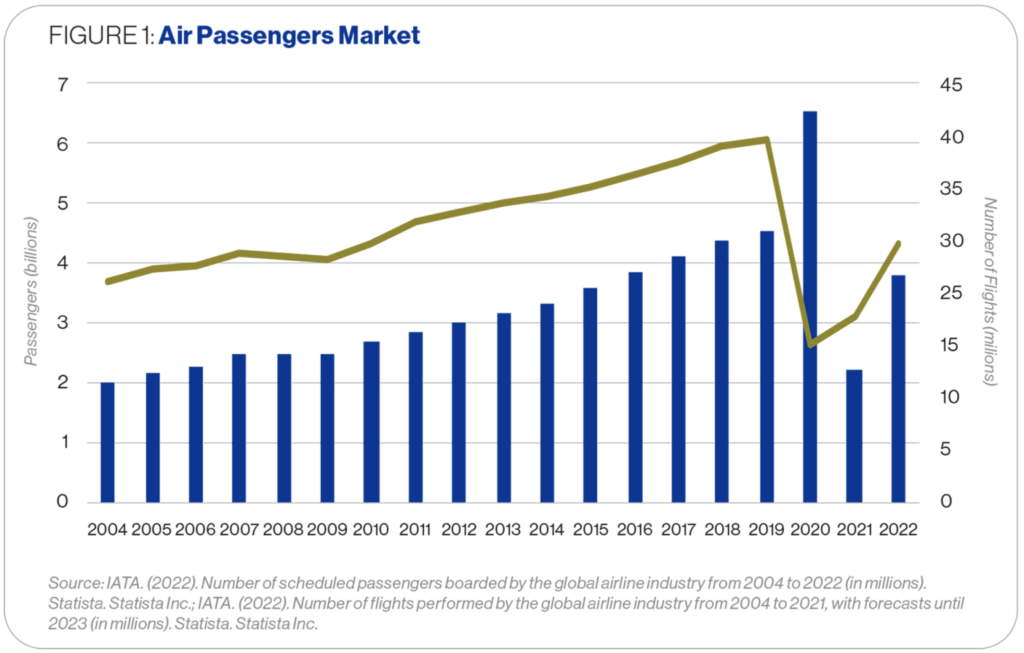
While the COVID-19 pandemic reduced global air travel significantly, the industry rebounded strongly, with 2.2 billion people flying in 2021.



Global air traffic is now at 95.7 percent of pre-COVID levels. Not only has the industry seen air passenger traffic increase, but the number of flights has also increased—from 24 million in 2004 to 28 million in 2022 (figure 1).
Air travel is highly energy intensive and accounts for two percent of global energy-related CO2 emissions. Aviation fuel is used by commercial, private, and military flights. Commercial aviation includes passengers and freight.
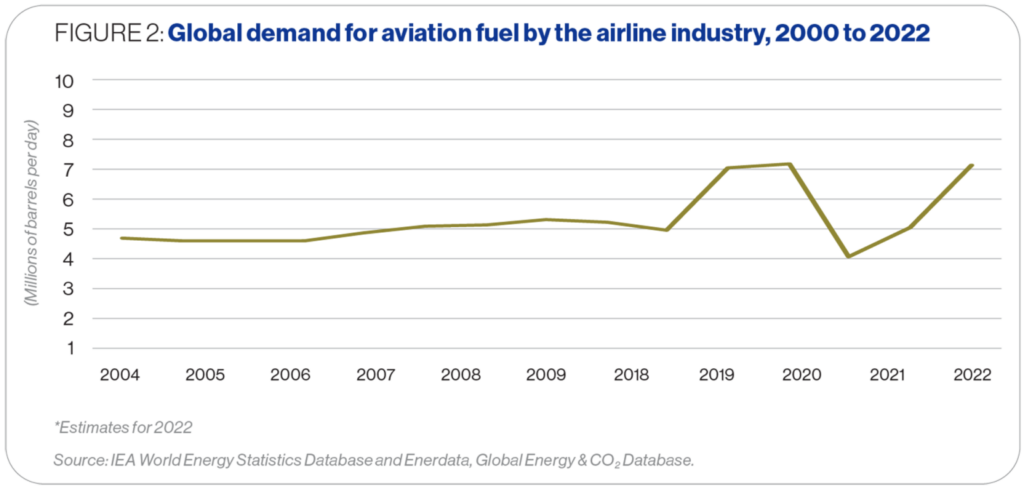
The aviation industry’s demand for oil is dominated by its demand for jet fuel, estimated at between 7 and 8 million barrels per day and accounting for 5 to 6 percent of global oil demand (figure 2).
Less than one percent of the jet fuel consumed is considered to be sustainable aviation fuel. As more countries in Asia and Africa develop and the demand for air travel increases, there will be more demand for jet fuel.
The Canadian Energy Centre’s “Energy Perspectives” are short analyses released periodically to provide context on energy issues for investors, policymakers, and the public. The source of profiled data depends on the specific issue.
Share This:






















INSIGHT: The Northern Shield Energy Corridor Provides Energy Security for All Canadians – Yogi Schulz