


 CDN NEWS |
  US NEWS







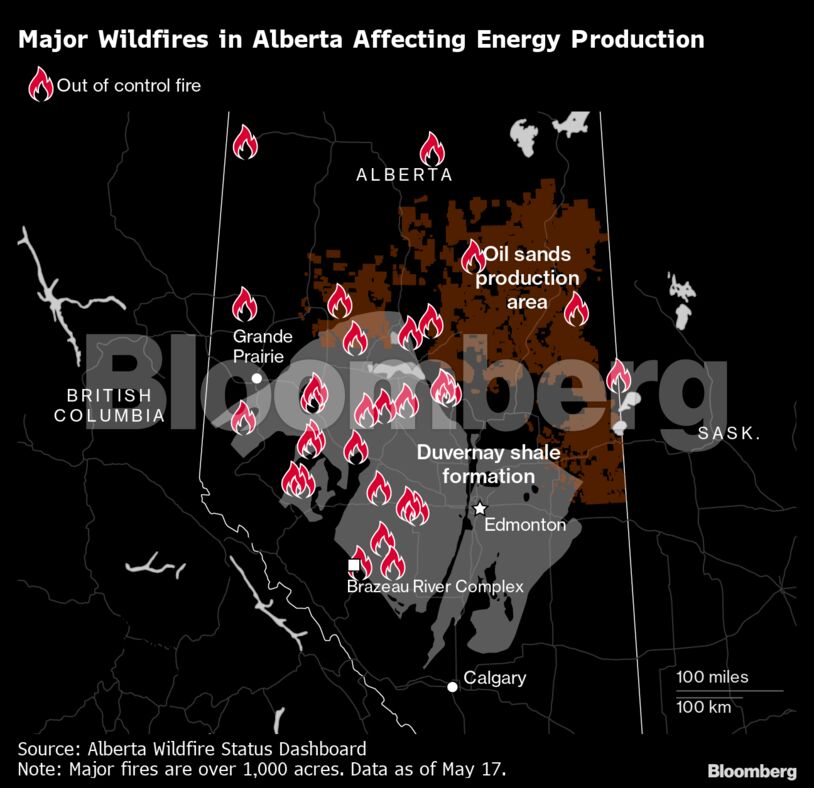
More than 2,800 firefighters from Canada and the US are on the ground, dealing with hot, dry and gusty conditions, Christie Tucker, a spokeswoman for Alberta Wildfire, said Saturday.
Rain and cooler weather are anticipated in the next days, but a lot depends on where that rain falls. “While showers will certainly be welcomed by firefighters, we monitor thunderstorms very carefully,” Tucker said, as lightning strikes might start new fires.
A wildfire crossed Highway 43 near Fox Creek, 260 kilometers (162 miles) northwest of Edmonton, on Thursday and flames were still close to the town, Tucker said. The area is a major center for drilling light oil and gas in the Duvernay shale formation.



The disruptions are already weighing on oil inventories at one critical hub. Storage tanks in Edmonton, which is closer to the blazes than Alberta’s other major hub of Hardisty, were holding 18.1 million barrels as of May 13, according to geospatial industry-data provider Ursa Space Systems. That’s down from 19.7 million at the start of May. Volumes at Hardisty are holding broadly steady.
The situation is also starting to weigh on economic forecasts for Canada. ATB Financial estimated on Friday that the infernos may trim 0.1% to 0.3% off the country’s real gross domestic product this month.
So far, the blazes have mostly struck the gas-producing region of western Alberta, although ConocoPhillips did report some brief evacuations at its Surmont oil-sands site.
Share This:






















Cash-Rich Oil Majors Face Post-Iran Strategy Rethink: Bousso