


 CDN NEWS |
  US NEWS







By Geoffrey Cann
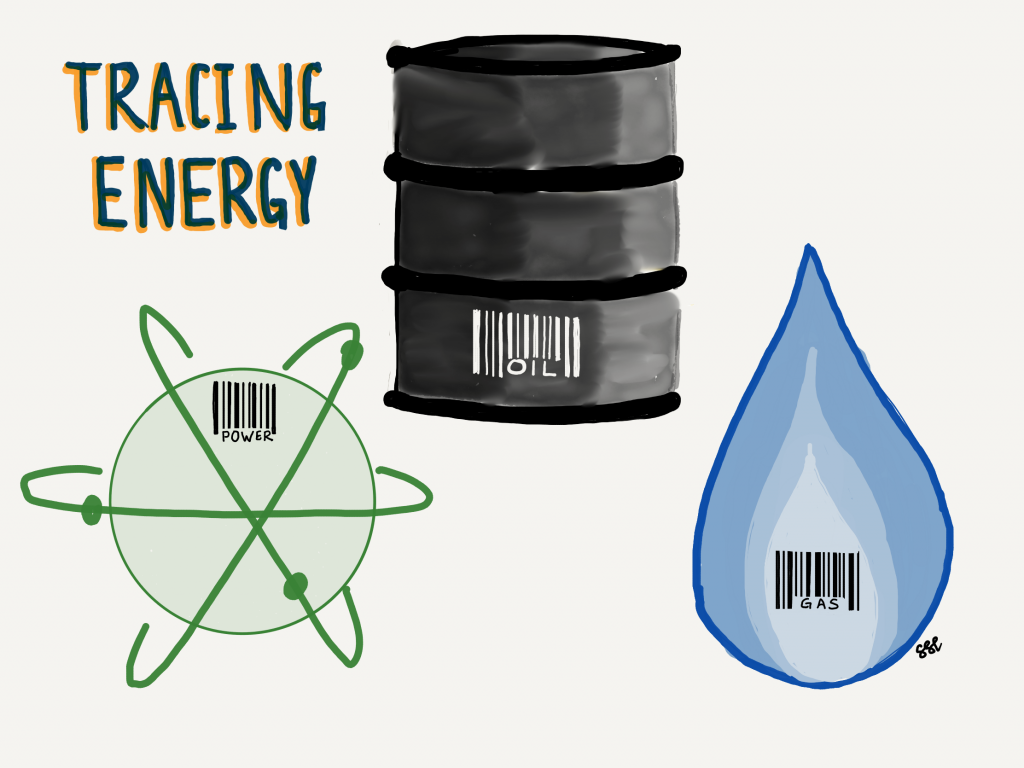
An ad campaign asks the provocative question: if oil and gas came with a label, what would it say? Instead, I ask why energy doesn’t come with a label, and how to give it one.
The Backstory
The Canadian Energy Center (CEC), a government-owned corporation, is tasked with promoting Canada as a supplier of choice for responsibly produced energy. The country’s energy industry (oil, gas, power) prides itself on its ability to meet the highest regulatory standards, its track record on environmental performance, and the general transparency of its operations, but lacks a means to give voice to these accomplishments without sounding self-serving. The CEC helps solve for this gap, and to counter the many voices keen to sway public and political opinion to oppose the energy industry in all aspects of its business.
With the world poised to both increase demand for energy by 47% to 2050, and to decarbonize existing fuel uses, regulators, capital markets and consumers will want objective evidence that their energy is responsibly produced, distributed and consumed. Canadian energy products cannot satisfy this market demand for energy provenance today, and hence the CEC’s advertising campaign’s tag line “IF oil and gas had a label, what would it say”.
This is a fine question but why stop there? The campaign should ask:
‘Why doesn’t ENERGY have a label”, and
‘How could we GIVE energy a label”.
Labels Matter
I don’t know about you but I’ve been conditioned over time to value provenance. We purchase organic foods in ever increasing volumes for the supposed health benefits. Apps provide us with a direct line to the merino sheep whose wool became the fibres in our sweater. Geographical indicators for products such as Scotch whisky, Parma ham, Champagne, and Edam cheese, lend authenticity and guarantees of quality, have the backing of courts, and protect suppliers from fake products.
Today, many jurisdictions require clear and positive labeling on goods as to their origins. In part this is for safety reasons, such as with pharmaceuticals, and for providing consumer confidence, such as baby food. Industrial companies need to know where parts originate to meet local content rules and to keep fake parts from entering into mission-critical equipment. Governments block suppliers and impose sanctions against rogue nations, and supply chains must honor the rules. Global brands, concerned about their impacts on the environment, now seek to understand the provenance of every element throughout their global networks.
Consumers rely on labels to guide their choices, to purchase locally made, to favor national champions, to signal support for specific brands, and to support social missions, such as climate change.
Energy Labels Matter Too
Today, we are in the early stages of an energy transition, and energy supplies are diversifying. Consumers, driven by the generation shift to the millennial cohort, are starting to express an interest in understanding energy supplies.
Markets are already responding to this general trend to understand provenance by applying sourcing concepts to energy products. Airlines offer consumers a fuel surcharge to purchase carbon offsets. Power companies sell green energy options such as green credits. Petroleum companies offer a green fuel option at the pump. Chemical companies now track the use of their products throughout their supply chains in response to global brand pressures.
Governments and regulators are also responding. Some jurisdictions require detailed information about energy production and emissions. Trading blocs, such as the EU, and large economies, such as China, are making dramatic commitments to remove carbon emissions from their energy mix.
Why Energy Lacks a Label
While some consumers may now have some choices some of the time for some their energy supplies, the provision of these products are for the most part hacks or work arounds of the legacy systems. Energy systems have historically been a series of separate and independent value chains. In part, this is due to the nature of energy—electricity, for example, is produced by a local utility, consumed close to the generator, and not shipped long distances. Electricity cannot be stored except in some kind of battery.
Petroleum producers have claimed, with some justification, that tracking the source of liquids and gases is not practical, because these commodities are frequently blended, refined, and traded.
These designs date back to the dawn of the modern energy age, and are generally built to solve for monopoly effects of large one-way distributed infrastructure, and for the capital needs of the asset owner and investor. They are focused on managing the engineering problem of balancing networks, and not participating in a world of decentralized energy.
As a result, energy value chains tend to be cost and margin based, and not consumer based. Energy products are pushed down the chains, and us consumers rarely have the ability to chose between energy sources at the margin (except gasoline). Power choices, in particular, feature long term contracts and supply commitments. Household energy budgets become fragmented across power, heat, and fuel. Similarly, businesses lack a single point of energy accountability. The Chief Procurement Officer may negotiate pricing, but rare is the organization with a Chief Energy Officer.
In my lifetime, the business models for participants in the energy value chains have barely budged. Prices for consumers have not gone down. Commercial systems for supplying energy to the world have not advanced. Green energy has emerged but is still a luxury item, priced at a premium to traditional grey energy. Energy markets are still heavily weighted towards preserving the status quo.



Energy stands in stark contrast to local transportation markets, which have been up-ended by ride-sharing services and rental scooters. In this age of energy transition, our energy systems are poorly suited to meet the new needs of the market and the consumer.
And so, CEC asks the question “if oil and gas had a label”.
But I believe that people want to actively chose products and services on the basis of emissions, pollution, sustainability, and safety, including energy, and not simply because of the source country, and not just oil and gas. Without energy choice, the transition to cleaner and more sustainable energy is delayed because the market signal is distorted.
Fraudulent or misleading energy products are offered. Energy expenditures will continue to be directed towards those organizations and nations who do not steward to emerging sustainability ideals. Capital markets will continue to reward laggard market participants, and companies will find their ability to attract the talent they need to be sorely compromised.
Labelling Energy
Fortunately, the wave of digital innovations that have transformed many other markets (financial services, telecoms, entertainment), is about to have the same positive impacts on energy. The building blocks that enable democratic choice for energy products enabled by labelling energy are falling into place. These components—internet of things, cloud computing, blockchain—allow for the tracking and tracing of energy products completely throughout their independent and increasingly interconnected value chains.
The essential ingredient to transforming energy is data. Historically, the energy industry has relied on its instrumentation and controlling systems (SCADA) to produce the data needed to manage energy supply and demand. The internet of things will provide for vast new data sources about energy, to be stored and processed in the cloud, and for consumers, immutably and confidentially recorded on blockchain structures. Emerging artificial intelligence engines will be able to process that data to make meaningful consumer decisions.
Many organizations are starting to exploit these new capabilities to reinvent energy supply chains. Mavennet, a Toronto-based blockchain company, is supporting the Dept of Homeland Security to trace petroleum movements across borders. VAKT is overhauling petroleum product trading in Europe. Finboot helps Iberia Airlines track fuel purchases, SABIC with feedstock tracing, and Repsol with product certification.
Labelling energy as to its provenance will drive a significant rethinking of the pillars of the energy business—operating costs, financial accounting for assets, asset depreciation, tolling models, and pricing.
Significant Benefits Await
A tremendous upside awaits those who embrace the transformation of energy markets and supply. Some consumers are already signaling an interest in their energy supply, suggesting that it may be possible to form a positive demand-driven relationship with energy consumers. Artificial markets that exist in the supply chain of energy products may be eliminated, lowering the cost of energy for all. Consumer choice can eliminate undesirable energy products, from nations ambivalent towards broader climate goals, or with lax environmental standards, or that fail to fill political and social goals. The capabilities that deliver energy transparency may easily extend to other critical commodities, such as carbon, minerals, ores and metals.
Business leaders will also benefit. Capital allocation should improve as capital flows transparently to satisfy clear consumer choice. Operating costs should improve as asset maintenance regimes better reflect consumer needs for specific energy type availability. Gold-plating should diminish.
Finally, capital markets will gain. Market participants will redirect financial investments towards positive energy asset plays, which could unlock a new asset class of new energy products. Capital markets may be able to more correctly value energy businesses based more on their revenues and margins, and not on their original cost or depreciation. Lastly, new business models, with the transformation impact of Netflix but on a multi-trillion dollar scale, can be realised, such as guilt-free energy, charity energy, global energy surcharges, and fully democratised energy.
Conclusions
There is no time to waste. The tools are at hand, and the consumer is ready to buy. It’s time to move from if to when.
Check out my latest book, ‘Carbon, Capital, and the Cloud: A Playbook for Digital Oil and Gas’, available on Amazon and other on-line bookshops.
You might also like my first book, Bits, Bytes, and Barrels: The Digital Transformation of Oil and Gas’, also available on Amazon.
Take Digital Oil and Gas, the one-day on-line digital oil and gas awareness course on Udemy.
Take the one-hour Digital for the Front Line Worker in Oil and Gas, on Udemy.
Biz card: Geoffrey Cann on OVOU
Mobile: +1(587)830-6900
email: [email protected]
website: geoffreycann.com
LinkedIn: www.linkedin.com/in/training-digital-oil-gas
Share This:




















SETTING OFF ALARM BELLS: Carney’s EU Deal Threatens Alberta, Energy, & Sovereignty – 170,000 Reasons to Reject Canada’s EU “Associate Membership” – The Nemeth Report