


 CDN NEWS |
  US NEWS








Background
Fire disasters have a devastating impact on both lives and property. As a result, quick and reliable fire detection has become a must for every industrial site across many segments and applications. In particular, optical flame detection has progressed to meet the ever-growing demand for maximum reliability, availability, and minimal false alarm events. It is widely employed to protect both high-value plants and personnel in many high-risk industries, such as oil & gas (onshore & offshore), petrochemicals, hazardous material handling, and storage.
Improving Optical Flame Detection
Evolving from the early single sensor optical detectors using only UV or IR sensors, the legacy UV/IR and IR3 technologies dominate the market and are used by all optical flame-detector manufacturers. The IR3 concept developed at the time by Spectrex led to the next level in the optical fire-detection world. This patented technology revolutionized the field of fire safety by providing long-range, highly sensitive flame detectors with exceptionally improved false alarm immunity.
IR3 devices can detect a standard 0.1 m2 gasoline fire at a distance of up to 65 m (210 ft) under extreme weather and harsh industrial conditions, with an incomparable low false alarm rate. All manufacturers today are using Spectrex’s original concept, often calling it multi-IR to differentiate it from IR3.
We Invented It, We Perfected It
Adding a fourth sensor to a flame detector is not a novelty. There are vendors who use several UV and IR sensors, while some add an extra sensor in the visual or near IR spectrum. The purpose of adding such components is to meet a project specification and win the product datasheet war, impressing prospective customers by having more sensors. There is also a technological aspect. Its real essence, is an effort to reduce false alarm trips. Such a component allows manufacturers to reduce the device’s sensitivity, resulting in reduced area coverage and effective detection distance, regardless of changing weather conditions.
Other vendors add additional sensors for redundancy purposes. The idea is having identical sensors that will ensure that if there is a failure, the device will still work for some time. Most sensor faults are not related to a “burnt component”, but to “noisy” performance as a result of their low quality. This approach is a common way to reduce cost by using lower-quality sensors instead of using a reliable optical component with proven performance and lifespan.
QuadSense™ Adds Safety and Reduce Costs
The main design goals behind the new Spectrex flame-detection product line were larger detection coverage, ease of installation and increased reliability. Also taken into consideration was the elimination of false alarms in complex installations using the experience gathered throughout the years with a huge global installation base.
These goals required innovative ideas to develop the next level of the field-proven SharpEye™ 40/40 IR3 solution. QuadSense is much more than just adding a sensor, it is the perfection of Spectrex patented and widely known IR3 technology. With the great value it brings to customers, QuadSense is the next level in the optical flame detection industry with superior performance and reliability.
How Does It Work?
The sensor type used in SharpEye 40/40D QuadSense detectors is a chip based on a refractory metal alloy. The reason for using this robust material for QuadSense sensors is its extraordinary resistance to extreme temperatures and drastic changes and wear. The sensor technology and manufacturing method ensure the desired signal-to-noise ratio. The extremely low noise level of the component also allows the sophisticated electronics to modulate further and convert the signals, thus achieving an extended area coverage without any tradeoff on other parameters.
Layered filter facets used in QuadSense sensors provide the huge dynamic span needed not only to keep the device sensitivity within the entire detection range, but to ensure flawless detection even with an intense black-body radiation.
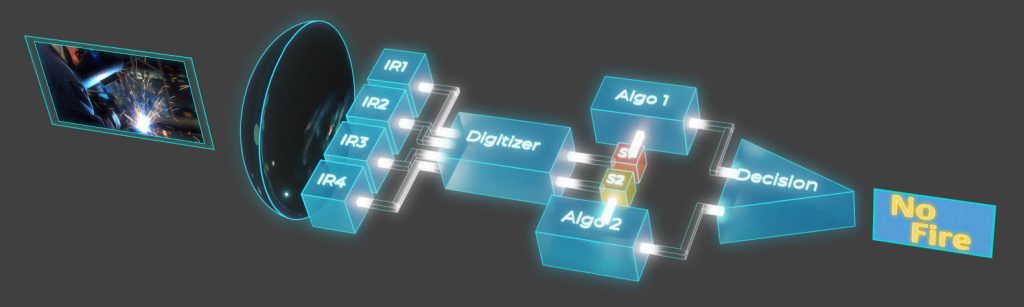
Figure 1. QuadSense simultaneously equalizes the different signal frequencies, eliminates unrelated noise, distinguishes between black-body radiation and fire at the same time.
Why QuadSense?
QuadSense employs four sensors to monitor two different sets of wavelength bands. These IR3 detection engines run simultaneously, much like two IR3 detectors working in parallel to reach a certain decision.
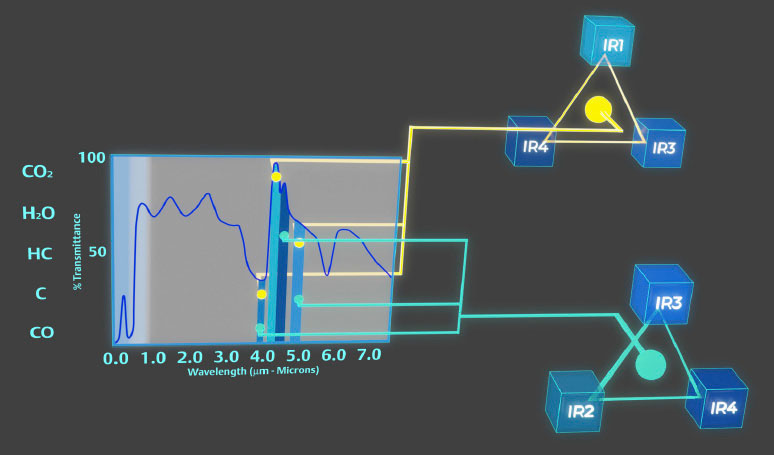
Figure 2. QuadSense architecture and adapting algorithm doubling the power of IR3.
The technology features a built-in process that compares different sets of values that vary by signal intensity for a fraction of a second. This enables the sensors to evaluate and distinguish between black-body radiation (as a cause of false alarms) and fire at the same time. Thus, in case of intense black-body radiation, the detector can detect if a fire will ignite.
QuadSense uses digital processing, with a sampling rate five times greater than previous models, achieving ultra-fast detection, and a sampling resolution with an exponent of 12, enabling discrimination of background interference and unparalleled false alarm immunity.
The devices use two powerful microcontrollers to provide all the resources needed for the calculations. This allows controlling detection time within the required limit while having enough spare time to use an enlarged interval of time within which the calculations are executed. An ultra-fast detection speed of only several milliseconds has been achieved while increasing the detector coverage, providing greater accuracy and false alarm immunity. For most vendors, extended area coverage or detector speed is achieved by increasing detector sensitivity, which makes it prone to false alarms. This is not the case with QuadSense. With sophisticated Signal Processing Techniques (SPT), for example, correlations, ratios, frequency analysis, periodic checks, threshold crossing, and more, are combined to ensure flawless device performance.
Furthermore, most vendors use hot CO2 emissions released during the combustion process to detect fire. However, hot CO2 is also released by the exhaust of various machinery. A flame detector located nearby could easily be turned into a false alarm. QuadSense is designed to avoid such false alarms. Its performance has been tested and certified by the top approval agencies.
The SharpEye 40/40D series detectors are certified by FM to detect flames that are based on a vast range of substances, while helping enable detection at the longest possible distances. In line with the rise in battery manufacturing, 40/40D detectors are able to detect fires originating from lithium-ion batteries.
Is QuadSense More of IR3?
QuadSense doubles the power of IR3 technology, expanding performance limits beyond the existing IR3 models currently on the market. Adding to the detection range improves effective detection coverage. Increasing response speed in applications where every second is critical for saving lives and property brings greater value to our customers. Upgrading the self-test features of the device expands its reliability. Single wiring options, various configurable options and easy installation make ordering and usage simple and convenient.
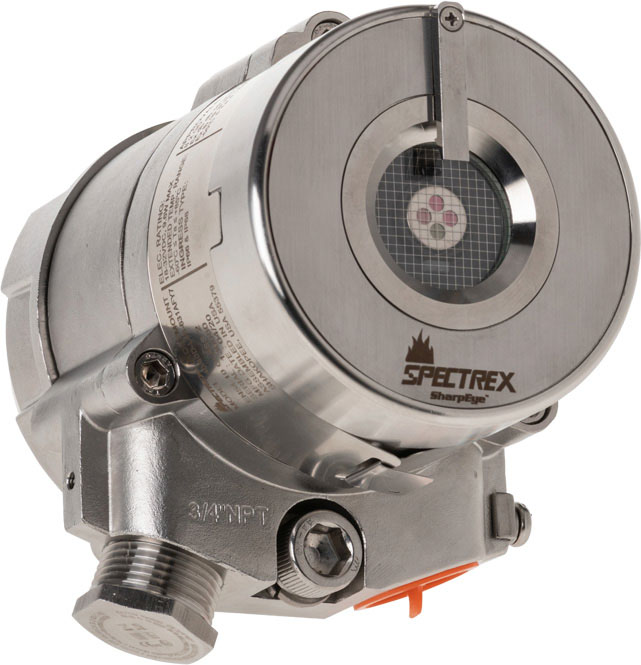
Figure 3. 40/40D Series Next Generation Flame Detectors.
For more information on Spectrex’s Next-Gen QuadSense technology series products please visit our website or call us at 1-800-912-9262.
Share This:






















COMMENTARY: Varcoe: ‘Do No Harm’: Should Alberta Step in to Fix Gas System Constraints, Given Past Energy Interventions?