CDN NEWS |
  US NEWS







Crude has been buffeted by bullish and bearish headlines in recent days, while staying largely rangebound near a six-month low. A brief halt of Russian flows to some parts of Europe and weaker-than-expected US inflation data pushed prices higher. The subsequent resumption of Russian supply — as well as renewed attempts to resurrect the Iran nuclear deal — have since weighed on the market.
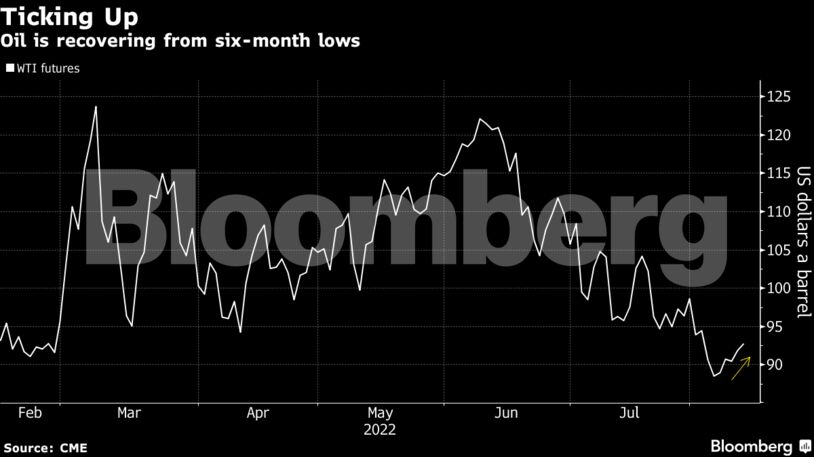
In the short-term, oil prices will be “dictated by macro, inflation, interest rates and what happens with the Iran nuclear deal,” said Helge Andre Martinsen, a senior oil analyst at DNB Bank ASA. Further out, “it looks like demand worries might be a bit overdone, and extremely high gas prices will support oil demand during winter with gas-to-oil switching.”
| Prices: |
|---|
|
The softer-than-expected US inflation print on Wednesday was driven in part by a marked decline in gasoline prices. Nationwide average retail pump prices have dropped back below $4 a gallon after peaking at a record above $5 in mid-June, according to data from auto club AAA.
The market’s recent easing is evident in a narrowing of closely watched time differentials. WTI’s prompt spread — the gap between its two nearest contracts — has shrunk to 72 cents a barrel in backwardation, down from $2.88 a month ago. The comparable measure for global benchmark Brent was at $1.08 a barrel, down by about two-thirds in the same period.
Share This: