


 CDN NEWS |
  US NEWS







By David Yager
One of the new and popular terms of the 21st century used to describe human behavior is “woke”. But its meaning and roots are not well understood or defined.
The 1989 vintage 1561-page Websters Ninth New Collegiate Dictionary defines “woke” as the past tense of wake; “past and past part of wake.” Wake is to quit sleeping, rouse, or excite.
Thirty-three years later the on-line version of the same dictionary defines woke as, “’aware of and actively attentive to important facts and issues (especially issues of racial and social justice),’ and identified as U.S. slang. It originated in African American English and gained more widespread use beginning in 2014 as part of the Black Lives Matter movement. By the end of that same decade it was also being applied by some as a general pejorative for anyone who is or appears to be politically left leaning.”
Discrimination on the basis of race, color, age, height, weight, sexual orientation, income or education is wrong. While discrimination is likely impossible to eradicate, western society continues to try harder and improve.
To accelerate awareness and enforce behavior, the woke movement has expanded to include language. Not only should people not think the wrong things, but they can’t say or display them either. The list of non-permitted words, phrases and symbols expands continuously.
Today woke describes a frame of mind and acceptable form of behavior. Woke represents doing, thinking and saying only what is politically correct and socially acceptable. Therefore, it was inevitable that it would expand to the environment and climate change.
The primary target is fossil fuels. But thinking and saying the right things about specific forms of energy is much different than understanding the science and physics of replacing them. How else could anyone believe wind and solar could be substituted for oil and gas?
Unencumbered by facts or global market size, opposing fossil fuels and reciting the appropriate mantra about getting rid of them became a moral crusade. This in turn has increased demand for change.
But changing human behavior and changing physical energy sources are entirely different things.
There is no harm caused by reducing discrimination or increasing social justice.
But when societal pressures cause a reduction in energy supplies or renders them unaffordable, the consequences are extremely serious.
**********
The UK’s Financial Times (FT) newspaper sponsors international conferences titled “Moral Money – Your Guide To Better Business and Finance.” The purpose is to “Turn Talk Into Action To Meet ESG Targets.” According to FT, its London gathering May 18 and 19 involved 600 attendees, 45 speakers, over 750 companies, and had a social media reach of 4.5 million.
This title is pure woke. Because anything but supporting ESG and climate concerns is, by definition, Immoral Money.
And that is bad. Which is a fundamental tenet of woke culture. Either you believe or you are the enemy.
The headline sponsors were the big dogs of international finance including Bank of America, McKinsey & Company, BNP Paribas, HSBC, and Deloitte.
Deloitte and HSBC played a role in a video of a presentation that went viral, caused a media firestorm, and may cost the HSBC presenter his job.
Why? Because the wrong things were said publicly about climate change, ESG finance, and the future of the world.
Deloitte presented before HSBC. The speaker was Sharon Thorne, Chair of Deloitte’s Global Board. FT advertised Thorne as, “An advocate for collective action on environmental sustainability and climate change, Sharon regularly engages with global leaders from businesses, governments, and NGOs, and frequently speaks about ESG-related matters in public forums. She is a strong believer in the need for greater diversity, equity, and inclusion in business and civil society, and she has long championed greater diversity in senior leadership roles to build a more equitable future for all.”
This is surely the textbook definition of 21st century corporate woke. This job didn’t used to exist. That it does is a sign of the times. Thorne sits on the board of the World Economic Forum Platform for Shaping the Future of the New Economy and Society Stewardship.
Exactly what Thorne said is not easily accessible. You had to pay to see it. However, FT Tweeted during her presentation, “The APAC (Asia Pacific) region is at risk of losing up to $98 trillion in the coming years as a result of climate change. ‘There are no jobs on a dead planet’ (said) Sharon Thorne speaking at #FTMoral Money.”
A week later at the WEF in Davos, Deloitte gave a presentation that included this APAC figure titled “Global Turning Point.”
In a news release tied to the Davos presentation, Deloitte stated, “…unchecked climate change could cost the global economy US$178 trillion over the next 50 years unless global leaders unite in a systemic net-zero transition.”
To ensure nobody missed the gravity of the impending disaster, Deloitte added, “If global warming reaches around 30C towards the century’s end, the toll on human lives could be significant – disproportionately impacting the most vulnerable and leading to loss of productivity and employment, food and water scarcity, worsening health and well-being, and ushering in a lower standard of living globally.”
It used to be radical environmentalists and ultra-left politicians that said these things.
But this is now what global business giants feel they must tell the world because of woke culture influences on economics, ESG investing, stakeholder capitalism and corporate social responsibility.
Because business is no longer just about making money by safely providing people with the quality and affordable goods and services that they need.
When the ESG phenomenon crystalized pre-pandemic, avoiding fossil fuels was really easy because coal, oil and gas prices were in the dumpster.
But that has all changed.
Following Thorne’s presentation Stuart Kirk – Global Head of Responsible Investments for HSBC Asset Management – took the stage with a presentation pre-approved by HSBC titled, “Why investors need not worry about climate risk.”
The title was courageous for one of the first big banks to righteously proclaim in 2018 that it would no longer finance oil sands or new coal developments. This was after European clients Shell, Statoil (now Equinor) and BP had sold or reduced their oil sands interests.
However, Kirk was, using woke terminology, clearly “triggered” by Thorne’s remarks. He opened with “What I am going to say over the course of the next 10 slides is to explain why I completely disagree with the presentation that Sharon from Deloitte’s gave a few presentations ago and why financial risk is not something we need to worry about.”
Hold on. Stranded assets. Sunset industries. Massive financial disruption. What’s this?
The first slide was titled, “Unsubstantiated, shrill, self-serving, apocalyptic, warnings are ALWAYS wrong.” This was followed by quotes from Mark Carney, the UN, Henry Paulson, World Economic Forum and the Bank of England stating that climate change was the greatest threat to civilization in history and therefore the biggest risk to business and the economy.
Calling out central bankers Kirk said, “I completely get that there is competition for funding…I completely get that you’ve got to say something, that you’ve got to fly around the world and attend conferences, and you’ve got to out-hyperbole the next guy.”
But he declared that the recitations from business that we are doomed was getting out of hand stating, “Sharon said we are not going to survive. No one ran from the room. In fact, most of you barely looked up from your mobile phones at the prospect of non-survival…After 25 years in the financial industry there’s always some nut job telling me it’s the end of the world.”
One of Kirk’s biggest concerns was the sheer volume of paperwork and compliance that ESG and climate issues were causing for his team at HSBC and the rest of the world’s economy. He said, “Last night Target (shares of the big American retailer) fell 25% and people are asking the board of US companies to deal with climate risk.”
Kirk added his bank was dealing with cryptocurrencies, US regulators, China, a looming housing crisis, rising interest rates and inflation. He declared too many in business and finance are being pressured to “grind to a halt” and deal with problems 20 or 30 years from now. “The proportionality is completely out of whack.”

Then he wondered why despite climate alarms ringing louder, asset values kept rising anyway. “The Sharons and Mark Carneys of the world need to tell us why prices are going up with our own demise.” He added, “The Mark Carneys…have to convince us that every single one of us is wrong on climate risk. That’s possible, but it’s a big call to make.”
Kirk quipped that even if ocean levels increased six meters in 100 years putting Miami underwater, stock markets would rise anyway. People would adapt. He presented more charts, graphs and data showing that the continued growth of population and individual prosperity were the primary drivers of GDP. And that would continue.
There’s more. It leaves the viewer wondering, “How can he say that?” Here the link https://youtu.be/bfNamRmje-s.
It turns out he can’t. Kirk was “suspended” from his duties a few days later pending an internal investigation. But HSBC admitted the slides were pre-approved. Pundits from around the world piled on at how someone could dare to be so outrageously indifferent and insensitive to what so many have labelled the “climate emergency” and an existential threat to the future of the world.
Kirk said he believed the climate science. But he was talking about business, finance and capital markets, not emissions.
Many in the financial community were relieved that somebody finally had to courage to publicly question the politically correct ESG mantra as the world deals with more immediate challenges such as a war in eastern Europe, high oil and gas prices, energy shortages, and a growing food crisis.
On May 29, The Telegraph reported that the CEOs of UK financial outfits Legal & General (HSBC shareholder) and competitor Standard Chartered Bank didn’t agree with everything Kirk said, but stated on the record that the increasing pressure to stifle free speech and open debate about major policy issues was wrong.
As the economy deteriorates, ESG investing’s impact on supplies of the key commodities the world cannot yet live without is increasingly being called out as a problem, not a solution.
Maybe HSBC was surreptitiously testing the waters to see how much views have changed.
According to an internet search, Kirk still works at HSBC. But he’s now a celebrity among many in business and finance.
More key figures that were all ESG all the time when there was more money to be made by saying that are backtracking, like Blackrock’s Larry Fink.
FT recently reported, “Vanguard refuses to end new fossil fuel investments. World’s second-largest asset manager cites it duty to maximize returns for its clients.”
Current events are proving that today’s woke-centric society cannot pledge, shame or talk its way out of shortages of essential physical commodities.
Using capital markets to restrict fossil fuel supplies in the absence of suitable substitutes has proven to be disastrous. The result is shortages and skyrocketing prices.
Until suitable new energy sources are developed, the only way to modify energy consumption using behavior modification is to use less. The IEA released a ten-point plan to balance oil and gas markets. Proposed solutions include car pooling, working from home, public transit, reduced air travel, and inhabiting your dwelling at less comfortable temperatures.
Put another way, self-discriminate against your own preferred lifestyle and energy consumption.
Disrupted by reality and shaken by economics, finance and markets, the business community and many governments are moving away from woke economics and politics. To use the original definition literally, more people are going back to sleep.
**********
Even Canada’s Liberal climate crusaders – who last summer told the world just how much more our country would reduce emissions by 2030 than the 2015 Paris commitments required – are being dislodged by current events.
At a G7 meeting in Europe last week, Environment Minister Steven Guilbeault and Energy Minister Jonathan Wilkinson said that Canada could increase LNG exports from the east coast within a few years from new projects in Nova Scotia and New Brunswick.
It was only in February that this same government put the last nail in the coffin of Energie Saguenay, a $10 billion LNG export project in Quebec.
Other governments are making decisions about fossil fuels that would have been unthinkable a year ago. Many of the pledges made at COP 26 in Glasgow in November are crumbling.
Regardless, undoing this all will take a lot of work. For the anti-fossil fuel movement, the crusade continues.
In February NGO LeadNow declared that “RBC is funding genocide” by continuing to finance the Coastal GasLink pipeline. The perpetrators of the serious vandalism at a Coastal GasLink construction site on February 17 remain at large.
Steven Guilbeault has yet to apologize for his pre-politics illegal environment protest activities stating, “Civil disobedience was never a goal in an of itself. It was just a tool. Now I’m using different tools.”
Former MP Kennedy Stewart was arrested at a TMX construction site in Burnaby for defying RCMP blockades. His punishment was to be elected Mayor of Vancouver.
Oil company executives are routinely called climate criminals. Lawsuits against oil companies for climate crimes continue in several US states. Michigan remains determined to shut down Enbridge Line 5 oblivious to a global oil prices and supply disruptions. Quebec is sticking with its commitment to prohibit oil and gas development in that province, forcing lease holders seek compensation.
Environmental activism remains unaccountable. Lawbreaking, slander, vandalism, and policies that drive up the cost of everything continue get a hall pass if the intentions appear noble.
Meanwhile, fully accountable companies and governments are changing course as it become obvious that woke economics accelerates energy poverty.
FT’s next Moral Money conference is set for October in New York. Who says what in five months will be very interesting.
Is it possible our crazy world is actually fixing itself?
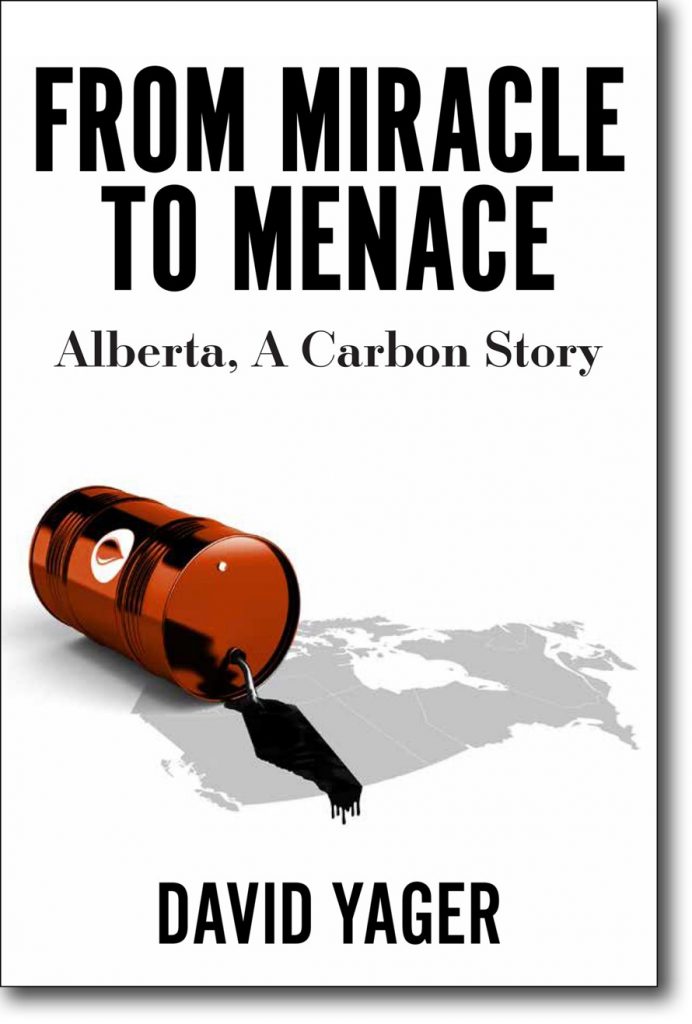
David Yager is an oil service executive, oil and gas writer, energy policy analyst, and author of From Miracle to Menace – Alberta, A Carbon Story. Find the book to www.miracletomenace.ca.
Share This:




















OPINION: The Iran War Energy Crisis is Just Getting Started: Bousso