CDN NEWS |
  US NEWS







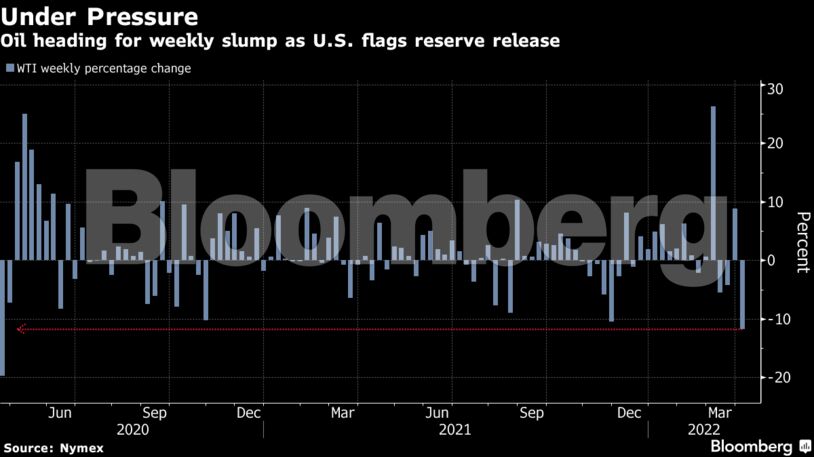
Oil headed for the biggest weekly loss in almost two years after the Biden administration ordered an unprecedented release of U.S. strategic reserves to tame rampant prices.
West Texas Intermediate futures rose 0.6% Friday, swinging between gains and losses in another volatile session and recouping some of this week’s decline. The U.S. plans to release 1 million barrels a day for six months. President Joe Biden said he expects allies will also agree to release more oil from their own reserves.
Citigroup Inc. said the U.S. appeared to have taken steps to ensure that it could deliver the promised volumes, despite having never drawn down that much oil before from the reserve stockpile. Goldman Sachs Group Inc. cut its price forecasts for this year, but boosted the estimate for 2023 arguing that the move won’t fix a longer-term supply crisis.
Biden’s move follows rocketing gasoline prices in America and concerns over supply shortages following Russia’s war in Ukraine. The conflict has roiled global commodity markets and driven up the price of everything from food to fuels. It has also led to tumultuous trading in oil, with massive intraday swings throughout March. WTI traded in almost a $37 range last month.
The Biden administration’s giant oil release puts it in stark contrast to OPEC+, which on Thursday ratified a planned modest production increase of about 430,000 barrels a day in record time.



The U.S. has already tapped its reserves twice in the past six months but it’s done little to cool prices. As much as 180 million barrels may be released this time, and Biden said he expects another 30 million to 50 million more barrels from allies. American physical crude prices tumbled.
“This will ease the acute supply shortage on the oil market,” Commerzbank analyst Carsten Fritsch said.
| Prices |
|---|
|
Early on Friday, the market also came under some technical pressure as WTI breached its 50-day moving average for the first time since early January. Brent also briefly slipped toward that level, before rallying away from it.
Prices have also slid this week amid concerns about Chinese demand as the world’s biggest oil importer implements a series of lockdowns to curb a virus resurgence. Those curbs are starting to have an impact on the economy, with manufacturing activity contracting in March.
Share This: