CDN NEWS |
  US NEWS







Futures in New York extended gains but remained below $80 a barrel, a level they haven’t hit since 2014. The U.S. Energy Department recently said that it had no plans “at this time” to tap the nation’s oil reserves, easing concerns that emergency supplies would be used to counter rising gasoline prices.
Crude rallied to the highest since 2014 earlier this week after OPEC+ stuck with plans for a gradual boost in supply next month despite a rapidly tightening market, in part due to the energy crisis. Russia’s offer to ease the gas crunch in Europe and a Financial Times report that the U.S. would consider releasing crude oil from reserves saw prices tumble more than 3% on Thursday. Crude has since more than reversed those losses.
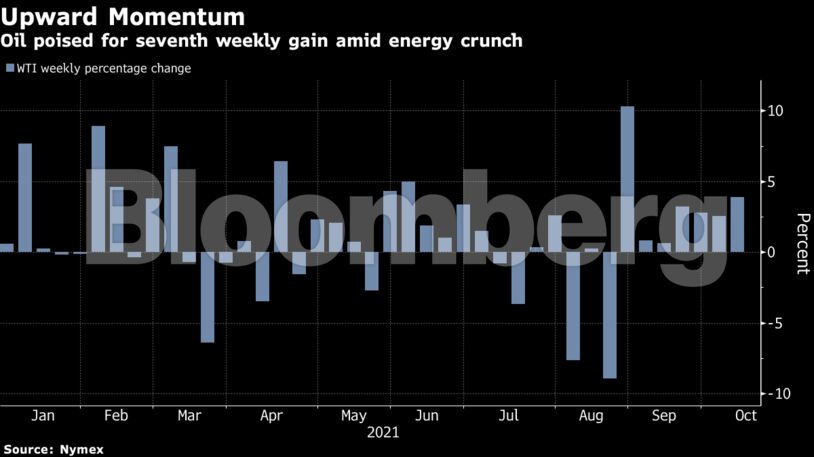
The economic recovery from the pandemic along with a supply disruption in the Gulf of Mexico following Hurricane Ida had already tightened the market before rising natural gas prices spurred additional demand for oil products like diesel and fuel oil.


“Releasing strategic oil reserves will probably not be off the table entirely if oil prices continue to rise,” Carsten Fritsch, an analyst at Commerzbank AG, wrote in a report. Given strong demand, which is likely to be boosted by the gas-to-oil switch, and restricted production from OPEC+, “the oil market will remain tight until year’s end.”
The bank has raised its Brent price forecast for this quarter to $85 a barrel, from $75, and also increased its first-quarter 2022 estimate from $70 to $75.
| Prices |
|---|
|
Russia has offered some form of respite to Europe with the possibility of increased natural gas flows. Meanwhile, China is still facing power outages and Beijing has ordered its state-owned firms to secure energy supplies for winter at all costs. Chinese fuel oil futures jumped almost 10% on Friday as local markets resumed after a week-long national holiday.
| Other market news: |
|---|
|
Share This: